What Iran and Israel's escalation means for efforts to end regional conflict
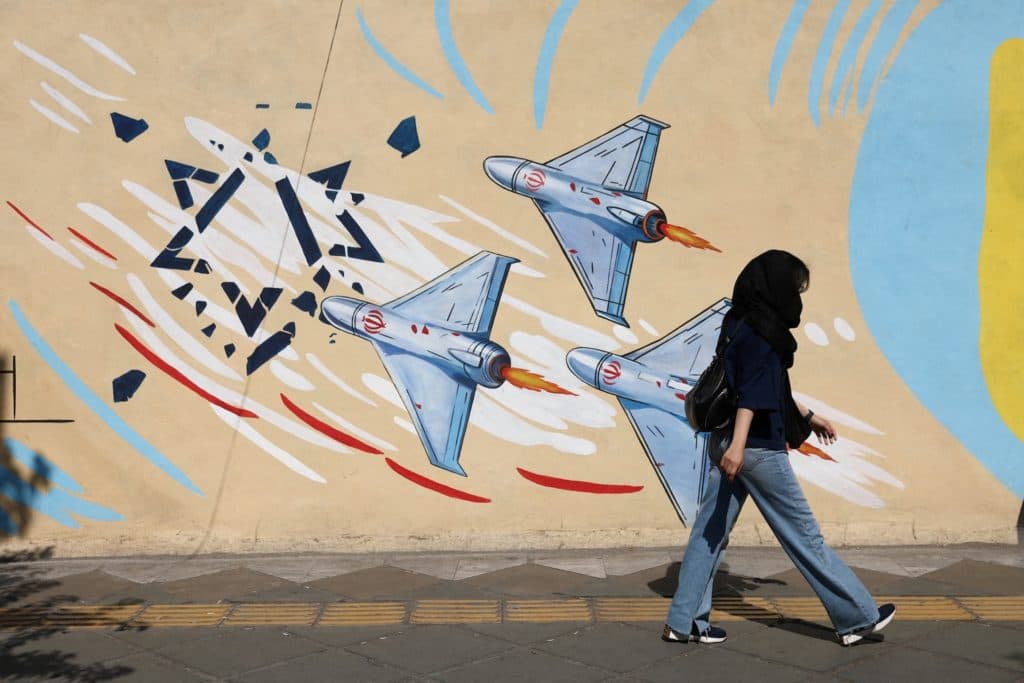
The escalating conflict between Iran and Israel signals a deepening of regional warfare, echoing biblical prophecies of nations rising against nations in the last days.
Joel 3:9-10
Prophetic Fulfillment“Proclaim this among the nations: Prepare war; stir up the mighty men. Let all the men of war draw near; let them come up. Beat your plowshares into swords, and your pruning hooks into spears; let the weak say, 'I am a warrior.'”
Why this passage
Joel 3 is a prophecy of the gathering of nations for judgment in the Valley of Jehoshaphat, often understood as a last-days scenario where God summons the nations to war against His people. The original context addressed the nations that scattered Israel and divided His land.
The call to 'prepare war' and reverse the peace of Micah 4:3 signals a time when conflict, not peace, dominates the international stage.
This passage legitimately extends to the current Iran-Israel escalation because it describes a divinely orchestrated summons of nations to battle in the region surrounding Jerusalem. The involvement of Iran (ancient Persia) and Israel directly echoes the prophetic geography of Joel's oracle.
Behold, the Lord declares through Joel: 'Proclaim this among the nations: Prepare war; stir up the mighty men. Let all the men of war draw near; let them come up.' (Joel 3:9) The clash between Iran and Israel is not merely a political dispute—it is a gathering of nations for battle that Scripture foretold.
As the powers of the Middle East align and escalate, the believer's heart must not be troubled but watchful. These are the birth pangs the Lord Jesus spoke of, signaling that the time of His appearing draws ever nearer.
Today's Prayer
Pray for the peace of Jerusalem and for the protection of innocent lives caught in the escalating conflict between Iran and Israel.
Further Scripture
Additional passages that illuminate this event, each grounded in a distinct interpretive lens.
“Why do the nations rage and the peoples plot in vain? The kings of the earth set themselves, and the rulers take counsel together, against the Lord and against his Anointed, saying,”
Why this passage
Psalm 2 is a royal psalm describing the rebellion of the nations against God's anointed king, ultimately pointing to the Messiah. The 'raging' of nations and their plotting is a timeless principle: human rulers naturally resist God's authority and His chosen people.
The psalm's original hearers understood it as a warning against Gentile opposition to Israel's divinely appointed king.
This principle applies directly to the Iran-Israel conflict, where Iran's leadership has openly called for Israel's destruction and plotted against the Jewish state. The 'raging' of the nations is not merely political but spiritual rebellion against God's covenant purposes for Israel.
How it applies
The article highlights Iran's role in escalating conflict with Israel, with analysts noting Iran's strategic aims to destabilize the region. This reflects the Psalmist's observation of nations raging against God's Anointed and His people.
The counsel of Iran's rulers against Israel is a modern manifestation of this ancient rebellion.
Christians are reminded that such opposition is ultimately futile, as the Psalm concludes with God's sovereign laughter and the establishment of His King on Zion.
“Behold, I am about to make Jerusalem a cup of staggering to all the surrounding peoples. The siege of Jerusalem will also be against Judah. On that day I will make Jerusalem a heavy stone for all the peoples. All who lift it will surely hurt themselves. And all the nations of the earth will gather against it.”
Why this passage
Zechariah 12 is a prophecy of Jerusalem's future siege and deliverance, where God makes the city a 'cup of staggering' and a 'heavy stone' that injures all who try to move it. The original context is a last-days scenario where all nations gather against Jerusalem.
The prophecy emphasizes that Jerusalem will be a source of conflict that entangles the nations.
This passage legitimately extends to the Iran-Israel escalation because Iran's involvement, along with its proxies (Hezbollah, Hamas), represents a gathering of surrounding peoples against Jerusalem. The 'staggering' effect on global diplomacy—as the article notes, the escalation complicates peace efforts—matches the prophetic description of Jerusalem as a burden that hurts those who try to manage it.
How it applies
The article discusses how the Iran-Israel escalation affects efforts to end regional conflict, with analysts noting that the crisis makes diplomatic solutions more difficult. This fulfills Zechariah's image of Jerusalem as a 'heavy stone' that injures those who try to lift it—every attempt to resolve the conflict only seems to deepen it.
Believers should recognize that Jerusalem's role as a flashpoint is not a diplomatic failure but a prophetic certainty, pointing to the day when the Lord Himself will intervene to save the city.
Related by Scripture
Other events we've interpreted through the same passage or hermeneutical lens.
Middle East crisis live: Iran launches broad retaliatory attacks after US strikes over downed helicopter
Wars & Rumors of WarsShares Psalm 2:1-2Trump launches strikes against Iran after downing of US army helicopter
Wars & Rumors of WarsShares Joel 3:9-10Israeli attack on Tyre in Lebanon kills eight as evacuation ordered for Christian quarter
Wars & Rumors of WarsShares Joel 3:9-10Eight killed in south Lebanon strike as Israel warns entire city to evacuate
Wars & Rumors of WarsShares Joel 3:9-10Iran seeks new regional norm with strikes on Israel | The Jerusalem Post
Wars & Rumors of WarsShares Zechariah 12:2-3
Community launching soon
Get the invite by email when the Watchman's Wall opens
Share this article
Source: PBS— we link to the original for full context.