US and Iran exchange fire as Vance says deal could be months away | First Thing
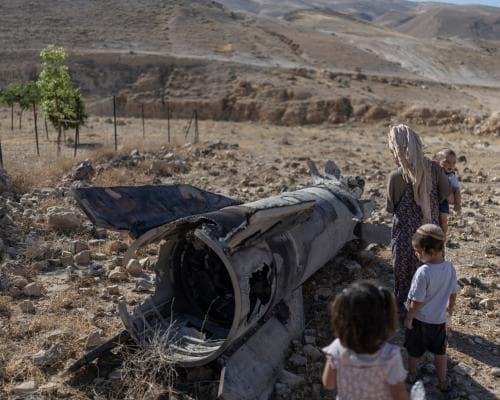
The US and Iran exchange fire while Vice President Vance predicts the war will end within months with a deal favorable to America, echoing biblical warnings of sudden peace declarations amid ongoing conflict.
1 Thessalonians 5:3
Prophetic Fulfillment“While people are saying, 'There is peace and security,' then sudden destruction will come upon them as labor pains come upon a pregnant woman, and they will not escape.”
Why this passage
Paul warns the Thessalonians that the day of the Lord will come unexpectedly when the world is proclaiming peace and security. The original context addresses the suddenness of Christ's return and the judgment that follows, contrasting the world's false confidence with the believer's readiness.
This passage has been consistently understood in dispensationalist theology as describing a future period when global leaders will announce a false peace, only to be met with sudden destruction. The pattern of military conflict followed by diplomatic assurances of a deal fits this prophetic template.
Historical context, theological significance, application today — denomination-neutral, ~1,000-word walk-through.
Behold, the nations rage and the kings of the earth take counsel together against the Lord and His Anointed (Psalm 2:1-2). Yet man boasts of ending war on his own terms, speaking of deals that serve his own interests.
Scripture warns that when they say 'Peace and safety,' then sudden destruction comes (1 Thessalonians 5:3). Let us not be lulled by the promises of men, but watch and be sober, for the day of the Lord comes as a thief in the night.
Today's Prayer
Pray that the nations would not trust in their own negotiations but turn to the Prince of Peace, Jesus Christ, before the day of the Lord overtakes them.
Further Scripture
Additional passages that illuminate this event, each grounded in a distinct interpretive lens.
“Why do the nations rage and the peoples plot in vain? The kings of the earth set themselves, and the rulers take counsel together, against the Lord and against his Anointed, saying,”
Why this passage
This psalm describes the futile rebellion of the nations against God's sovereign rule. The original hearers understood it as a coronation psalm for Israel's king, but the New Testament applies it to the Messiah (Acts 4:25-28).
The pattern of nations raging and rulers conspiring is a recurring biblical principle.
The psalm's depiction of kings and rulers taking counsel together against the Lord applies directly to any geopolitical conflict where nations assert their own will rather than submitting to God's authority. The US-Iran confrontation is a contemporary instance of this ancient pattern.
How it applies
The exchange of fire between the United States and Iran, two nations that have set themselves against each other and against God's purposes, illustrates the rage of the nations described in Psalm 2. Vance's talk of a deal 'good for US economically' reveals the self-interest that drives such conflicts.
Rather than raging against one another, the nations are called to 'kiss the Son' (Psalm 2:12) and submit to Christ's authority, the only true foundation for lasting peace.
“Proclaim this among the nations: Consecrate for war; stir up the mighty men. Let all the men of war draw near; let them come up. Beat your plowshares into swords, and your pruning hooks into spears; let the weak say, 'I am a warrior.'”
Why this passage
Joel prophesies a gathering of nations for judgment in the Valley of Jehoshaphat, where God will judge the nations for their treatment of Israel. The call to beat plowshares into swords reverses the messianic peace of Isaiah 2:4, indicating a time of intensified warfare before the Lord's intervention.
This passage is understood in dispensationalist theology as describing the final conflict of the nations against Jerusalem, but it also serves as a pattern for the escalation of warfare that precedes the Day of the Lord. The US-Iran conflict, involving a nation that threatens Israel, fits this prophetic framework.
How it applies
The exchange of fire between the US and Iran, a nation that has repeatedly called for Israel's destruction, echoes Joel's call to prepare for war. The conflict's escalation from rhetoric to active military engagement mirrors the prophetic pattern of nations arming themselves for confrontation.
Believers should recognize that such conflicts are not merely geopolitical but part of the larger biblical narrative of nations gathering against God's purposes, ultimately leading to the Lord's intervention and judgment.
Related by Scripture
Other events we've interpreted through the same passage or hermeneutical lens.
News Analysis: The war front that could sink Trump’s negotiations with Iran
Wars & Rumors of WarsShares Joel 3:9-10WH Smith to raise £100m as it warns on profits due to Iran war
Wars & Rumors of WarsShares Joel 3:9-10Middle East crisis live: Iran launches broad retaliatory attacks after US strikes over downed helicopter
Wars & Rumors of WarsShares Psalm 2:1-2Trump launches strikes against Iran after downing of US army helicopter
Wars & Rumors of WarsShares Joel 3:9-10Iran downs US Apache helicopter
Wars & Rumors of WarsShares Joel 3:9-10
Community launching soon
Get the invite by email when the Watchman's Wall opens
Share this article
Source: The Guardian— we link to the original for full context.