Lebanon’s Hezbollah-allied parliament speaker: No talks with Israel until war ends
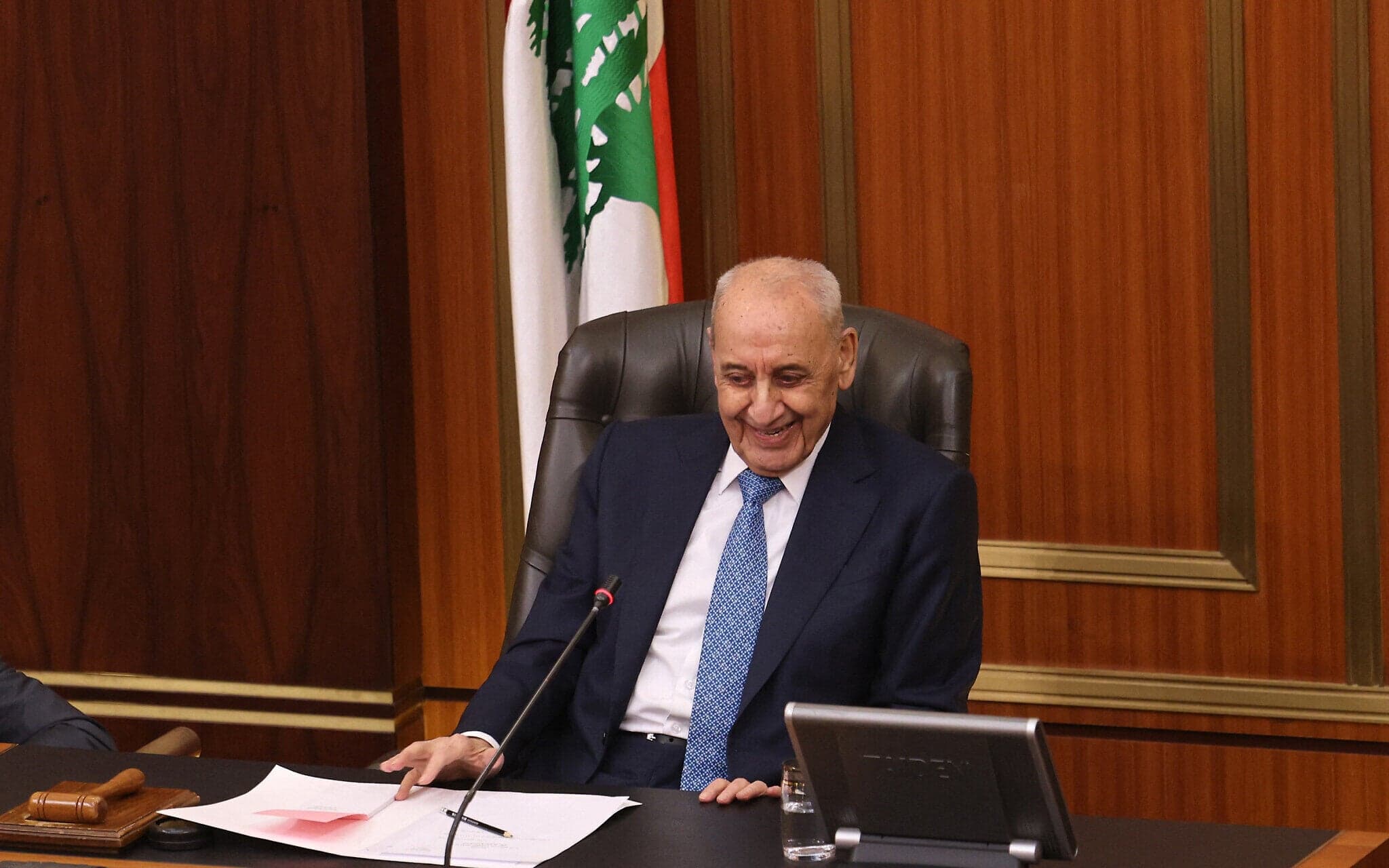
Hezbollah's political arm blocks Lebanon-Israel talks, vetoing any diplomatic engagement while war continues — a pattern Scripture identifies as the cry of 'peace, peace' being weaponized: false-peace brokers who ensure no genuine peace can take root.
Ezekiel 13:10-11
Direct Principle“Because they have misled my people, saying, 'Peace,' when there is no peace, and because, when the people build a wall, these prophets smear it with whitewash, say to those who smear it with whitewash that it shall fall! There will be a deluge of rain, and you, O great hailstones, will fall, and a stormy wind break out.”
Why this passage
Ezekiel 13 addresses leaders who proclaim peace to consolidate their own power while the people they claim to protect remain in danger. The whitewashed wall is a structure that appears sound but is fundamentally rotten — the cosmetic of 'no talks until war ends' presents as principled resistance while actually ensuring permanent instability.
The plain grammatical-historical sense is a divine indictment of those who weaponize peace-language to obstruct genuine reconciliation. The principle applies universally wherever political actors use the rhetoric of protection to block resolution.
The prophet Ezekiel warned of those who 'have misled my people, saying Peace, when there is no peace' — daubing a wall with whitewash while the structure crumbles beneath. Here, Hezbollah's parliamentary allies publicly declare that no dialogue may begin until war ends, ensuring the very war they fuel can never be resolved through negotiation.
Behold the bitter irony: those who claim to protect Lebanese sovereignty are the very ones surrendering it to Tehran's agenda. The whitewashed wall stands — and the Lord declares it shall fall.
Today's Prayer
Pray that Lebanon's leaders would find the courage to pursue genuine sovereignty and peace, freed from the grip of those who profit from perpetual conflict, and that the Prince of Peace would open doors that no political faction can shut.
Further Scripture
Additional passages that illuminate this event, each grounded in a distinct interpretive lens.
“Thus says the LORD concerning the prophets who lead my people astray, who cry 'Peace' when they have something to eat, but declare war against him who puts nothing into their mouths.”
Why this passage
Micah 3:5 exposes leaders whose 'peace' declarations are transactional — they cry peace when it serves their interests and declare war when it does not. The original context is Judah's corrupt prophets who tailored their messages to whoever was feeding them.
The principle transcends its immediate context: any political or religious bloc that dictates the conditions of peace based on its own factional advantage rather than the people's genuine welfare fulfills this pattern exactly.
How it applies
Hezbollah's alliance with Iran ensures that 'peace' is only permitted on terms that preserve Hezbollah's armed status and Tehran's regional leverage. Lebanon's civilian population — who eat nothing from Hezbollah's calculus — bear the declared war.
Micah's indictment falls precisely here: those who have something to eat from Iran's patronage cry 'no talks,' while those who put nothing in their mouths suffer the consequences of endless conflict.
“Too long have I had my dwelling among those who hate peace. I am for peace, but when I speak, they are for war.”
Why this passage
Psalm 120 is a Song of Ascents expressing the grief of one surrounded by those who are constitutionally opposed to peace — not merely disagreeing about terms, but hating peace as a category. The psalmist's declaration 'I am for peace, but when I speak, they are for war' captures an ancient and recurring human pattern.
The wisdom application here is not that Israel is the psalmist — that would overreach — but that this psalm describes the structural reality of any negotiating context where one party is not genuinely seeking resolution.
How it applies
Lebanon's president and the US envoy signal openness to dialogue; Hezbollah's parliamentary arm replies with categorical refusal. The ancient pattern of Psalm 120 plays out in the Eastern Mediterranean: a speaker for peace is met with the grammar of war from those for whom conflict is structurally preferable to resolution.
The psalm offers no easy comfort — only honest witness to how long God's people have dwelt among those who hate peace.
“Thus says the LORD of hosts: The fast of the fourth month and the fast of the fifth and the fast of the seventh and the fast of the tenth shall be to the house of Judah seasons of joy and gladness and cheerful feasts. Therefore love truth and peace.”
Why this passage
Zechariah 8 contains the LORD's promise that Jerusalem will be a city of truth and peace — with specific emphasis on the command 'love truth and peace.' The covenant vision is of a Middle East where nations stream to Jerusalem not in war but in the pursuit of God's shalom.
This eschatological horizon stands in stark contrast to the present moment, where the political architecture surrounding Jerusalem is designed to prevent any movement toward peace — making the promise all the more poignant.
How it applies
The LORD of hosts commands nations near Jerusalem to 'love truth and peace.' Hezbollah's veto of Lebanon-Israel dialogue represents the precise inversion of this covenant vision — truth about the conflict is suppressed, and peace is structurally refused.
The contrast between God's declared will and Hezbollah's declared policy could not be sharper, and the covenant promise stands as both indictment and ultimate hope.
Related by Scripture
Other events we've interpreted through the same passage or hermeneutical lens.
Bilawal urges diplomacy over war in Iran–US tensions
Peace & Security DeclarationsShares Ezekiel 13:10-11A War Declared Over—or Merely Reframed? Narratives, Power, and Perception in the US-Israel-Iran Conflict
Peace & Security DeclarationsShares Ezekiel 13:10-11Hostilities with Iran 'terminated': Trump tells US Congress
Peace & Security DeclarationsShares Ezekiel 13:10-11Trump tells Congress the Iran war has ‘terminated’ as legal deadline hits - Politico
Peace & Security DeclarationsShares Ezekiel 13:10-11Gianni Infantino tells Fifa congress that Iran will play at World Cup in US as planned
Peace & Security DeclarationsShares Ezekiel 13:10-11
Community launching soon
Get the invite by email when the Watchman's Wall opens
Share this article
Source: timesofisrael— we link to the original for full context.