Bilawal urges diplomacy over war in Iran–US tensions
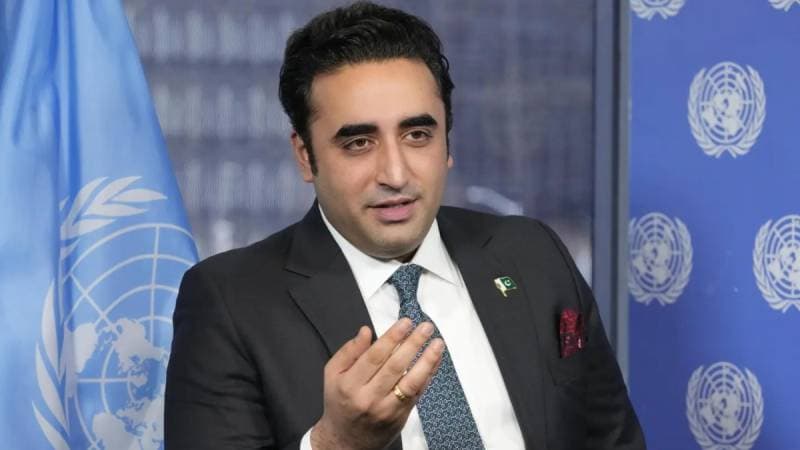
Pakistani opposition leader Bilawal Bhutto Zardari urges diplomacy over military action amid escalating Iran-US tensions — a public peace declaration issued against the backdrop of genuine war risk, echoing the prophetic pattern of voices crying 'peace and safety' while the threat of sudden destruction looms.
Ezekiel 13:10-11
Direct Principle“Because, yes, because they have misled my people, saying, 'Peace,' when there is no peace, and because, when the people build a wall, these prophets smear it with whitewash, say to those who smear it with whitewash that it shall fall! There will be a deluge of rain, and you, O great hailstones, will fall, and a stormy wind break out.”
Why this passage
Ezekiel addressed professional prophets in Jerusalem who assured the people that all was well while the Babylonian threat gathered. The whitewashed wall is a vivid image of a fortification that appears sound but has no structural integrity — the plaster conceals rot, not stone.
The principle that applies is timeless: when political voices offer peace assurances atop unresolved hostility between adversarial powers, the spiritual discerner must test whether the wall is genuinely reinforced or merely re-plastered. The US-Iran standoff involves entrenched ideological, nuclear, and proxy-war dimensions that no single speech resolves.
The prophet Ezekiel condemned those who daubed the wall with untempered mortar, crying 'Peace!' when there was no peace — leaders who soothed the people with hopeful words while the foundations were crumbling beneath them (Ezekiel 13:10). When a prominent political voice declares that 'diplomacy is the only viable path' amid genuine escalatory pressure between nuclear-capable powers, it is worth asking whether the wall being plastered is truly secure, or whether the storm has not yet arrived.
This is not a call to despair, but to discernment. Scripture does not forbid the pursuit of peace — it commands it.
Yet it also warns that declarations of peace issued without righteousness as their foundation are as fragile as whitewash on a cracking wall. The watchful believer prays for genuine reconciliation while holding loosely to the promises of men.
Today's Prayer
Pray that God would grant wisdom to world leaders navigating the Iran-US crisis, and that any peace achieved would be built on justice rather than mere political convenience.
Further Scripture
Additional passages that illuminate this event, each grounded in a distinct interpretive lens.
“They have healed the wound of my people lightly, saying, 'Peace, peace,' when there is no peace.”
Why this passage
Jeremiah's repeated refrain — 'shalom, shalom, v'ein shalom' — targets leaders and prophets who offered superficial remedies for deep national wounds. The word 'lightly' (Hebrew: qalal) means cheaply, without adequate substance — a quick patch over a gaping injury.
This verse is not primarily about geopolitics but about spiritual and moral diagnosis: those who minimize the severity of a crisis in order to avoid difficult reckoning. The pattern applies wherever public figures issue calming statements that do not correspond to the depth of the danger.
How it applies
When the Iran-US tension involves nuclear brinkmanship, proxy conflicts spanning multiple nations, and decades of unresolved hostility, a statement that 'diplomacy is the only viable path' — while true in principle — risks healing the wound lightly if it substitutes reassuring rhetoric for genuine structural engagement.
Jeremiah's warning echoes here: the repetition of 'peace, peace' by political voices can become its own danger when it lulls populations into complacency about a crisis that has not been resolved.
“While people are saying, 'There is peace and security,' then sudden destruction will come upon them as labor pains come upon a pregnant woman, and they will not escape.”
Why this passage
Paul's warning in 1 Thessalonians 5 is explicitly eschatological — set within his teaching on the Day of the Lord. The phrase 'peace and security' (eirēnē kai asphaleia) may echo a Roman imperial slogan, making it even more pointed: the empire's promise of Pax Romana could not forestall divine judgment.
The prophetic pattern Paul describes — public peace-and-safety rhetoric immediately preceding sudden destruction — is not a prediction about any single event, but a recurring sign characteristic of the age before the Lord's return.
How it applies
Bilawal's statement that war is 'not the answer' and diplomacy is 'the only viable path' is precisely the kind of peace-and-security declaration Paul identifies as a marker of the age. The tension between the US and Iran has not been defused by such statements in past cycles of escalation.
This does not mean destruction is imminent from this particular speech — but it does mean that believers are called to watchfulness precisely when political leaders are most confidently announcing that peace is within reach.
Related by Scripture
Other events we've interpreted through the same passage or hermeneutical lens.
Iran Shuts Hormuz As Middle East Peace Talks Enter Dire Straits
Wars & Rumors of WarsShares 1 Thessalonians 5:3Iran US Israel war Live Updates: Trump And Pezeshkian End War Through Digital Signatures, Ships Transit Hormuz
Peace & Security DeclarationsShares 1 Thessalonians 5:3Iran's Deal With Washington Is A Pause, Not A Peace
Wars & Rumors of WarsShares 1 Thessalonians 5:3Trump signs initial deal to end war in Iran and open Strait of Hormuz
Peace & Security DeclarationsShares 1 Thessalonians 5:3Pope Leo says 'thanks be to God' for interim US-Iran peace deal
Peace & Security DeclarationsShares 1 Thessalonians 5:3
Community launching soon
Get the invite by email when the Watchman's Wall opens
Share this article
Source: Web Desk— we link to the original for full context.