Hostilities with Iran 'terminated': Trump tells US Congress
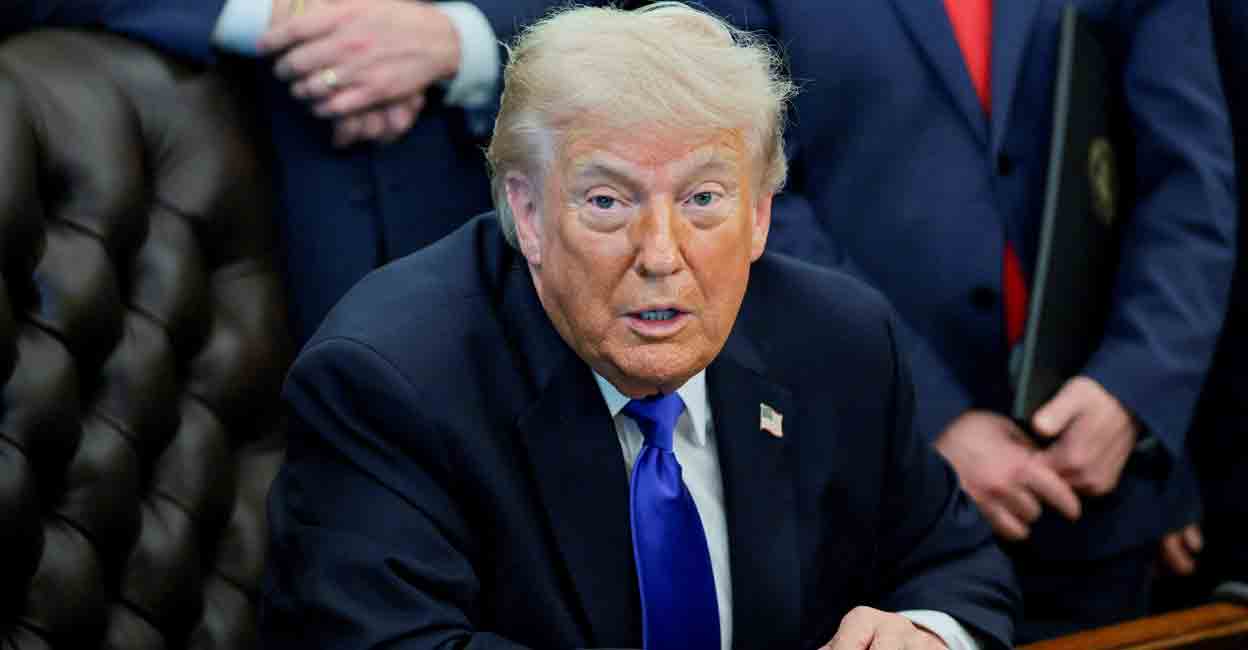
President Trump's declaration that hostilities with Iran are 'terminated' echoes the ancient prophetic warning against leaders who cry 'Peace, peace' when the underlying conflicts — Hezbollah-Israel fighting, Iranian nuclear ambitions, Strait of Hormuz tensions — remain very much alive.
Ezekiel 13:10-11
Direct Principle“Precisely because they have misled my people, saying, 'Peace,' when there is no peace, and because, when the people build a wall, these prophets smear it with whitewash, say to those who smear it with whitewash that it shall fall! There will be a deluge of rain, and you, O great hailstones, will fall, and a stormy wind break out.”
Why this passage
Ezekiel 13 is addressed to those who prophesy 'peace' over Israel when no covenantal or political peace has actually been secured — they cover a structurally unsound wall with cosmetic plaster. The grammatical-historical sense is a divine indictment of leaders and spokesmen who manufacture a sense of security to suit political needs while the underlying danger remains intact.
This principle extends directly and rigorously to any political declaration of peace where the conditions producing hostility — here, Iranian nuclear ambitions, active Hezbollah-Israel fighting, and unresolved sanctions — have not been addressed. The wall is whitewashed; it has not been rebuilt.
The prophet Ezekiel condemned those who plastered a crumbling wall with whitewash, crying 'Peace!' when no peace had been secured — and Scripture records that the wall fell regardless (Ezekiel 13:10-16). When a powerful nation's leader declares hostilities 'terminated' while Hezbollah rockets still fly over Lebanon, Iranian negotiating proposals remain unresolved, and sanctions remain in place, we behold that same whitewashed wall.
Hear, O reader: declarations of peace made by the powerful do not sanctify what God has not settled. The call of the hour is not optimism in diplomacy, but sobriety in prayer — that rulers would seek the Prince of Peace rather than the appearance of peace.
Today's Prayer
Pray that the leaders of nations would not paper over genuine conflict with hollow declarations, but would seek the true peace that comes only from the Lord of hosts.
Further Scripture
Additional passages that illuminate this event, each grounded in a distinct interpretive lens.
“While people are saying, 'There is peace and security,' then sudden destruction will come upon them as labor pains come upon a pregnant woman, and they will not escape.”
Why this passage
Paul's eschatological warning in 1 Thessalonians 5:3 describes a characteristic moment preceding sudden judgment: a public atmosphere of declared peace and security that blinds those who inhabit it. The near horizon addressed the Thessalonians' question about the Day of the Lord; the far horizon applies to any era in which premature peace declarations shape public complacency.
The verse is not merely about personal spiritual laxity — it describes a geopolitical and social atmosphere of announced peace that is followed by sudden disruption. This is the recurring human pattern the apostle is warning against.
How it applies
A presidential declaration to Congress that hostilities with Iran are 'terminated' is precisely the kind of 'peace and security' announcement Paul describes — issued by a governing authority to a public audience, intended to signal the end of danger.
Yet the article itself catalogs the continuing dangers: Hezbollah fighting, unresolved Iranian negotiations, Strait of Hormuz oil concerns, and Iranian cluster-munitions allegations. The declaration of peace and the reality of ongoing hostility exist simultaneously — which is the condition Paul identifies as uniquely dangerous.
“They have healed the wound of my people lightly, saying, 'Peace, peace,' when there is no peace.”
Why this passage
Jeremiah 8:11 (paralleling 6:14) indicts the priests and prophets of Judah who offered superficial healing — treating a mortal wound as though it were a scratch — by repeating the assurance of peace. The Hebrew shalom, shalom (doubled for emphasis) conveys the rhetorical confidence with which peace is proclaimed, contrasted with the absence of its substance.
As a wisdom-level principle recurring across Jeremiah, this verse encapsulates the timeless human tendency of those in authority to declare resolution before resolution has been achieved, because resolution is politically useful.
How it applies
The repetition of 'terminated' as a decisive, declarative word in Trump's congressional communication mirrors the doubled 'Peace, peace' Jeremiah records — confident, public, and politically motivated.
The article makes clear that Iran's negotiating proposal was not accepted, that Hezbollah-Israel fighting continues, and that the regional architecture of conflict is intact. The wound has been dressed lightly.
“The way of peace they do not know, and there is no justice in their paths; they have made their crooked paths; whoever walks in them does not know peace.”
Why this passage
Isaiah 59 is a sustained lament over the moral and covenantal failure that makes genuine peace impossible — the chapter diagnoses why Israel could not find shalom, linking it directly to injustice, deceit, and crooked dealing. The plain sense is that peace is not an achievement of diplomatic language but of righteous order; where crooked paths remain, peace cannot exist regardless of what it is called.
This principle applies beyond Israel to the general condition of nations: a peace declared without addressing the underlying moral and structural disorders is not peace but its name.
How it applies
The US-Iran relationship — marked by decades of sanctions, proxy warfare through Hezbollah, disputed nuclear programs, and regional power competition — represents precisely the 'crooked paths' Isaiah describes.
A presidential declaration does not straighten those paths. Until the underlying disorders are addressed, Isaiah's word stands: 'whoever walks in them does not know peace.'
Related by Scripture
Other events we've interpreted through the same passage or hermeneutical lens.
Iran Shuts Hormuz As Middle East Peace Talks Enter Dire Straits
Wars & Rumors of WarsShares 1 Thessalonians 5:3Iran US Israel war Live Updates: Trump And Pezeshkian End War Through Digital Signatures, Ships Transit Hormuz
Peace & Security DeclarationsShares 1 Thessalonians 5:3Iran's Deal With Washington Is A Pause, Not A Peace
Wars & Rumors of WarsShares 1 Thessalonians 5:3Trump signs initial deal to end war in Iran and open Strait of Hormuz
Peace & Security DeclarationsShares 1 Thessalonians 5:3Pope Leo says 'thanks be to God' for interim US-Iran peace deal
Peace & Security DeclarationsShares 1 Thessalonians 5:3
Community launching soon
Get the invite by email when the Watchman's Wall opens
Share this article
Source: Malayala Manorama— we link to the original for full context.