Israel Kills Eight in Strike on Lebanon; US Rescues Helicopter Crew From Hormuz
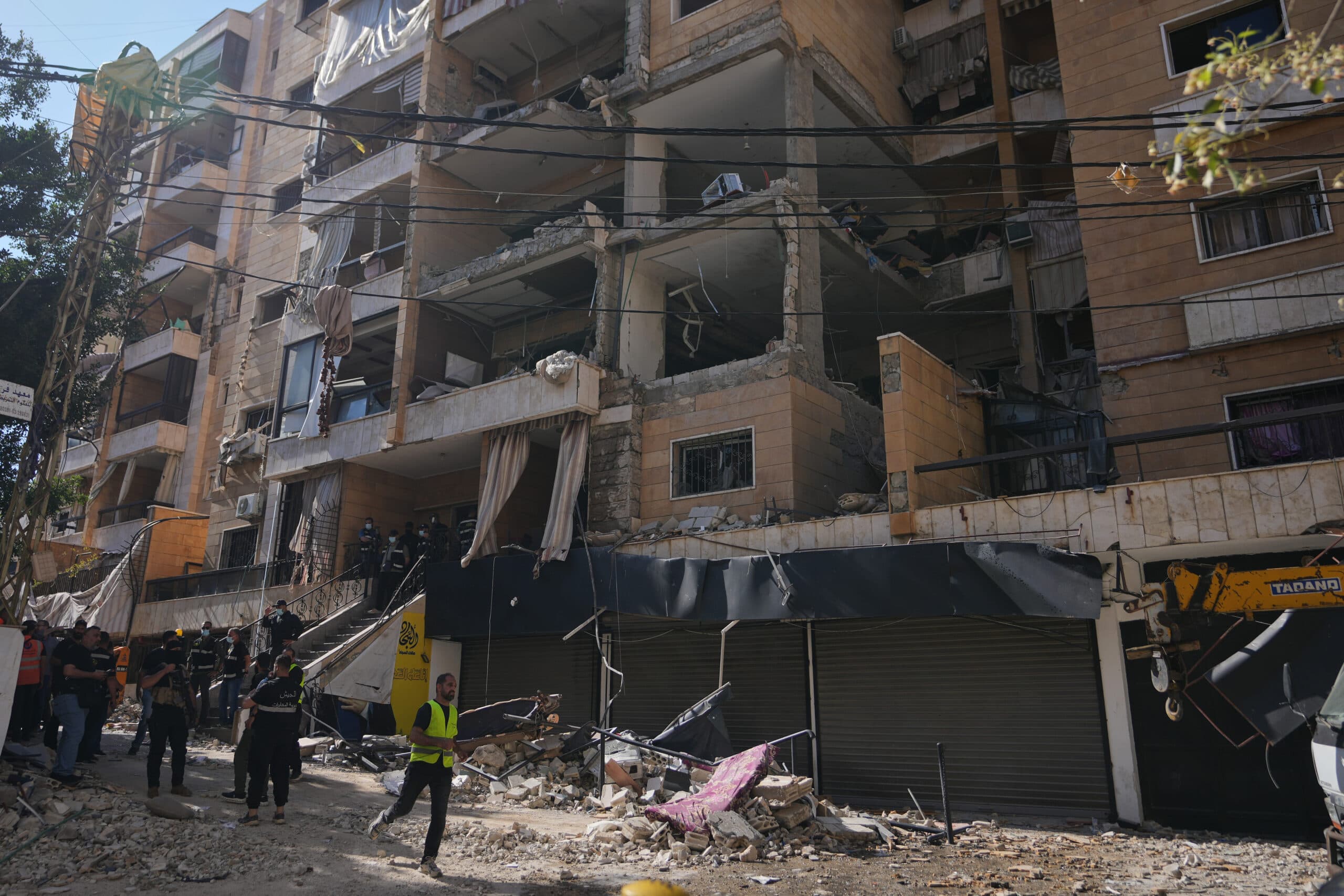
Israel's strike on Tyre, Lebanon, killing eight, and the US rescue of a helicopter crew from the Hormuz Strait reflect escalating regional conflicts that echo biblical prophecies of wars and rumors of wars as signs of the last days.
Joel 3:9-10
Prophetic Fulfillment“Proclaim this among the nations: Consecrate for war; stir up the mighty men. Let all the men of war draw near; let them come up. Beat your plowshares into swords, and your pruning hooks into spears; let the weak say, 'I am a warrior.'”
Why this passage
Joel 3:9-10 is a prophetic summons to the nations for war in the Valley of Jehoshaphat, a passage that describes the gathering of all nations against Jerusalem and Israel in the last days. The original context is a call to prepare for divine judgment on the nations that have scattered God's people.
This oracle envisions a reversal of the peace of Micah 4:3, where nations actively arm themselves for conflict. The specific mention of Tyre (Phoenicia) in Joel 3:4-8 as one of the nations judged for selling Israelites into slavery gives this strike on Tyre a striking prophetic resonance.
Behold, the Lord Jesus warned, "You will hear of wars and rumors of wars. See that you are not alarmed, for this must take place, but the end is not yet" (Matthew 24:6).
The strike on Tyre, an ancient city of Phoenicia, and the military action in the strategic Hormuz Strait remind us that the nations rage and the kingdoms totter.
Yet take heart, O believer. These conflicts are not random chaos but the birth pains foretold by our King.
They call us to watchfulness, not fear, and to prayer for the peace of Jerusalem and the hastening of His return.
Today's Prayer
Pray for the peace of Jerusalem and the peoples of Lebanon and Iran, that the Prince of Peace would restrain the hand of war and draw many to repentance before the final day.
Further Scripture
Additional passages that illuminate this event, each grounded in a distinct interpretive lens.
“Why do the nations rage and the peoples plot in vain? The kings of the earth set themselves, and the rulers take counsel together, against the Lord and against his Anointed, saying,”
Why this passage
Psalm 2 is a royal psalm describing the rebellion of the nations against Yahweh and His Messiah. The 'raging' of the nations is not mere noise but active military and political plotting against God's established order, centered on His anointed king in Jerusalem.
The psalm's original context is the coronation of a Davidic king, but it is applied in the New Testament (Acts 4:25-28) to the opposition against Jesus Christ. It describes a perennial pattern: human rulers unite in vain opposition to God's purposes, a pattern that intensifies in the last days.
How it applies
The strike on Tyre and the US rescue operation in the Hormuz Strait are manifestations of the nations' rage described in Psalm 2. Israel, the land of God's Anointed, is at the center of this conflict, while the Persian Gulf powers (Iran) and Western nations (US) take counsel together in military posturing.
This rage is ultimately 'in vain' — it cannot thwart God's plan to establish His King on Zion. The article's report of peace efforts under strain underscores the futility of human diplomacy apart from submission to the Prince of Peace.
“For the day of the Lord is near upon all the nations. As you have done, it shall be done to you; your deeds shall return on your own head.”
Why this passage
Obadiah's prophecy is directed against Edom for its violence against Israel, but the principle extends to 'all the nations' in the day of the Lord. The book declares that God will judge nations based on how they have treated His people, a theme echoed throughout the prophets.
The 'day of the Lord' is both a near judgment on Edom (5th century BC) and a far eschatological judgment on all nations. The principle of retributive justice — 'as you have done, it shall be done to you' — is a consistent biblical theme.
How it applies
The strike on Tyre, a city historically hostile to Israel, and the broader Middle East war involving Iran (ancient Persia, also judged in the prophets), serve as a warning that the day of the Lord is near upon all nations that oppose God's purposes. The US rescue operation in the Hormuz Strait, while a military action, also places America in the volatile region where prophecy speaks of judgment.
This is not a direct fulfillment of Obadiah but a sobering reminder that every nation's deeds toward Israel and God's people are recorded and will be repaid. The escalating conflict should drive readers to repentance, not partisanship.
Related by Scripture
Other events we've interpreted through the same passage or hermeneutical lens.
IDF strikes kill 30, wound 92 in Lebanon over past day, Health Ministry says
Wars & Rumors of WarsShares Joel 3:9-10News Analysis: The war front that could sink Trump’s negotiations with Iran
Wars & Rumors of WarsShares Joel 3:9-10WH Smith to raise £100m as it warns on profits due to Iran war
Wars & Rumors of WarsShares Joel 3:9-10Middle East crisis live: Iran launches broad retaliatory attacks after US strikes over downed helicopter
Wars & Rumors of WarsShares Psalm 2:1-2Trump launches strikes against Iran after downing of US army helicopter
Wars & Rumors of WarsShares Joel 3:9-10
Community launching soon
Get the invite by email when the Watchman's Wall opens
Share this article
Source: Insurance Journal— we link to the original for full context.