Car bomb kills senior Russian military official near Moscow
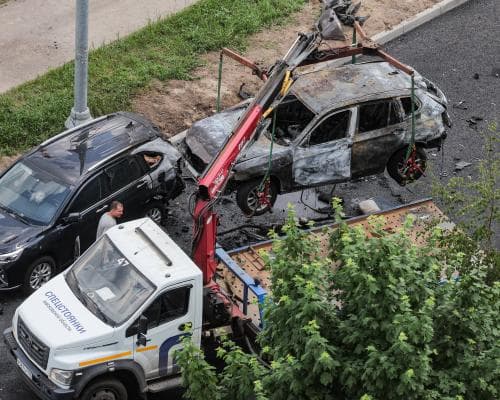
The assassination of a senior Russian military official by car bomb near Moscow signals the intensification of conflict and the spread of violence into the heart of Russia, echoing biblical warnings of wars and rumors of wars as signs of the last days.
Matthew 24:6-7
Prophetic Fulfillment“And you will hear of wars and rumors of wars. See that you are not alarmed, for this must take place, but the end is not yet. For nation will rise against nation, and kingdom against kingdom, and there will be famines and earthquakes in various places.”
Why this passage
In its original context, Jesus spoke these words to His disciples on the Mount of Olives, answering their question about the sign of His coming and the end of the age. The plain sense is that escalating conflicts—wars, rumors of wars, and nation-against-nation strife—would characterize the period leading up to His return.
These are not the final sign themselves but birth pains that mark the age.
This passage is the foundational prophecy for understanding modern warfare as a sign of the last days. The assassination of a senior military official by car bomb near Moscow is a direct example of the kind of targeted, escalating violence Jesus described—a war that spreads from the battlefield into the heart of a nation's capital.
Historical context, theological significance, application today — denomination-neutral, ~1,000-word walk-through.
Behold, the Lord Jesus warned, "You will hear of wars and rumors of wars. See that you are not alarmed, for this must take place, but the end is not yet" (Matthew 24:6).
The car bomb that killed Colonel Damir Davydov near Moscow is not merely a local crime—it is a sign of the times, a ripple from the war in Ukraine reaching into the capital itself.
Take heed, O reader: the pattern of escalating violence, of assassinations and covert strikes, is exactly what Scripture foretold would mark the age before the end. Do not be alarmed, but let these events stir your heart to watchfulness and prayer, for the Lord's return draws nearer with every passing conflict.
Today's Prayer
Pray for peace in the nations and for the salvation of souls caught in the spiral of war, that many would turn to Christ before the final trumpet sounds.
Further Scripture
Additional passages that illuminate this event, each grounded in a distinct interpretive lens.
“Why do the nations rage and the peoples plot in vain? The kings of the earth set themselves, and the rulers take counsel together, against the LORD and against his Anointed, saying,”
Why this passage
Psalm 2 is a royal psalm describing the rebellion of earthly rulers against God and His Messiah. The 'raging of the nations' and 'plotting in vain' is a timeless principle: human governments, in their pride and ambition, conspire and wage war against God's purposes.
The psalm was originally sung at the coronation of Israel's king, but its ultimate referent is the Messiah, Jesus Christ.
The principle applies directly to any act of war or assassination where nations or factions rage against one another, revealing the rebellious heart of humanity under sin. The car bomb killing of a Russian colonel is an act of rage and plotting—a microcosm of the nations' rebellion against God's order.
How it applies
The assassination of Colonel Davydov is a stark example of the nations' rage that Psalm 2 describes. Whether carried out by Ukrainian operatives, internal factions, or other actors, this act of targeted violence reflects the futility of human warfare against the backdrop of God's sovereign rule.
The psalm calls believers to recognize that such conflicts are ultimately rebellion against the Anointed One, and to find refuge in Christ rather than in the shifting fortunes of war.
“Proclaim this among the nations: Consecrate for war; stir up the mighty men. Let all the men of war draw near; let them come up. Beat your plowshares into swords, and your pruning hooks into spears; let the weak say, 'I am a warrior.'”
Why this passage
Joel 3 is a prophecy of the gathering of nations for judgment in the Valley of Jehoshaphat, a picture of the final war against God's people. The call to 'beat plowshares into swords' is a reversal of the peace prophecy in Micah 4:3, indicating a time when nations prepare for war rather than peace.
The original context is the Day of the Lord, when God judges the nations for their treatment of Israel.
While this prophecy finds its ultimate fulfillment in the end-times battle, the pattern of nations arming and escalating conflict is a recurring sign that the age is moving toward that final confrontation. The assassination of a senior military official is part of this pattern of war preparation and escalation.
How it applies
The car bomb killing of Colonel Davydov is a concrete example of the war-footing Joel describes. Whether the conflict in Ukraine or the covert war of assassinations, nations are indeed beating their plowshares into swords.
This event shows that the spirit of the age is one of war, not peace, and it points forward to the ultimate gathering of nations for judgment that Joel prophesied. Believers should see this as a sign that the Day of the Lord is approaching.
Related by Scripture
Other events we've interpreted through the same passage or hermeneutical lens.
News Analysis: The war front that could sink Trump’s negotiations with Iran
Wars & Rumors of WarsShares Joel 3:9-10WH Smith to raise £100m as it warns on profits due to Iran war
Wars & Rumors of WarsShares Joel 3:9-10Middle East crisis live: Iran launches broad retaliatory attacks after US strikes over downed helicopter
Wars & Rumors of WarsShares Psalm 2:1-2Trump launches strikes against Iran after downing of US army helicopter
Wars & Rumors of WarsShares Joel 3:9-10Iran downs US Apache helicopter
Wars & Rumors of WarsShares Joel 3:9-10
Community launching soon
Get the invite by email when the Watchman's Wall opens
Share this article
Source: The Guardian— we link to the original for full context.