Trump welcomes King Charles: 'Wounds of war healed into the most cherished friendship'
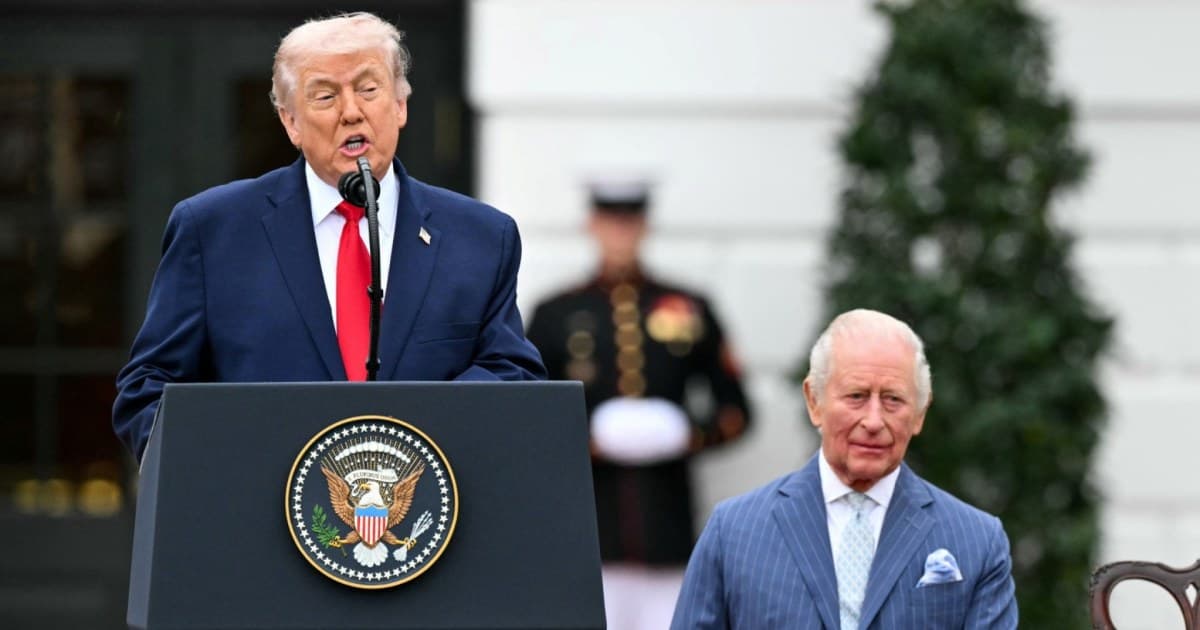
World leaders invoke the ceremonial language of healed wounds and cherished friendship — the polished vocabulary of peace and security that Scripture warns can veil the absence of true shalom when proclaimed by earthly powers.
Jeremiah 8:11
Direct Principle“They have healed the wound of my people lightly, saying, 'Peace, peace,' when there is no peace.”
Why this passage
Jeremiah's oracle against Jerusalem's priests and prophets identifies the spiritual malpractice of offering a light, surface-level healing to a wound that runs deep. The Hebrew shalom repeated — 'shalom, shalom' — carries the ironic weight of insistence: the louder the proclamation, the more suspect the diagnosis.
The plain grammatical sense is that confident, ceremonially repeated declarations of peace are not evidence of peace but can themselves be symptoms of the disease — an unwillingness to reckon with the depth of the fracture.
Ezekiel wrote of prophets who 'daubed' the wall of false peace 'with untempered mortar,' crying peace when no peace had been established on any lasting foundation (Ezekiel 13:10). When heads of state gather in gilded ceremony to proclaim that wounds are healed and friendship is cherished, the watchman does not dismiss the moment — but he does lift the trumpet.
The peace Christ gives is not as the world gives (John 14:27). Ceremonial declarations between empires have always been spoken with confidence, and have always, in time, been overtaken by the very conflicts they claimed to have buried.
Let the believer receive this pageantry with sober eyes, grateful for diplomacy's real goods, yet anchored to the One whose covenant of peace shall not be removed.
Today's Prayer
Pray that believers would hold with open hands the peace that nations declare, trusting not in the rhetoric of statecraft but in the Prince of Peace whose shalom surpasses all earthly summitry.
Further Scripture
Additional passages that illuminate this event, each grounded in a distinct interpretive lens.
“While people are saying, 'There is peace and security,' then sudden destruction will come upon them as labor pains come upon a pregnant woman, and they will not escape.”
Why this passage
Paul's eschatological warning in 1 Thessalonians 5 concerns the Day of the Lord arriving precisely in the moment when the world's confidence in its own peace architecture is at its highest. The phrase 'peace and security' (eirēnē kai asphaleia) maps directly onto the language of modern diplomatic ceremony.
The near horizon was the Roman Pax and the Jewish complacency before 70 AD; the far horizon is the last days' global confidence before sudden judgment. The pattern — ceremonial peace declarations followed by unexpected upheaval — recurs through history as a structural warning, not merely a once-for-all prediction.
How it applies
A state visit between the American president and the British monarch, framed in the highest rhetoric of healed wounds and enduring friendship, is precisely the kind of public 'peace and security' declaration Paul's readers were to receive with watchfulness rather than ease.
The believer is not called to cynicism — diplomacy is a legitimate good — but to the sober vigilance of those who know what hour it is (Romans 13:11), undeceived by the pageantry of earthly powers proclaiming what only the Prince of Peace can deliver.
“Precisely because they have misled my people, saying, 'Peace,' when there is no peace, and because, when the people build a wall, these prophets plaster it with whitewash,”
Why this passage
Ezekiel addressed false prophets in Jerusalem who soothed the people with assurances of peace while Babylon's armies gathered. The grammatical-historical sense condemns the practice of papering over structural instability — whether moral, political, or military — with the language of peace and security.
The principle is not confined to the office of prophet; it describes any public declaration of peace that names what does not yet exist in substance. The whitewashed wall looks solid and beautiful until the storm reveals that the mortar was not fit for the load.
How it applies
When President Trump and King Charles exchange the ceremonial language of 'healed wounds' and 'cherished friendship,' the words are not necessarily false — but they are words spoken over a world of active wars, fractured alliances, and unresolved tensions.
Ezekiel's warning cuts through the ceremony: the beauty of the plaster does not testify to the strength of the wall. The watchman notes the declaration and then looks, as Ezekiel commanded, at what lies beneath it.
“Thus says the LORD concerning the prophets who lead my people astray, who cry 'Peace' when they have something to eat, but declare war against him who puts nothing into their mouths.”
Why this passage
Micah exposes the conditional nature of peace rhetoric among those who hold power: peace is proclaimed when interests align, and conflict erupts when they do not. The pattern is not unique to ancient Israel's prophets but describes the structural logic of statecraft across every era.
The wisdom principle is that declarations of friendship between nations are routinely calibrated to the interests of those who declare them — a truth that does not make diplomacy evil, but does make it something other than the peace Scripture promises.
How it applies
The US-UK 'special relationship' has always been celebrated most loudly when both parties find it strategically useful. Micah's lens does not condemn the relationship but invites the discerning reader to weigh what interests underlie the ceremony — and to refuse the naïve equation of political friendship with genuine shalom.
The Christian brings to every diplomatic stage the question Micah's oracle poses: whose interests are being served by this declaration, and what happens when the interests diverge?
Related by Scripture
Other events we've interpreted through the same passage or hermeneutical lens.
Iran Shuts Hormuz As Middle East Peace Talks Enter Dire Straits
Wars & Rumors of WarsShares 1 Thessalonians 5:3Iran US Israel war Live Updates: Trump And Pezeshkian End War Through Digital Signatures, Ships Transit Hormuz
Peace & Security DeclarationsShares 1 Thessalonians 5:3Iran's Deal With Washington Is A Pause, Not A Peace
Wars & Rumors of WarsShares 1 Thessalonians 5:3Trump signs initial deal to end war in Iran and open Strait of Hormuz
Peace & Security DeclarationsShares 1 Thessalonians 5:3Pope Leo says 'thanks be to God' for interim US-Iran peace deal
Peace & Security DeclarationsShares 1 Thessalonians 5:3
Community launching soon
Get the invite by email when the Watchman's Wall opens
Share this article
Source: nbcnews— we link to the original for full context.