Qatar warns Iran it will not be used as 'political punching bag'
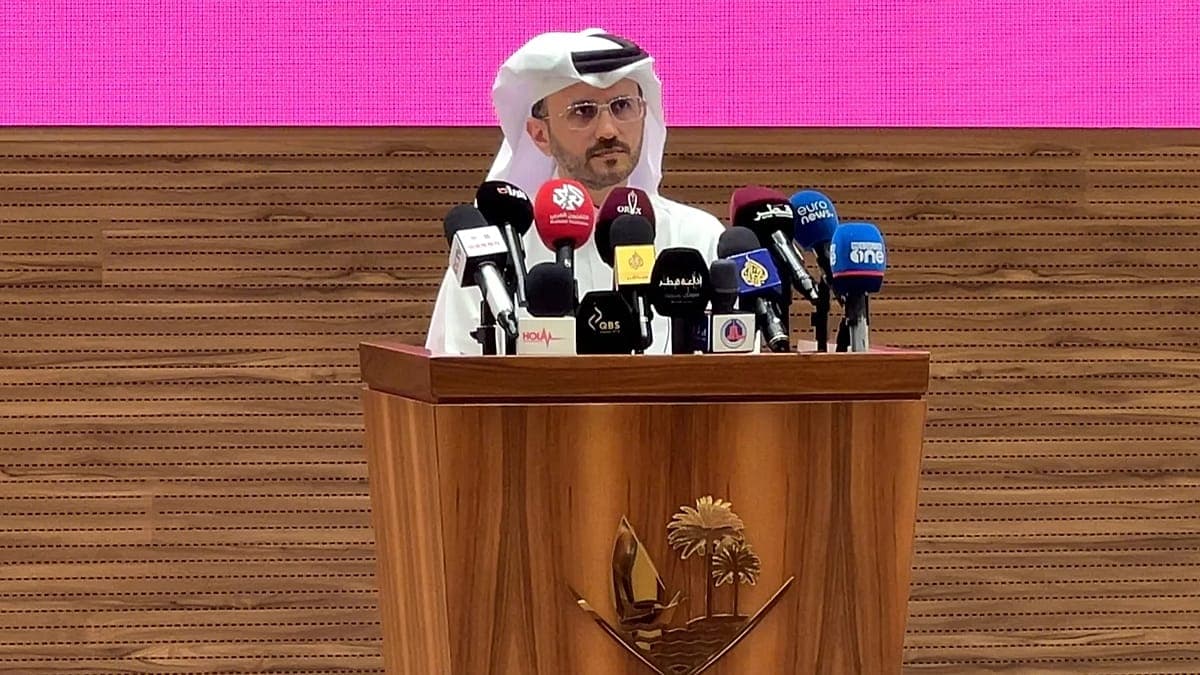
Qatar's public warning to Iran — demanding a 'comprehensive deal' while refusing to serve as a diplomatic scapegoat — reveals how shallow the calls for Gulf stability truly are, a whitewashed peace built on competing interests rather than genuine resolution.
Jeremiah 8:11
Direct Principle“They have healed the wound of my people lightly, saying, 'Peace, peace,' when there is no peace.”
Why this passage
Jeremiah's indictment in chapter 8 targets priests and prophets who offered superficial remedies — a light healing — to deep national wounds, assuring the people all was well when catastrophe was imminent. The phrase 'healed lightly' (Hebrew: qalal, to treat as trivial) captures the very nature of diplomatic minimization.
The principle extends naturally to any political or diplomatic process that pronounces stability without addressing the structural causes of conflict — treating a mortal wound with a bandage.
The prophet Ezekiel thundered against those who 'daubed it with whitewash,' erecting a wall of false peace that cannot stand when the storm arrives. Qatar's plea for a 'comprehensive deal' in the Strait of Hormuz is precisely such a wall — nations speaking peace while each guards its own survival, and the plaster is already cracking.
Hear, O reader: the instability gathering in the Persian Gulf is not merely a geopolitical puzzle. It is a reminder that no treaty of man can secure what only the Prince of Peace ordains.
Take heed to pray, and take heed to watch.
Today's Prayer
Pray that the fragile diplomacy of the Gulf would expose the insufficiency of human peace-making and turn the hearts of leaders and peoples toward the only lasting covenant of peace found in Christ.
Further Scripture
Additional passages that illuminate this event, each grounded in a distinct interpretive lens.
“Because they have misled my people, saying, 'Peace,' when there is no peace, and because, when the people build a wall, these prophets smear it with whitewash, say to those who smear it with whitewash that it shall fall! There will be a deluge of rain, and you, O great hailstones, will fall, and a stormy wind break out.”
Why this passage
Ezekiel 13 confronts false prophets in Israel who proclaimed peace and security while the Babylonian threat gathered — daubing a structurally unsound wall with cosmetic whitewash. The grammatical-historical sense is plain: cheap declarations of 'peace' and 'security' applied over genuine instability are an offense to God and a danger to the people who trust them.
This principle is not bounded to ancient Israel; it describes a recurring pattern in human governance wherever leaders speak 'peace' to avoid the harder reckoning. The principle directly illuminates any moment when diplomatic language is deployed as plaster over a crumbling wall.
How it applies
Qatar calls for a 'comprehensive deal' to secure the Gulf even as it simultaneously warns Iran not to use it as a 'political punching bag' — the very language of a nation standing between hostile powers with no real shelter. The 'comprehensive deal' is whitewash: a verbal wall smeared over profound, unresolved tensions in the Strait of Hormuz.
When the storm of genuine confrontation arrives — whether through miscalculation, military action, or economic collapse — such diplomatic plaster will not hold.
“While people are saying, 'There is peace and security,' then sudden destruction will come upon them as labor pains come upon a pregnant woman, and they will not escape.”
Why this passage
Paul's warning in 1 Thessalonians 5:3 follows his instruction about the Day of the Lord arriving unexpectedly — the very context is eschatological vigilance. The specific pattern Paul describes is not mere cynicism about diplomacy; it is a prophetic sign-pattern: the very moment leaders converge on language of 'peace and security,' sudden destruction intervenes.
The original hearers understood this as a call to sobriety and watchfulness precisely because false peace-declarations would characterize the age preceding Christ's return.
How it applies
Qatar, Iran, and European partners are all now using the language of security frameworks, comprehensive deals, and crisis management in the Strait of Hormuz — a body of water through which a significant portion of the world's energy supply flows. The convergence of 'peace and security' language around one of the world's most volatile chokepoints is a precise echo of Paul's warning.
The watchman does not say this moment is the fulfillment — but he does say: the pattern is present, and sobriety is warranted.
“Why do the nations rage and the peoples plot in vain? The kings of the earth set themselves, and the rulers take counsel together, against the LORD and against his Anointed.”
Why this passage
Psalm 2 opens with a question that has echoed through every century of human geopolitics: why do the nations scheme and maneuver in ultimately futile counsel? The psalm's scope is universal — kings and rulers of the earth — and its verdict is plain: their plotting is vain (Hebrew: riq, empty, worthless) not because they are weak but because they operate outside of God's sovereign decree.
This is wisdom-application in the fullest sense: the Psalmist identifies a recurring, observable pattern in human affairs that Scripture pronounces upon with finality.
How it applies
The spectacle of Qatar warning Iran, applauding European mediators, and calling for 'comprehensive deals' is precisely the counsel of earthly rulers taking counsel together — each acting in self-interest, each speaking the language of security, none invoking the LORD of nations.
The reader who knows Psalm 2 is neither panicked nor naive: the nations will rage, the schemes will multiply, and the One who sits in the heavens will have the last word.
Related by Scripture
Other events we've interpreted through the same passage or hermeneutical lens.
Iran war day 114: US, Iranian delegations in Switzerland for key talks
Wars & Rumors of WarsShares Psalm 2:1-2Iran Shuts Hormuz As Middle East Peace Talks Enter Dire Straits
Wars & Rumors of WarsShares 1 Thessalonians 5:3What lessons will Iran’s new leadership draw from the 110-day war?
Wars & Rumors of WarsShares Psalm 2:1-2US, Iran envoys head for talks, Israeli strikes continue after ceasefire
Wars & Rumors of WarsShares Psalm 2:1-2'Bibi Is A Warrior PM': Trump Backs Netanyahu Despite US Intel That He May 'Undermine' Iran Deal
Wars & Rumors of WarsShares Psalm 2:1-2
Community launching soon
Get the invite by email when the Watchman's Wall opens
Share this article
Source: Mohamed Elashi; Aadel Haleem— we link to the original for full context.