Trump says the US will extend its ceasefire with Iran at Pakistan’s request
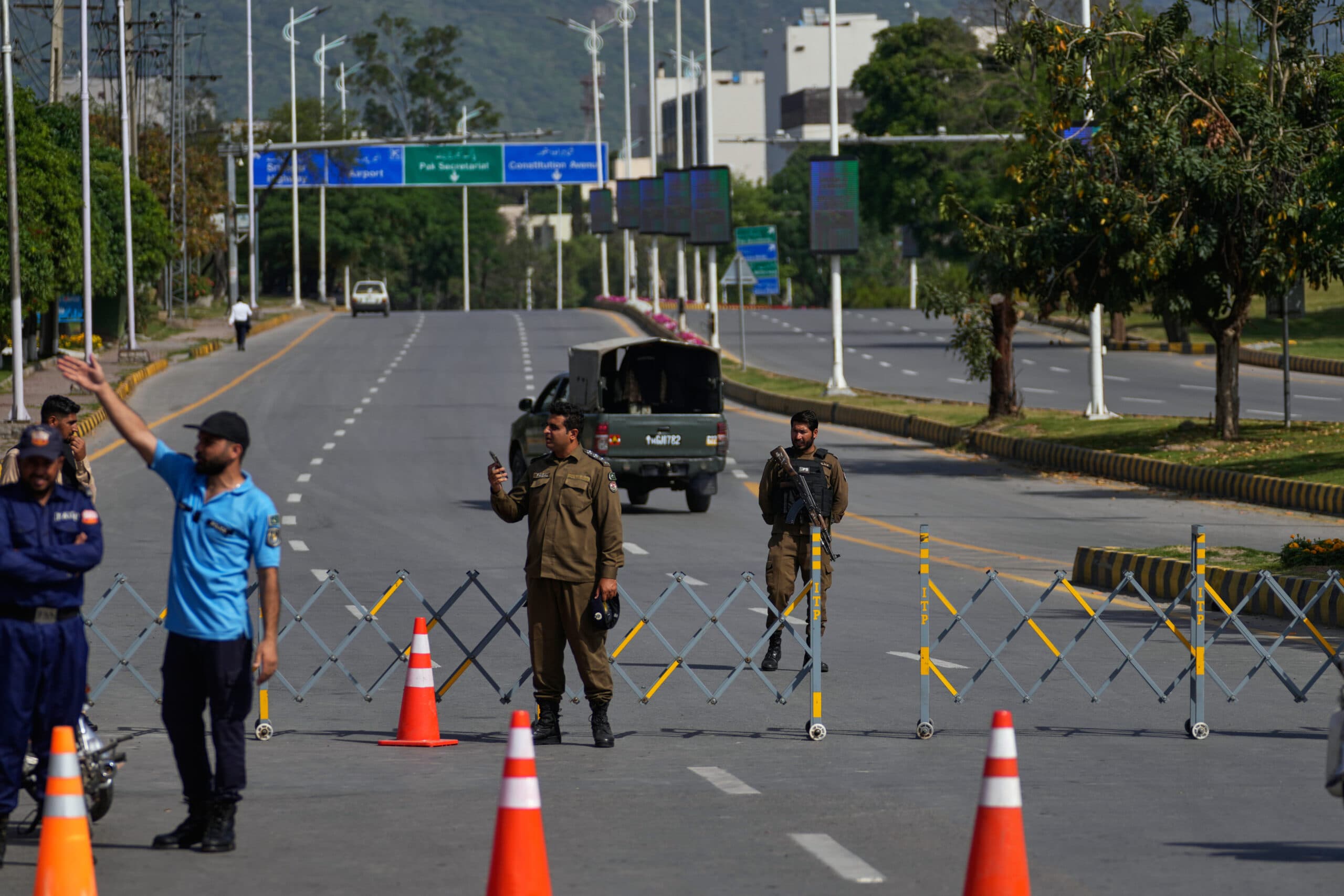
The Trump administration declared a ceasefire extension with Iran brokered by Pakistan, yet Iran has not formally accepted and both sides openly acknowledge readiness to resume hostilities — a hollow peace declaration that Scripture repeatedly identifies as a sign of spiritual and geopolitical danger.
Jeremiah 8:11
Direct Principle“They have healed the wound of my people lightly, saying, 'Peace, peace,' when there is no peace.”
Why this passage
Jeremiah 8:11 is the condensed prophetic verdict on the political and religious leadership of Judah as Babylon approached. The doubled cry — 'shalom, shalom' — is rhetorical: the repetition mimics the confident, reassuring tone of officialdom while Jeremiah insists the diagnosis is fatally superficial.
'Healing lightly' means treating a life-threatening wound with a bandage rather than surgery, projecting wellness when the patient is critical. This is a timeless principle about the moral failure of leaders who prioritize the appearance of resolution over honest reckoning with danger.
The prophet Ezekiel warned of leaders who 'build a wall, and others smear it with whitewash' — constructing a facade of stability over a structure that cannot hold. This ceasefire between the US and Iran has precisely that quality: one party declares peace, the other has not accepted it, and both retain their weapons and their will to fight.
The whitewash of diplomatic language does not change the underlying reality of enmity. For the believer, this is a sober reminder that genuine peace between nations — like genuine peace in the human heart — can only be founded on truth, not managed optics.
When world leaders paper over dangerous rifts with press releases, our trust must remain anchored not in diplomatic frameworks but in the Prince of Peace who alone makes lasting reconciliation possible.
Today's Prayer
Pray that leaders in Washington, Tehran, and Islamabad would pursue honest diplomacy rather than performative declarations, and that the Church would not be lulled into complacency by hollow assurances of peace in a region central to biblical prophecy.
Further Scripture
Additional passages that illuminate this event, each grounded in a distinct interpretive lens.
“Exactly because they have misled my people, saying, 'Peace,' when there is no peace, and because, when the people build a wall, these prophets smear it with whitewash, say to those who smear it with whitewash that it shall fall! There will be a deluge of rain, and you, O great hailstones, will fall, and a stormy wind break out.”
Why this passage
Ezekiel 13 is directed against false prophets in Jerusalem who proclaimed peace and security to a people on the verge of Babylonian destruction. The precise Hebrew charge is that they said 'shalom' where no shalom existed, and then covered the resulting false confidence with a thin layer of credibility — the whitewash metaphor.
The principle Ezekiel establishes is not limited to cultic prophecy; it is a moral and spiritual judgment against any leadership class that substitutes the appearance of stability for genuine reconciliation, because doing so leaves the people exposed to the very catastrophe the facade was meant to conceal.
How it applies
The Trump administration's announcement of a ceasefire extension — made unilaterally, with Iran neither formally accepting nor standing down — is precisely the whitewashed wall Ezekiel describes. The 'wall' of diplomacy has been erected and publicly smeared with the language of de-escalation, but the underlying structure is admittedly unstable: officials on both sides confirm they remain ready to resume strikes.
The rain, hailstones, and stormy wind of Ezekiel's metaphor represent the real-world consequences that follow when leaders mistake managed optics for actual peace.
“While people are saying, 'There is peace and security,' then sudden destruction will come upon them as labor pains come upon a pregnant woman, and they will not escape.”
Why this passage
Paul's warning in 1 Thessalonians 5:3 is eschatological and prophetic, set within his teaching on the Day of the Lord. The phrase 'peace and security' — eirēnē kai asphaleia — was also a Roman imperial slogan used to project the Pax Romana.
Paul subverts it: the very moment when official voices declare the world stable and ordered is the moment of greatest vulnerability to sudden, irreversible collapse. The labor-pain metaphor conveys both the inevitability and the swiftness of what follows — there is no stopping it once it begins.
This is not merely a warning about false prophets but about the systemic self-deception of governing powers.
How it applies
Iran's nuclear program remains operational. Proxy forces aligned with Tehran continue operations across the region.
Israel stands in a state of unresolved existential tension with Iran. Into this environment, official US communication announces 'peace and security' — a ceasefire extension — while the structural conditions for sudden escalation remain fully intact.
Paul's warning is that this precise posture, confident declarations of stability issued over unresolved danger, is the spiritual and geopolitical condition that precedes the most catastrophic reversals.
“Thus says the LORD concerning the prophets who lead my people astray, who cry 'Peace' when they have something to eat, but declare war against him who puts nothing into their mouths.”
Why this passage
Micah 3:5 exposes a specific corruption: leaders who calibrate their peace declarations not to actual conditions but to their own interests and alliances. When a party serves their agenda, they cry peace; when that party crosses them, they declare war.
The condemnation is of instrumentalized diplomacy — peace language used as a tool of leverage rather than an honest description of reality. Micah's target is the prophetic-political leadership class of Israel, but the moral principle is structural and recurrent in human governance.
How it applies
Pakistan's brokerage of this ceasefire extension reflects a complex web of interests — Pakistan has its own strategic relationship with both the United States and Iran, and the announcement benefits Pakistani diplomatic standing regardless of whether Iran substantively agrees. The US declaration of peace extension, made while Iran has not confirmed acceptance, fits Micah's portrait of peace being cried in a context shaped by competing interests rather than mutual resolution.
The ceasefire language serves the moment; the underlying hostility remains ready to be weaponized.
Related by Scripture
Other events we've interpreted through the same passage or hermeneutical lens.
Iran Shuts Hormuz As Middle East Peace Talks Enter Dire Straits
Wars & Rumors of WarsShares 1 Thessalonians 5:3Iran US Israel war Live Updates: Trump And Pezeshkian End War Through Digital Signatures, Ships Transit Hormuz
Peace & Security DeclarationsShares 1 Thessalonians 5:3Iran's Deal With Washington Is A Pause, Not A Peace
Wars & Rumors of WarsShares 1 Thessalonians 5:3Trump signs initial deal to end war in Iran and open Strait of Hormuz
Peace & Security DeclarationsShares 1 Thessalonians 5:3Pope Leo says 'thanks be to God' for interim US-Iran peace deal
Peace & Security DeclarationsShares 1 Thessalonians 5:3
Community launching soon
Get the invite by email when the Watchman's Wall opens
Share this article
Source: Religion News Service— we link to the original for full context.