Pakistan Minister, U.S. envoy discuss efforts for 2nd round of U.S.-Iran talks
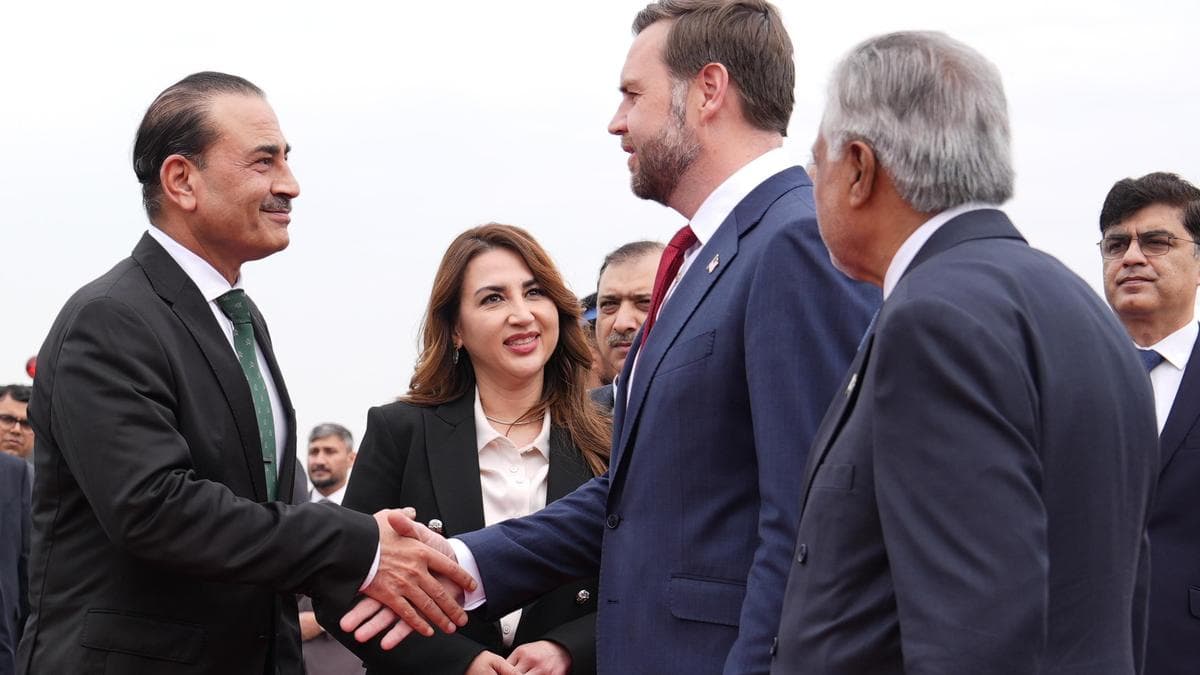
Pakistan is actively mediating a second round of U.S.-Iran nuclear negotiations, creating the diplomatic appearance of progress toward peace while the underlying Iranian nuclear threat and deep geopolitical enmities remain structurally unresolved — a pattern Scripture repeatedly identifies as false peace.
Jeremiah 8:11
Direct Principle“They have healed the wound of my people lightly, saying, 'Peace, peace,' when there is no peace.”
Why this passage
Jeremiah's repeated refrain — 'shalom, shalom, w'ein shalom' — captures a pattern embedded in how human institutions respond to existential danger: by minimizing the severity of the wound and declaring healing prematurely. The word 'lightly' (Hebrew: qalal) carries the sense of treating something weighty as trivial.
The original context was Jerusalem's religious and political establishment assuring the people that Babylon posed no real threat. The principle is durable: diplomatic frameworks that declare progress without structural change treat a deep wound lightly.
Ezekiel warned of prophets who 'have misled my people, saying Peace, when there is no peace, and because, when the people build a wall, these prophets smear it with whitewash.' The image is precise: a structurally compromised wall — a nation still pursuing nuclear weapons, still funding regional proxies, still calling for the destruction of Israel — plastered over with the appearance of diplomatic stability. Pakistan's brokered talks may produce another round of negotiations, but negotiations are not the same as peace.
They are, at their worst, the whitewash. The Christian is not called to cynicism, but to clear-eyed discernment: we recognize that lasting peace between nations will not be achieved through frameworks and envoy meetings, but only through the Prince of Peace who will one day rule from Jerusalem.
Today's Prayer
Pray that world leaders and negotiators would not mistake diplomatic process for genuine security, and that believers would remain watchful and grounded in the only peace that surpasses understanding — even as nuclear tensions simmer beneath the surface of these talks.
Further Scripture
Additional passages that illuminate this event, each grounded in a distinct interpretive lens.
“Exactly because they have misled my people, saying, 'Peace,' when there is no peace, and because, when the people build a wall, these prophets smear it with whitewash, say to those who smear it with whitewash that it shall fall! There will be a deluge of rain, and you, O great hailstones, will fall, and a stormy wind break out.”
Why this passage
Ezekiel delivered this oracle against the false prophets of Jerusalem who proclaimed peace to a people on the brink of Babylonian destruction. The governing principle is not limited to prophets in the technical sense but describes any leadership class — political, religious, or diplomatic — that declares stability where structural danger remains and suppresses honest assessment of threat.
The 'whitewash' metaphor is Ezekiel's own: a cosmetic covering applied to a wall that is already failing at its foundation. The grammatical-historical sense requires only that real danger exists beneath the surface of proclaimed peace — precisely the condition of Iranian nuclear talks.
How it applies
Iran has not dismantled its nuclear infrastructure, has not ceased enriching uranium toward weapons-grade levels, and has not renounced its declared enmity toward Israel and the United States. Pakistan's brokering of a second round of talks — however well-intentioned — applies diplomatic whitewash to a wall whose foundational cracks remain.
The deluge Ezekiel describes is the consequence of mistaking process for resolution, and history in the Middle East has repeatedly confirmed that pattern.
“While people are saying, 'There is peace and security,' then sudden destruction will come upon them as labor pains come upon a pregnant woman, and they will not escape.”
Why this passage
Paul's warning in 1 Thessalonians 5 is set within an explicit eschatological context — the Day of the Lord — and uses the phrase 'peace and security' (eirēnē kai asphaleia) as a technical marker for the false confidence that precedes sudden catastrophe. The Greek asphaleia carries the connotation of stability and safety, the precise language of arms-control diplomacy.
Paul is not describing ordinary optimism but an institutional, collective declaration of safety that blinds people to imminent danger. The 'labor pains' metaphor stresses that the coming destruction is both inevitable and irreversible once begun.
How it applies
Each round of U.S.-Iran nuclear talks is accompanied by statements from envoys and ministers about 'constructive dialogue' and 'diplomatic progress' — precisely the vocabulary of peace and security. If Iran achieves nuclear capability behind the cover of ongoing negotiations, the 'sudden destruction' Paul describes — whether military conflict, nuclear miscalculation, or regional war — arrives at the moment the world believed the crisis was being managed.
This passage does not predict when that moment comes; it describes the spiritual and institutional pattern that precedes it.
“Persia, Cush, and Put are with them, all of them with shield and helmet;”
Why this passage
Ezekiel 38 describes a coalition of nations — led by Gog of the land of Magog — that will move against the land of Israel in the latter days. Persia (ancient Elam/Persia, corresponding geographically to modern Iran) is explicitly named as a member of this coalition.
The plain grammatical-historical sense identifies a northern and eastern coalition assembled against Israel at a time when Israel dwells in perceived safety. Scholars debate the identifications of Gog and Magog, but the inclusion of Persia is textually unambiguous.
The passage requires that Iran exists as a hostile, armed, and coalitioned power in the end-time period.
How it applies
Iran's ongoing nuclear program, its alliance structures with Russia and China, and its consistent hostility toward Israel fit the general profile of the Ezekiel 38 coalition. Diplomatic talks that fail to fundamentally alter Iran's trajectory — including its weapons program and its regional military posture — leave intact the very conditions Ezekiel 38 describes.
Pakistan's mediation may delay confrontation; it does not dissolve the coalition Ezekiel foresaw. American Christians watching these negotiations should hold them against this larger prophetic backdrop with sober, not sensational, discernment.
Related by Scripture
Other events we've interpreted through the same passage or hermeneutical lens.
Iran Shuts Hormuz As Middle East Peace Talks Enter Dire Straits
Wars & Rumors of WarsShares 1 Thessalonians 5:3Iran US Israel war Live Updates: Trump And Pezeshkian End War Through Digital Signatures, Ships Transit Hormuz
Peace & Security DeclarationsShares 1 Thessalonians 5:3Iran's Deal With Washington Is A Pause, Not A Peace
Wars & Rumors of WarsShares 1 Thessalonians 5:3Trump signs initial deal to end war in Iran and open Strait of Hormuz
Peace & Security DeclarationsShares 1 Thessalonians 5:3Pope Leo says 'thanks be to God' for interim US-Iran peace deal
Peace & Security DeclarationsShares 1 Thessalonians 5:3
Community launching soon
Get the invite by email when the Watchman's Wall opens
Share this article
Source: The Hindu— we link to the original for full context.