Muslims begin the annual Hajj in sweltering heat against a backdrop of war concerns
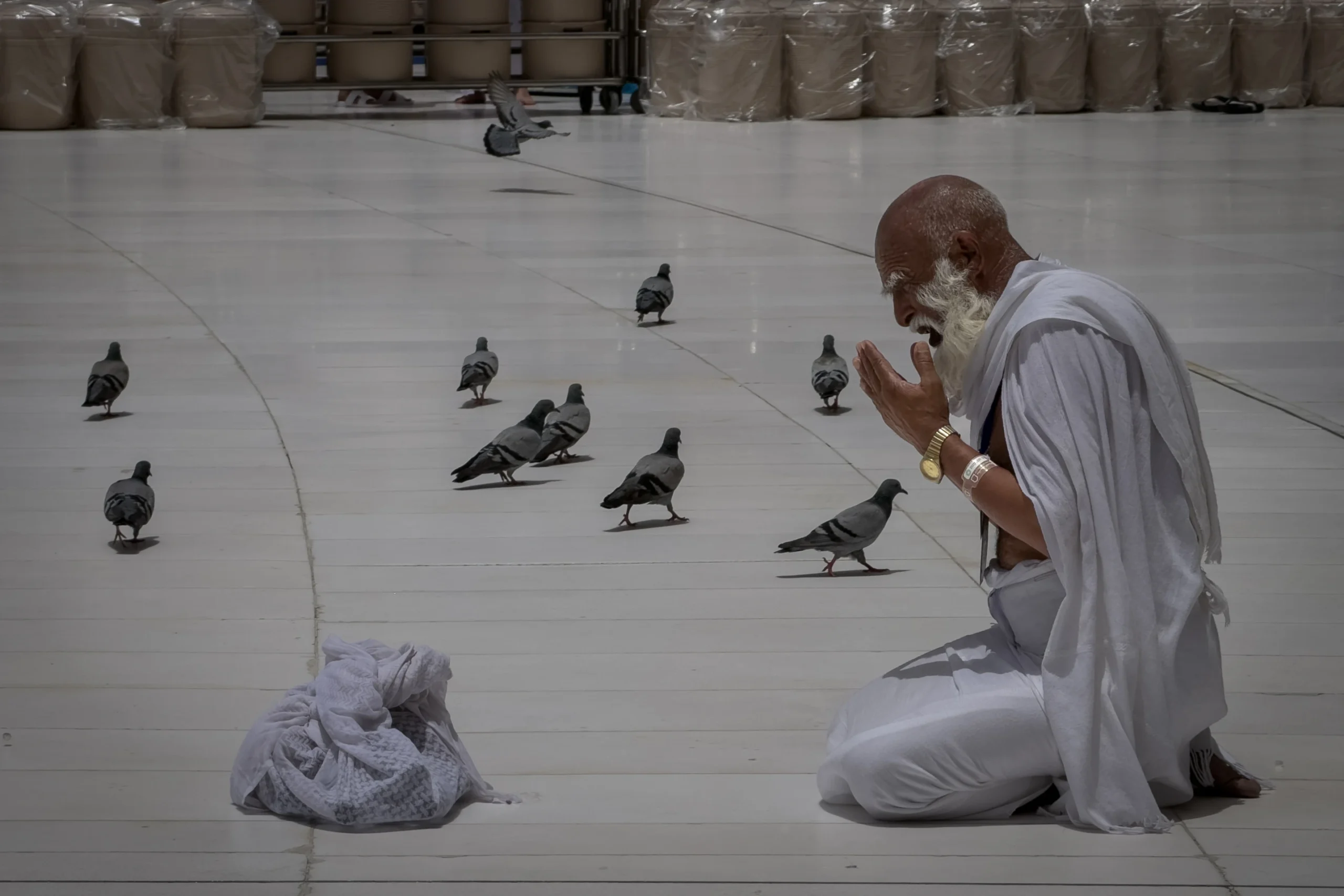
The annual Hajj pilgrimage proceeds under scorching heat and the shadow of a fragile ceasefire in the Iran war, illustrating how even sacred gatherings occur amid the 'wars and rumors of wars' that Scripture warns will mark the last days.
Matthew 24:6-7
Prophetic Fulfillment“And you will hear of wars and rumors of wars. See that you are not alarmed, for this must take place, but the end is not yet. For nation will rise against nation, and kingdom against kingdom, and there will be famines and earthquakes in various places.”
Why this passage
Jesus, in the Olivet Discourse, describes the 'beginning of birth pains' that precede His return. Wars and rumors of wars are not the end themselves but the necessary prelude, a pattern that will intensify until the end.
The phrase 'nation will rise against nation' indicates widespread, not isolated, conflict.
This passage directly applies to the article's context: the Hajj takes place against 'the backdrop of a tenuous ceasefire in the Iran war and related regional tensions and uncertainty.' The 'rumors of wars' are the very 'regional tensions' that hang over the pilgrimage, fulfilling Christ's warning that such things 'must take place.'
Historical context, theological significance, application today — denomination-neutral, ~1,000-word walk-through.
Behold, the nations gather for their rites while the sword yet hangs overhead. As the prophet Joel declared, 'Proclaim this among the nations: Prepare war; stir up the mighty men.
Let all the men of war draw near; let them come up' (Joel 3:9).
Even Mecca, the heart of Islam, cannot escape the rumble of conflict. The faithful march in heat and fear, a living parable that no earthly peace is secure until the Prince of Peace returns.
Today's Prayer
Pray that amidst the world's ceaseless conflicts and false peaces, many hearts would turn to the true and lasting peace found only in Jesus Christ.
Further Scripture
Additional passages that illuminate this event, each grounded in a distinct interpretive lens.
“Proclaim this among the nations: Consecrate for war; stir up the mighty men. Let all the men of war draw near; let them come up. Beat your plowshares into swords, and your pruning hooks into spears; let the weak say, 'I am a warrior.'”
Why this passage
Joel 3:9-10 is a summons to the nations for the final judgment in the Valley of Jehoshaphat, where God gathers all peoples to decide their fate. The imagery of turning agricultural tools into weapons reverses the messianic peace of Micah 4:3, signaling a time when war preparations dominate.
This passage speaks to the very pattern seen in the article: nations are stirred up, tensions simmer, and even a religious gathering like Hajj occurs under the shadow of war. The 'tenuous ceasefire' and 'regional tensions' reflect the prophetic call to 'consecrate for war'—a world that cannot escape its own martial readiness.
How it applies
The Hajj, meant as a pilgrimage of peace and submission, takes place against a backdrop of war concerns and a fragile ceasefire in the Iran conflict. This mirrors Joel's prophecy that in the last days, the nations will be consumed with war preparations, and even sacred assemblies will be held in the shadow of conflict.
Believers should see this as a sign that the world's peace is always provisional, and that only Christ's return will bring the true peace that the nations cannot achieve.
“Why do the nations rage and the peoples plot in vain? The kings of the earth set themselves, and the rulers take counsel together, against the LORD and against his Anointed, saying,”
Why this passage
Psalm 2 is a royal psalm describing the rebellion of the nations against God and His Messiah. The 'raging' of the nations is not random but a deliberate, futile opposition to divine rule.
The psalmist asks the rhetorical question to highlight the absurdity of human arrogance before God.
This principle applies directly to the article: the nations are 'raging' through war and tension, even as millions gather for a religious ritual. The 'tenuous ceasefire' and 'regional tensions' are the very 'plotting' and 'counseling together' that the psalm describes—human efforts to establish peace apart from God's Anointed.
How it applies
The Hajj occurs amid the 'raging' of nations—Iran, regional powers, and the fragile ceasefire that could collapse at any moment. This is a vivid illustration of Psalm 2: the world's rulers and peoples cannot find lasting peace because they reject the true King.
Christians should take comfort that despite the nations' rage, God's Anointed sits enthroned in heaven, and His ultimate peace will prevail.
Related by Scripture
Other events we've interpreted through the same passage or hermeneutical lens.
Israeli attack on Tyre in Lebanon kills eight as evacuation ordered for Christian quarter
Wars & Rumors of WarsShares Joel 3:9-10Eight killed in south Lebanon strike as Israel warns entire city to evacuate
Wars & Rumors of WarsShares Joel 3:9-10Middle East crisis live: People flee Lebanese city of Tyre after Israel orders evacuation ahead of strikes
Wars & Rumors of WarsShares Joel 3:9-10Since beginning of war, 29 ships attacked in Middle East — UKMTO
Wars & Rumors of WarsShares Matthew 24:6-7Israel and Iran trade strikes, threatening to drag the region back into full-scale war
Wars & Rumors of WarsShares Psalm 2:1-2
Community launching soon
Get the invite by email when the Watchman's Wall opens
Share this article
Source: religionnews— we link to the original for full context.