US political violence generates a familiar cycle - this time it's in overdrive
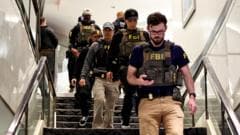
A rising tide of political violence in America — normalized, cyclical, and accelerating — reflects the biblical pattern of societies that have cast off a shared moral anchor, turning neighbor against neighbor in the very pattern Scripture warned would mark a people abandoned to their own devices.
Isaiah 59:7-8
Direct Principle“Their feet run to evil, and they are swift to shed innocent blood; their thoughts are thoughts of iniquity; desolation and destruction are in their highways. The way of peace they do not know, and there is no justice in their paths; they have made their crooked paths; no one who treads on them knows peace.”
Why this passage
Isaiah 59 is a covenant lawsuit — the prophet indicting Israel not for ignorance of the law but for willful abandonment of it. The phrase 'their feet run to evil' describes not sporadic transgression but institutionalized momentum toward violence; 'the way of peace they do not know' describes a society that has lost the very conceptual framework for peaceful coexistence.
The plain grammatical-historical sense is that when a people collectively reject the fear of God, their social fabric degrades in a predictable sequence: unjust thoughts produce unjust words, unjust words produce violent actions, and violent actions become normalized until 'desolation and destruction are in their highways' — public life itself becomes the arena of destruction.
The prophet Isaiah declared, 'Their feet run to evil, and they are swift to shed innocent blood; their thoughts are thoughts of iniquity; desolation and destruction are in their highways' (Isaiah 59:7). When a society loses its tether to the fear of God, violence does not merely increase — it accelerates, feeding upon itself until bloodshed becomes the assumed language of public life.
What we witness in America's political landscape is not merely a policy dispute grown hot, but the fruit of a deeper severing: a nation that once broadly acknowledged transcendent moral authority now finds no shared ground on which to resolve conflict without force. Let the church neither despair nor grow numb, but rather shine as those who know the Prince of Peace — and pray without ceasing for a mercy this generation has not yet earned.
Today's Prayer
Pray that God would break the cycle of political violence in America, granting repentance to leaders and citizens alike, and that the Church would stand as a witness to the reconciling peace of Christ in a nation devouring itself.
Further Scripture
Additional passages that illuminate this event, each grounded in a distinct interpretive lens.
“In those days there was no king in Israel. Everyone did what was right in his own eyes.”
Why this passage
The closing verse of Judges is the editorial verdict on an entire era of cyclical violence — a society that had been given law and covenant but descended, step by step, into tribal atrocity. The refrain 'everyone did what was right in his own eyes' is not a celebration of freedom but a diagnosis of anarchy: the absence of acknowledged transcendent authority produces not liberty but vendetta.
The parallel is structural, not merely tonal. The book of Judges documents a people cycling through provocation, violence, temporary relief, and renewed violence — each cycle worse than the last, precisely the 'familiar cycle in overdrive' the article describes.
How it applies
When a nation's political actors each claim absolute moral authority for their own cause and none acknowledge a standard above themselves, the Judges pattern reasserts itself: violence becomes the only arbiter. The escalating political violence in America echoes a society in which every faction is its own king, and every opponent is a legitimate target.
The church that reads Judges knows this story does not end well without repentance — and knows equally that repentance, not political victory, is the only exit.
“But understand this, that in the last days there will come times of difficulty. For people will be lovers of self, lovers of money, proud, arrogant, abusive, disobedient to their parents, ungrateful, unholy, heartless, unappeasable, slanderous, without self-control, brutal, not loving good.”
Why this passage
Paul's warning to Timothy names a specific moral profile that characterizes 'times of difficulty' in the last days — and the list is not abstract. 'Brutal,' 'unappeasable,' 'slanderous,' and 'without self-control' describe a social character, not merely individual sins; Paul envisions these traits becoming culturally normative, the ambient temperature of public life.
The prophecy does not require a singular cataclysmic event; it describes a gradual hardening of social character that makes political violence not exceptional but expected.
How it applies
The article's observation that America's political violence is 'familiar' and 'cyclical' and now 'in overdrive' fits Paul's description of a society in which brutality has lost its power to shock — because it has become normal. 'Unappeasable' and 'slanderous' describe a political culture in which no compromise is possible and opponents are treated as existential threats worthy of destruction.
This passage calls the reader not to political analysis but to personal sobriety: 'avoid such people' (v. 5), and refuse to be conformed to the spirit of the age.
“Righteousness exalts a nation, but sin is a reproach to any people.”
Why this passage
This proverb states a governing principle of political theology: national flourishing is not primarily economic or military but moral. The Hebrew word translated 'reproach' (חֶסֶד used inversely here — actually חֶרְפָּה, 'shame' or 'disgrace') carries the sense of a stain that weakens a people before God and before the nations.
The principle applies universally — 'any people' — meaning it is not a uniquely Israelite promise but a pattern woven into the fabric of human society: when wickedness is normalized at the civic level, national dignity and cohesion erode.
How it applies
A nation where political violence has become a 'familiar cycle' is a nation experiencing what Proverbs names as reproach — not merely bad optics, but the structural weakening that follows the abandonment of righteousness. The acceleration described in the article is the reproach deepening.
The remedy Proverbs implies is not a better political strategy but a return to righteousness — a call the church is uniquely positioned to issue, and uniquely obligated not to muffle.
Related by Scripture
Other events we've interpreted through the same passage or hermeneutical lens.
Why Americans Are Falling Out Of Love With LGBT ‘Pride’
Moral DeclineShares Proverbs 14:34Pope Leo rails against migrant deaths on visit to Spain’s ‘dock of shame’
Moral DeclineShares Proverbs 14:34Philippine bishop, ex-ICC judge lead new inquiry into thousands of Duterte-era killings
Moral DeclineShares Proverbs 14:34Tisza Backtracks on Proposal, Christian Culture Stays in Constitution
Moral DeclineShares Proverbs 14:34U.S. bishops praise Leo’s encyclical on AI, echo concern for human dignity, common good
Technology & SurveillanceShares Proverbs 14:34
Community launching soon
Get the invite by email when the Watchman's Wall opens
Share this article
Source: bbc— we link to the original for full context.