United Nations: Strait of Hormuz Disruption Could Trigger Global Food Price Crisis Within a Year
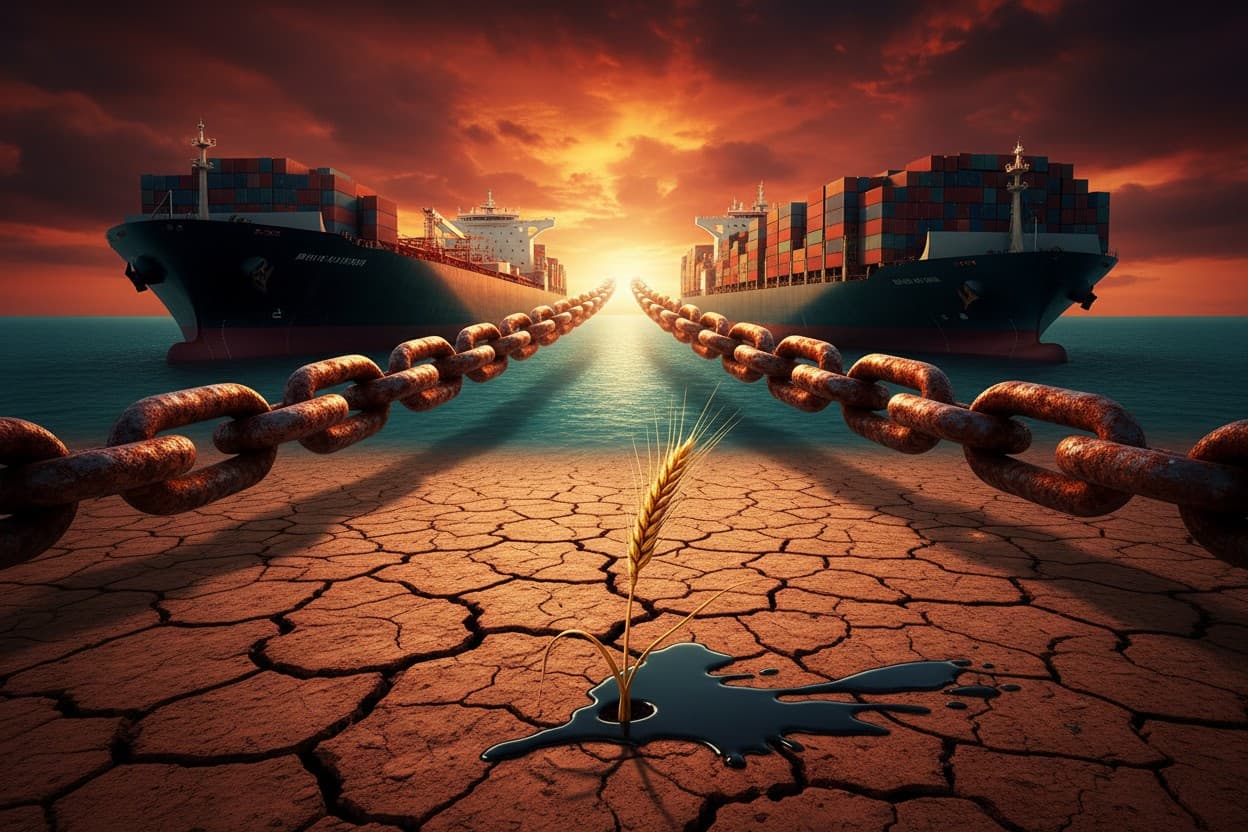
The UN warns that disruption in the Strait of Hormuz could trigger a global food price crisis within a year, echoing biblical prophecies of famine as a sign of the last days.
Amos 4:6
Direct Principle“"I also have given you cleanness of teeth in all your cities, and want of bread in all your places: yet have ye not returned unto me, saith the LORD."”
Why this passage
In its original context, Amos 4:6 is part of a series of judgments God brought upon Israel—including famine—to call them back to Himself. The phrase "cleanness of teeth" is a vivid metaphor for empty stomachs, describing a famine so severe that teeth have nothing to clean.
This principle remains: God uses scarcity of bread as a means to awaken nations and individuals to their dependence on Him. The UN's warning of a global food price crisis triggered by geopolitical disruption fits this pattern of widespread want of bread.
Behold, the Lord declares in Amos 4:6, "I also have given you cleanness of teeth in all your cities, and want of bread in all your places: yet have ye not returned unto me, saith the LORD."
This warning from the United Nations echoes a pattern Scripture reveals: famine is not merely economic calamity but a divine summons to repentance. As we see the potential for bread to become scarce across the earth, let it stir our hearts to turn to the One who alone provides daily bread.
Today's Prayer
Pray that the Lord would avert this looming food crisis and that His people would be moved to both repentance and compassionate provision for the hungry.
Further Scripture
Additional passages that illuminate this event, each grounded in a distinct interpretive lens.
“"And when he had opened the third seal, I heard the third beast say, Come and see. And I beheld, and lo a black horse; and he that sat on him had a pair of balances in his hand. And I heard a voice in the midst of the four beasts say, A measure of wheat for a penny, and three measures of barley for a penny; and see thou hurt not the oil and the wine."”
Why this passage
The third seal of Revelation depicts a black horse representing famine and economic scarcity. The "pair of balances" (scales) symbolizes rationing, and the prices—a measure of wheat for a penny (a day's wage)—indicate severe inflation and food shortage.
The specific mention of not harming the oil and wine may suggest that luxury goods remain available while staples become unaffordable, a pattern often seen in modern food price crises where basic grains spike while other commodities are less affected.
How it applies
The FAO's warning that Strait of Hormuz disruption could cause global food prices to soar within a year directly echoes the black horse's scenario: basic foodstuffs becoming prohibitively expensive. The report's focus on grain prices and the potential for a "food price crisis" aligns with the image of wheat and barley being weighed out at inflated costs.
This is a sobering reminder that the judgments of the Apocalypse are not distant mythology but patterns that can manifest in our time through geopolitical and economic disruptions.
“"Alas for the day! For the day of the LORD is at hand, and as a destruction from the Almighty shall it come. Is not the meat cut off before our eyes, yea, joy and gladness from the house of our God?"”
Why this passage
Joel 1 describes a locust plague and severe famine as a harbinger of the coming "day of the LORD." The prophet laments that food is cut off and joy ceases from God's house because of the scarcity.
Joel's prophecy connects agricultural and economic catastrophe directly to eschatological judgment. While the immediate context was a literal locust plague, the pattern of famine preceding the day of the Lord is a recurring biblical theme.
How it applies
The UN's warning that a disruption in the Strait of Hormuz could cut off food supplies globally parallels Joel's description of meat being "cut off before our eyes." If this crisis materializes, it would be a sign consistent with the prophetic pattern of famines preceding the day of the Lord.
Christians should watch and pray, recognizing that such events are not random but part of the birth pains Scripture foretells.
Related by Scripture
Other events we've interpreted through the same passage or hermeneutical lens.
‘Eid does not enter tents’: Palestinians in Gaza face grim holiday
Wars & Rumors of WarsShares Joel 1:15-16World's humanitarian system buckling, 'no longer fit for purpose,' US-based researchers say
FaminesShares Joel 1:15-16U.S.-Iran War’s Next Casualty: Global Food
FaminesShares Revelation 6:5-6World Bank expects fertilizer prices to rise by 31% this year
FaminesShares Revelation 6:5-6The Fertilizer Shock of 2026-2027: A Man-Made Famine in the Making
FaminesShares Revelation 6:5-6
Community launching soon
Get the invite by email when the Watchman's Wall opens
Share this article
Source: Naturalnews.com— we link to the original for full context.