Trump’s 'Economic Fury' squeezes Iran — but can Tehran outlast the pressure?
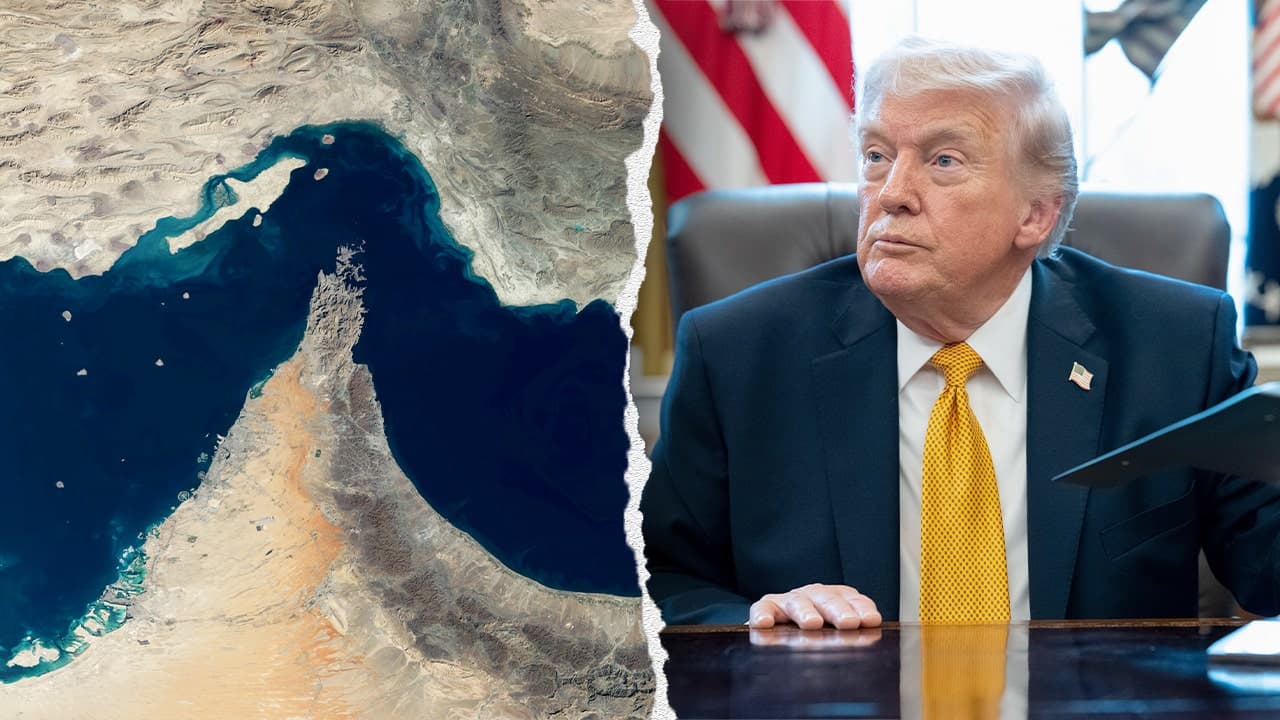
The United States is intensifying economic warfare and naval pressure against Iran, escalating a standoff that carries significant risk of open conflict — a pattern Scripture associates with the gathering of nations in the last days.
Jeremiah 25:15-17
Prophetic Fulfillment“Thus the LORD, the God of Israel, said to me: 'Take from my hand this cup of the wine of wrath, and make all the nations to whom I send you drink it. They shall drink and stagger and be crazed because of the sword that I am sending among them.' So I took the cup from the LORD's hand, and made all the nations to whom the LORD sent me drink it.”
Why this passage
Jeremiah 25 presents God as the sovereign dispenser of judgment upon nation after nation — including Persia's ancient predecessors — through instruments of economic ruin, military threat, and political collapse. The original oracle declared that no kingdom could ultimately insulate itself from the consequences God appoints for unrepentant nations.
The plain grammatical-historical sense is that God uses human political pressure and warfare as the cup He passes among the nations. The intensifying U.S. sanctions and naval blockade on Iran — ancient Persia/Elam — echo this pattern: a great power becomes the unwitting instrument of larger providential pressure upon a defiant regime.
The prophet Jeremiah foresaw a moment when no nation would escape the cup of God's judgment: 'All the kingdoms of the world which are on the face of the earth shall drink.' The coiling pressure between Washington and Tehran is not merely a geopolitical chess match — it is the churning of nations that Scripture describes as precursors to divine reckoning.
Take heed, believer: when great powers posture and squeeze one another toward the edge of open war, the herald's call is not panic but sobriety. God governs the rise and fall of every regime.
Let the trembling of nations drive us to our knees.
Today's Prayer
Pray that the escalating pressure between the United States and Iran would not ignite open war, and that God's sovereign hand would restrain violence while opening doors for the gospel among the Persian people.
Further Scripture
Additional passages that illuminate this event, each grounded in a distinct interpretive lens.
“The word of the LORD that came to Jeremiah the prophet concerning Elam, in the beginning of the reign of Zedekiah king of Judah. Thus says the LORD of hosts: 'Behold, I will break the bow of Elam, the mainstay of their might. And I will bring upon Elam the four winds from the four quarters of heaven. And I will scatter them to all those winds, and there shall be no nation to which those driven out of Elam shall not come.'”
Why this passage
Elam is ancient Persia — geographically and ethnically the heartland of modern Iran. Jeremiah's oracle against Elam declares that God would shatter the very source of Elam's military strength ('the bow') and scatter its people under pressure from every direction — a picture of comprehensive, multi-vector siege.
While the near-horizon fulfillment involved ancient Babylonian and Median campaigns against Elam, the oracle's scope — 'the four winds from the four quarters of heaven' — has long been understood by commentators as carrying a broader eschatological resonance regarding Persian/Iranian power and its ultimate limitation before God.
How it applies
The Trump administration's 'Economic Fury' campaign deploys precisely this kind of multi-vector pressure: financial sanctions cutting off oil revenue, naval blockade strangling maritime trade, and diplomatic isolation squeezing Iran from every quarter.
The ancient oracle against Elam did not promise the regime's immediate collapse but declared that no source of Iranian military or economic might — no 'bow' — is beyond God's reach. This standoff warrants sober watchfulness, not prophetic speculation.
“I raised my eyes and saw, and behold, a ram standing on the bank of the canal. It had two horns, and both horns were high, but one was higher than the other, and the higher one came up last. I saw the ram charging westward and northward and southward. No beast could stand before him, and there was no one who could rescue from his power. He did as he pleased and became great.”
Why this passage
Daniel 8 explicitly identifies the ram as Media-Persia (v. 20), charging westward with an aggression that no other power could check — until the goat from the west arrived.
The near-horizon fulfillment was Alexander's defeat of Persia, but the vision's framework established a permanent biblical pattern: Persian/Iranian power rises with regional dominance until confronted by a decisive western challenger.
The grammatical-historical sense is clear: the ram is Persia, its charging represents military-economic expansionism, and the confrontation with the west is built into the prophetic architecture of Daniel's vision.
How it applies
Modern Iran has charged westward through proxy militias, missile programs, and nuclear ambition — pressing into Syria, Lebanon, Yemen, and Iraq in ways that echo the ram's unchecked westward charge.
The current U.S. maximum-pressure campaign represents the arrival of precisely the kind of western confrontation Daniel's vision frames as inevitable. While we must not force modern identifications beyond the text's warrant, the structural parallel is striking and invites sober reflection.
“The great day of the LORD is near, near and hastening fast; the sound of the day of the LORD is bitter; the mighty man cries aloud there. A day of wrath is that day, a day of distress and anguish, a day of ruin and devastation, a day of darkness and gloom, a day of clouds and thick darkness,”
Why this passage
Zephaniah's oracle declares that the Day of the LORD overtakes nations through instruments of military, economic, and political devastation — and that 'the mighty man,' no matter how powerful, cries out in that day. The prophet's original audience was Judah, but the oracle extends explicitly to surrounding nations in chapters 2-3.
The principle is direct: no nation's economic or military might guarantees survival when God's appointed season of pressure arrives. Zephaniah's language of 'distress and anguish' maps onto the language of siege and sanction that characterizes Iran's current position.
How it applies
Tehran's leaders project defiance, but the compression of naval blockade, financial isolation, and internal economic collapse creates precisely the conditions Zephaniah describes — 'distress and anguish' for a 'mighty' regime that believed itself capable of outlasting any pressure.
The herald's task is not to predict whether Iran bends or breaks, but to note that Scripture consistently declares the pride of nations will not stand when God's day of reckoning advances.
Related by Scripture
Other events we've interpreted through the same passage or hermeneutical lens.
Iran's Nuclear Weapon Timeline Remains Unchanged Despite Weeks Of Strikes: Report
Wars & Rumors of WarsShares Jeremiah 49:34-36US attempt to open Strait of Hormuz tests fragile Iran war ceasefire
Wars & Rumors of WarsShares Jeremiah 49:34-36Iran targets UAE and a tanker in Strait of Hormuz as U.S. guides ships
Wars & Rumors of WarsShares Jeremiah 49:34-36Middle East crisis live: UAE says it has intercepted three Iran fired drones; US denies that Iran hit warship near strait of Hormuz
Wars & Rumors of WarsShares Jeremiah 49:34-36Trump admin warns Iraq over Iran terror proxies as US reportedly blocks cash payments
Wars & Rumors of WarsShares Jeremiah 49:34-36
Community launching soon
Get the invite by email when the Watchman's Wall opens
Share this article
Source: Fox News— we link to the original for full context.