Middle East crisis live: UAE says it has intercepted three Iran fired drones; US denies that Iran hit warship near strait of Hormuz
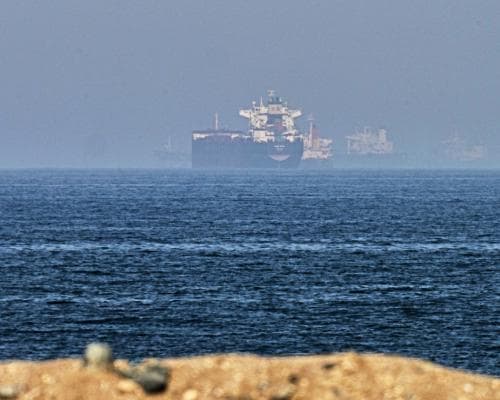
Iran has fired drones intercepted by the UAE and claimed to have struck a US Navy frigate near the Strait of Hormuz — a flashpoint of military escalation Scripture forewarned would characterize the last days, when nations rage and the seas become theaters of conflict.
Jeremiah 49:34-36
Prophetic Fulfillment“The word of the LORD that came to Jeremiah the prophet concerning Elam, in the beginning of the reign of Zedekiah king of Judah: 'Thus says the LORD of hosts: Behold, I will break the bow of Elam, the mainstay of their might. And I will bring upon Elam the four winds from the four quarters of heaven. And I will scatter them to all those winds, and there shall be no nation to which those driven out of Elam shall not come.'”
Why this passage
Elam, in ancient geography, corresponds precisely to the southwestern Persian heartland — the region today called Khuzestan and greater Iran. God's oracle against Elam declares that He will 'break the bow' of their military power and scatter them through divine intervention across the nations.
The bow was the preeminent weapon of Elam's military might; in modern terms, Iran's ballistic missiles and drone arsenal are the contemporary 'bow' — the mainstay of their regional threat projection.
The oracle does not say when this breaking occurs, only that God superintends it. The pattern of Iran launching drones and missiles that are intercepted, denied, or fail — as reported in this article — fits within the long biblical arc of God restraining and ultimately shattering the military ambitions of ancient Persia's descendants.
The prophet Jeremiah saw it plainly: 'A noise shall come even to the ends of the earth; for the LORD hath a controversy with the nations.' The Strait of Hormuz — through which a fifth of the world's oil passes — has become a stage where drone and missile claims collide with official denials, the very 'fog of war' Scripture anticipates as nations strive against nations.
Hear, O reader: the LORD is not surprised by these tremors in the Persian Gulf. He who scattered Elam and broke the bow of her might (Jeremiah 49:35) governs the affairs of Iran no less today than in the days of Cyrus.
Take courage — not in geopolitical advantage, but in the One who holds every sea in the hollow of His hand.
Today's Prayer
Pray that the Lord of hosts would restrain further escalation in the Persian Gulf, protect those in harm's way on land and sea, and open the eyes of nations to the futility of trusting in weapons rather than in the living God.
Further Scripture
Additional passages that illuminate this event, each grounded in a distinct interpretive lens.
“A stern vision is told to me; the traitor betrays, and the destroyer destroys. Go up, O Elam; lay siege, O Media; all the sighing she has caused I bring to an end.”
Why this passage
Isaiah 21 is the 'oracle concerning the wilderness of the sea' — widely understood by ancient and modern commentators to address Babylon and the surrounding Persian world, with Elam (Persia/Iran) and Media specifically summoned as instruments of judgment and conflict. The chapter opens with violent vision: treachery, destruction, and military aggression emanating from Elam.
While the near-horizon fulfillment pointed to Babylon's fall under Persian-Median forces, the far horizon preserves a pattern: Elam as an aggressive military actor whose operations are attended by divine attention and ultimately divine verdict.
How it applies
Iran launching drones and claiming missile strikes against US naval vessels near the Strait of Hormuz — the ancient 'sea' gateway of the Persian world — resonates with Isaiah's vision of Elam as a destabilizing aggressor. The 'traitor betrays' captures the contested claims: Iran asserting a strike it may not have landed, the fog of war producing treachery and confusion.
Scripture does not let these events pass unnoticed by God; Isaiah 21 reminds us that military upheaval in this ancient Persian theater has always been within the LORD's purview.
“When he opened the second seal, I heard the second living creature say, 'Come!' And out came another horse, bright red. Its rider was permitted to take peace from the earth, so that people should slay one another, and he was given a great sword.”
Why this passage
The second seal of Revelation depicts a rider granted authority to 'take peace from the earth' — the Greek aphairō eirēnēn captures an active, deliberate removal of stability rather than merely its absence. John's vision presents a global pattern: military conflict spreading and intensifying until no zone of the earth remains at peace.
The seal judgments are understood across the major eschatological frameworks (historic premillennial, amillennial, futurist) as describing conditions that characterize the present age in intensifying measure, reaching their fullness in the last days. The Strait of Hormuz is not a sideshow — it is one of the earth's most strategic maritime chokepoints, and its militarization directly threatens global stability.
How it applies
Iran's drone aggression against the UAE and its claimed missile strike on a US Navy frigate represent precisely the pattern John foresaw: actors 'permitted' by providential allowance to destabilize regions, taking peace from seas and skies alike through asymmetric military action.
The 'great sword' given to the red horseman is not one weapon but a systemic capacity for violence that spills across borders — as drone warfare now literally does, crossing sovereign airspace and targeting military vessels in international waters.
“The great day of the LORD is near, near and hastening fast; the sound of the day of the LORD is bitter; the mighty man cries aloud there. A day of wrath is that day, a day of distress and anguish, a day of ruin and devastation, a day of darkness and gloom, a day of clouds and thick darkness, a day of trumpet blast and battle cry against the fortified cities and against the lofty battlements.”
Why this passage
Zephaniah's oracle concerning the Day of the LORD depicts it as arriving with the sounds of military conflict: trumpets, battle cries, and assaults on fortified positions. The passage's original scope concerned Judah and the surrounding nations under Babylonian judgment, but the NT confirms the Day of the LORD has an eschatological horizon (2 Peter 3:10-12) that encompasses the culmination of history.
The prophets consistently depict the approach of that Day through escalating military confrontation among the great powers — not as its arrival, but as the drumbeat that precedes it. Each cycle of drone strikes, intercepted missiles, and naval confrontations near strategic chokepoints fits within that ominous accumulation.
How it applies
The Strait of Hormuz confrontation — drones downed, missiles claimed, a warship disputed — produces precisely the 'trumpet blast and battle cry' atmosphere Zephaniah described. The mighty nations cry aloud through press releases and military denials, while armed drones cross international airspace.
These events do not mark the Day of the LORD, but they are the kind of escalating military noise Scripture warns will characterize the age preceding it. The reader is exhorted to watchfulness, not panic.
Related by Scripture
Other events we've interpreted through the same passage or hermeneutical lens.
Iran's Nuclear Weapon Timeline Remains Unchanged Despite Weeks Of Strikes: Report
Wars & Rumors of WarsShares Jeremiah 49:34-36US attempt to open Strait of Hormuz tests fragile Iran war ceasefire
Wars & Rumors of WarsShares Jeremiah 49:34-36Iran targets UAE and a tanker in Strait of Hormuz as U.S. guides ships
Wars & Rumors of WarsShares Jeremiah 49:34-36Mali PM urges 'not to panic' after coordinated attack by jihadists, separatists
Wars & Rumors of WarsShares Zephaniah 1:14-16Trump admin warns Iraq over Iran terror proxies as US reportedly blocks cash payments
Wars & Rumors of WarsShares Jeremiah 49:34-36
Community launching soon
Get the invite by email when the Watchman's Wall opens
Share this article
Source: The Guardian— we link to the original for full context.