Mali PM urges 'not to panic' after coordinated attack by jihadists, separatists
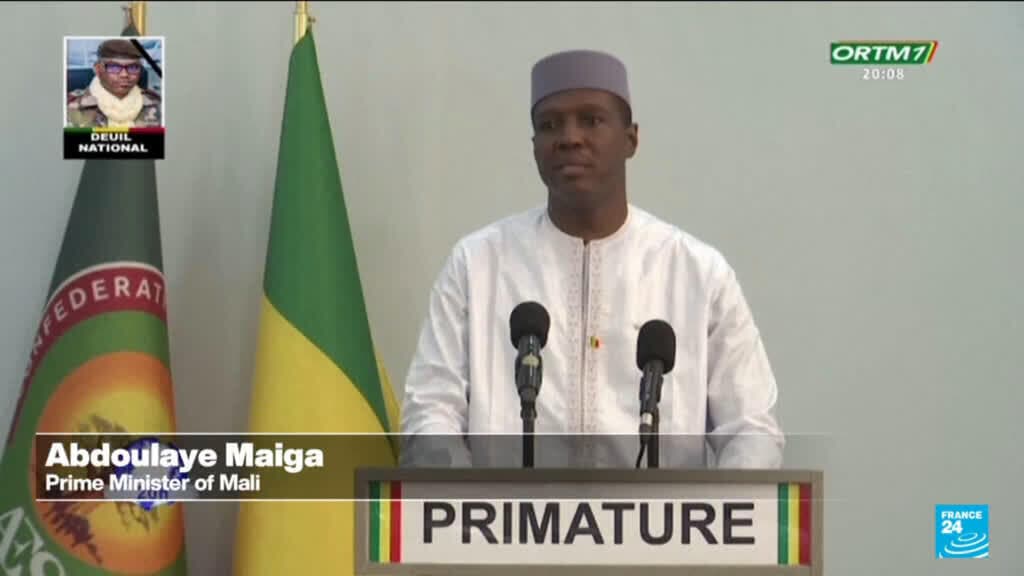
A devastating coordinated assault by al-Qaida-linked jihadists and separatist militants in Mali marks the largest attack in over a decade, deepening the Sahel's spiraling cycle of extremist violence and governmental collapse — a pattern Scripture addresses with unflinching clarity.
Zephaniah 1:14-16
Prophetic Fulfillment“The great day of the LORD is near, near and hastening fast; the sound of the day of the LORD is bitter; the mighty man cries aloud there. A day of wrath is that day, a day of distress and anguish, a day of ruin and devastation, a day of darkness and gloom, a day of clouds and thick darkness, a day of trumpet blast and battle cry against the fortified cities and against the lofty battlements.”
Why this passage
Zephaniah's oracle was addressed to Judah and the surrounding nations in the late 7th century BC, warning that covenant unfaithfulness would bring the LORD's judgment through military catastrophe, darkness, and the collapse of fortified defenses. The passage has both a near horizon (Babylonian devastation) and a far horizon (the eschatological Day of the LORD), establishing the pattern that violent national unraveling echoes divine judgment on human wickedness.
The plain grammatical sense is that nations which suppress justice and embrace violence are subject to a 'day of wrath' — a reckoning that arrives through historical upheaval. This prophetic framework legitimately extends to the Sahel, where coordinated jihadist violence is dismantling governments, fortifications, and civilian peace with terrifying speed.
Zephaniah declared of the nations: 'A day of wrath is that day, a day of distress and anguish, a day of ruin and devastation, a day of darkness and gloom.' The Sahel's spreading violence is not random chaos — Scripture recognizes it as the fruit of ungodliness working itself out through the nations, a world increasingly unable to bind the sword.
Yet the herald's task is not despair but sobriety. Mali's prime minister urges citizens 'not to panic,' but the deeper comfort belongs to those who know the Lord of Hosts — the One who declares the end from the beginning and holds every nation in His hand.
Fix your eyes on Him, not on the darkening horizon.
Today's Prayer
Pray that the Church in Mali and across the Sahel would stand firm in faith amid the violence, that believers would be protected and emboldened, and that God's sovereign mercy would reach the lost in the midst of this darkness.
Further Scripture
Additional passages that illuminate this event, each grounded in a distinct interpretive lens.
“The clamor will resound to the ends of the earth, for the LORD has an indictment against the nations; he is entering into judgment with all flesh, and the wicked he will put to the sword, declares the LORD. Thus says the LORD of hosts: Behold, disaster is going forth from nation to nation, and a great tempest is stirring from the farthest parts of the earth!”
Why this passage
Jeremiah 25 records Yahweh's judgment oracle against the nations — not merely Israel — declaring that violent upheaval moves across national borders like a great tempest, and that it originates in the LORD's sovereign judgment on wickedness. The original context describes Babylon's sweep through the ancient Near East, but the stated principle is explicitly universal: 'from nation to nation,' 'from the farthest parts of the earth.'
The principle requires no reinterpretation: God declares that He stirs catastrophic violence among the nations as an expression of His indictment against wickedness. This applies straightforwardly wherever coordinated violent destabilization spreads across borders.
How it applies
Mali's jihadist crisis does not confine itself to Mali — it is part of a regional Sahel conflagration already consuming Burkina Faso, Niger, Chad, and beyond, exactly the 'nation to nation' spread Jeremiah describes. The alliance of al-Qaida networks and ethnic separatists represents the 'great tempest stirring from the farthest parts of the earth,' a conflict with ideological roots stretching from the Arabian Peninsula to West Africa.
The Church must read these cascading regional conflicts through the lens Jeremiah provides: God is not absent from the Sahel — He is the sovereign Judge before whom all nations stand.
“Is a trumpet blown in a city, and the people are not afraid? Does disaster come to a city, unless the LORD has done it?”
Why this passage
Amos 3:6 is not merely rhetorical — it is a theological declaration embedded in Amos's indictment of Israel, asserting that no military catastrophe befalls a city apart from God's sovereign governance of history. The verse uses the ancient trumpet blast — the warning of approaching armies — as its image, grounding the principle in exactly the kind of coordinated militant assault the article describes.
The plain sense is that urban violence and military disaster are never purely geopolitical accidents. They stand within God's sovereign administration of justice over nations, a truth Amos asserts with the force of seven parallel rhetorical questions in this passage.
How it applies
When jihadist and separatist fighters strike Mali's cities in the largest coordinated attack in over a decade, Amos's ancient question resounds: 'Does disaster come to a city, unless the LORD has done it?' This is not to say God endorses jihadist ideology — but it is to say that such catastrophic violence does not occur outside His sovereign knowledge and governance.
For the believer watching Mali's unraveling, this verse forbids both fatalism and panic, calling instead for the fear of God — the recognition that human history, including its darkest chapters, is held in His hands.
“But understand this, that in the last days there will come times of difficulty. For people will be lovers of self, lovers of money, boastful, arrogant, abusive, disobedient to their parents, ungrateful, unholy, heartless, unappeasable, slanderous, without self-control, brutal, not loving good,”
Why this passage
Paul's warning to Timothy about 'times of difficulty' in the last days names specific moral characteristics — brutality, heartlessness, being 'unappeasable' — that produce societal violence. The original context addresses the moral condition of humanity in the eschatological era inaugurated by Christ's first coming, which reaches its fullest expression as history approaches its close.
The phrase 'brutal' (Greek: ἀνήμεροι, 'untamed, savage') and 'heartless' (ἄστοργοι, 'without natural affection') directly describe the moral engine behind indiscriminate jihadist violence against civilian populations — cruelty systematized and ideology-sanctified.
How it applies
The al-Qaida-linked militants who carried out Mali's largest coordinated attack in over a decade exemplify Paul's description of 'brutal' and 'heartless' actors — men for whom ideology has extinguished natural human compassion and who visit savage violence on the defenseless. Paul does not present this as surprising but as a prophesied characteristic of the age.
The American Christian watching this news from afar must resist numbness. Paul's point is not that such evil proves God is absent, but that it confirms the diagnosis Scripture gave long ago — and points to the urgent necessity of the Gospel reaching every corner of the Sahel.
Related by Scripture
Other events we've interpreted through the same passage or hermeneutical lens.
Watch Live: Hegseth, Caine give Iran war update after U.S. and Iran trade fire in Strait of Hormuz
Wars & Rumors of WarsShares Jeremiah 25:31-32Trump suggests Iran war could last ‘another two weeks,’ ‘maybe three weeks’
Wars & Rumors of WarsShares Jeremiah 25:31-32Iran: We fired missiles and drones due to the activity of US destroyers
Wars & Rumors of WarsShares Jeremiah 25:31-32Iran says ships being ‘guided’ by US through Hormuz must work with its armed forces
Wars & Rumors of WarsShares Jeremiah 25:31-32Russia’s Northern Fleet Bastion missile system crews hold exercise in Arctic
Wars & Rumors of WarsShares Amos 3:6
Community launching soon
Get the invite by email when the Watchman's Wall opens
Share this article
Source: france24— we link to the original for full context.