Trump orders U.S. military to 'shoot and kill' Iranian small boats choking Strait of Hormuz
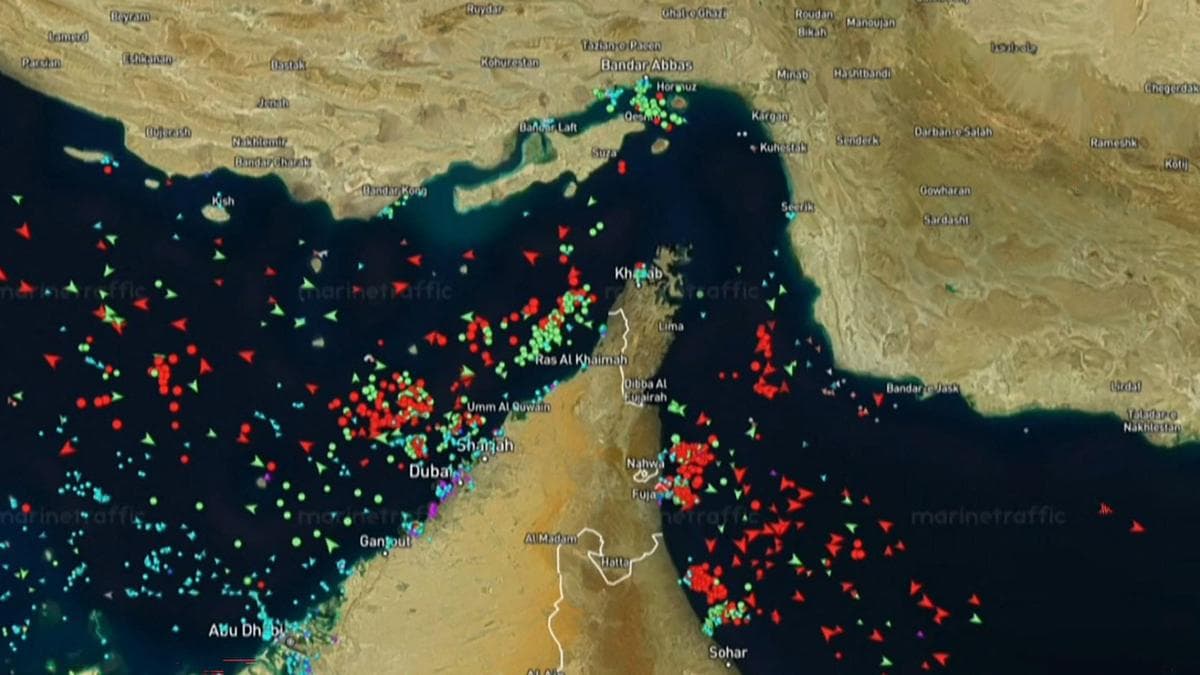
President Trump has ordered U.S. forces to destroy Iranian vessels threatening the Strait of Hormuz, bringing the United States and Iran to the edge of open naval warfare in the Persian Gulf — a region Scripture places at the center of end-times geopolitical conflict involving the ancient nation of Persia.
Jeremiah 49:35-37
Prophetic Fulfillment“Thus says the LORD of hosts: Behold, I will break the bow of Elam, the mainstay of their might. And I will bring upon Elam the four winds from the four quarters of heaven. And I will scatter them to all those winds, and there shall be no nation to which those driven out of Elam shall not come. I will terrify Elam before their enemies and before those who seek their life. I will bring disaster upon them, my fierce anger, declares the LORD. I will send the sword after them, until I have consumed them.”
Why this passage
Jeremiah 49:34-39 is one of Scripture's most specific and underappreciated oracles — addressed directly to Elam, the ancient kingdom whose heartland corresponds to modern southwestern Iran (Khuzestan and neighboring provinces). The near-horizon fulfillment involved Babylonian and later Median incursions into Elamite territory, but Jeremiah's language of scattering 'to all winds' and divine 'fierce anger' against Elam's military power ('the bow of Elam') carries a far-horizon dimension that later prophets and the New Testament book of Revelation (Susa/Elam appears as the setting of Daniel 8's ram vision) confirm is not exhausted by ancient history.
The phrase 'break the bow of Elam' targets the specific military instrument of Elamite/Persian power — their naval and missile harassment of shipping lanes is their modern 'bow.'
The prophet Jeremiah received a specific oracle against Elam — the heartland of ancient Persia — declaring, 'I will set my throne in Elam and destroy its king and officials.' This was not merely a word for ancient history; it described a pattern of divine sovereignty over Persian power that would recur across the ages. Today, Iranian fast-boats choking the Strait of Hormuz are the latest expression of that same Persian defiance of international order — and of the God who governs the nations.
The scatter and terror Jeremiah foresaw for Elam remind us that no naval strategy, no chokepoint dominance, no regional hegemon operates outside the reach of the Lord of hosts. When we see these confrontations escalating in the Persian Gulf, we are watching the stage of biblical prophecy being set in real time.
Today's Prayer
Pray that American and Iranian military commanders would be restrained from miscalculation that triggers open warfare in the Persian Gulf, and that God's sovereign hand would frustrate every plan of aggression that brings unnecessary suffering to sailors, civilians, and the watching world.
Further Scripture
Additional passages that illuminate this event, each grounded in a distinct interpretive lens.
“I raised my eyes and saw, and behold, a ram standing on the bank of the canal. It had two horns, and both horns were high, but one was higher than the other, and the higher one came up last. I saw the ram charging westward and northward and southward. No beast could stand before it, and there was no one who could rescue from its power. It did as it pleased and became great.”
Why this passage
Daniel 8 is one of Scripture's most precisely interpreted visions — the angel Gabriel explicitly identifies the two-horned ram as 'the kings of Media and Persia' (v. 20).
The vision depicts this Persian ram charging aggressively in multiple directions — westward, northward, southward — doing 'as it pleased' with no force able to resist it, until a goat from the west came swiftly and shattered it. The near-horizon fulfillment was Alexander the Great's destruction of the Achaemenid Persian Empire, but the broader pattern — a Persian power projecting dominance in multiple directions, provoking a confrontation with a Western power — has legitimate typological resonance in the grammatical-historical trajectory of the text, particularly given Gabriel's naming of the actors.
How it applies
Iran's aggressive use of small-boat tactics to 'charge' at Western naval assets in the Strait of Hormuz mirrors the pattern of the Danielic ram that 'did as it pleased' until overmatched. The U.S. military order to destroy Iranian vessels threatening passage through the Persian Gulf represents precisely the kind of Western power confrontation Daniel's vision foresaw halting Persian regional expansion.
Whether or not Daniel 8 has a second eschatological fulfillment, the structural parallel between ancient Persia's unchecked aggression and Iran's current behavior is grounded in the text's own identification of the actors.
“Is a trumpet blown in a city, and the people are not afraid? Does disaster come to a city, unless the LORD has done it?”
Why this passage
Amos 3:6 states one of Scripture's clearest theological principles about national crisis and divine sovereignty: no military alarm, no imminent disaster strikes a people without the LORD's superintending hand. Amos was addressing Israel's complacency about approaching judgment, but the principle is universal — it applies to any nation standing on the edge of armed conflict.
The rhetorical questions expect the answer 'No': the trumpet of military warning always operates within God's sovereign governance of history.
How it applies
The presidential order to shoot and kill Iranian vessels — a trumpet blast of imminent armed conflict in the Persian Gulf — is not merely a geopolitical event but falls under Amos's principle: God is not absent from this escalation. American Christians watching events unfold in the Strait of Hormuz should understand that the 'trumpet' being blown in this crisis is heard in heaven.
This is a moment for prayer and sober discernment, not merely geopolitical analysis.
“A stern vision is told to me; the traitor betrays, and the destroyer destroys. Go up, O Elam; lay siege, O Media; all the sighing she has caused I bring to an end.”
Why this passage
Isaiah 21 is a burden against Babylon that invokes Elam (Persia) and Media as the instruments of divine judgment. The grammatical-historical context is the fall of Babylon, but Isaiah's oracle opens with disturbing imagery of a whirlwind from the desert — associated in ancient Near Eastern geography with the Persian Gulf region — and summons Elam as a military actor on the world stage.
The passage acknowledges the 'sighing' caused by Persian military power — a recognition that Elamite/Persian aggression brings suffering before judgment is resolved. This oracle treats Persia's military role as embedded in God's larger purposes for the nations around the Persian Gulf.
How it applies
The Strait of Hormuz sits at the mouth of the Persian Gulf — precisely the geography Isaiah's 'burden of the wilderness of the sea' describes. Iran's choking of this waterway causes global economic and military 'sighing,' disrupting oil flows and threatening open warfare.
Isaiah's framing of Elam as a military actor whose aggression God addresses directly applies with geographic and national precision to the current Iranian naval confrontation with U.S. forces in that same corridor.
Related by Scripture
Other events we've interpreted through the same passage or hermeneutical lens.
Middle East crisis live: Hegseth to give Iran war update amid growing tensions in strait of Hormuz
Wars & Rumors of WarsShares Jeremiah 49:35-37The UAE says Iran resumes attacks as the U.S. moves to reopen the Strait of Hormuz
Wars & Rumors of WarsShares Jeremiah 49:35-37Iran war: US says both military and merchant ships have passed through Strait of Hormuz
Wars & Rumors of WarsShares Jeremiah 49:35-37Strait of Hormuz stuck in limbo as Trump mulls Iran's latest offer
Wars & Rumors of WarsShares Jeremiah 49:35-37Russia’s Northern Fleet Bastion missile system crews hold exercise in Arctic
Wars & Rumors of WarsShares Amos 3:6
Community launching soon
Get the invite by email when the Watchman's Wall opens
Share this article
Source: The Hindu— we link to the original for full context.