Middle East crisis live: Hegseth to give Iran war update amid growing tensions in strait of Hormuz
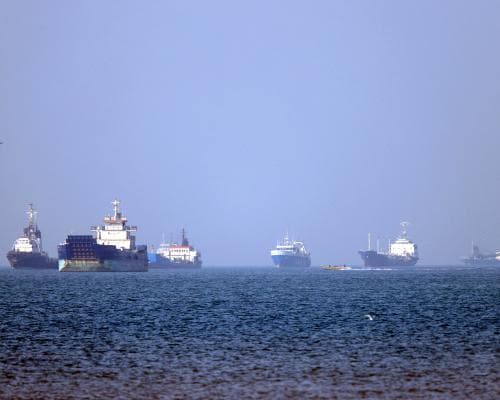
The United States and Iran stand on the edge of open conflict as Iran's parliament speaker declares a 'new equation' being solidified for the Strait of Hormuz, while Defense Secretary Hegseth prepares a war update — a powder keg of rumors and threats that Scripture declared would characterize the last days.
Jeremiah 49:35-37
Prophetic Fulfillment“Thus says the LORD of hosts: Behold, I will break the bow of Elam, the mainstay of their might. And I will bring upon Elam the four winds from the four quarters of heaven. And I will scatter them to all those winds, and there shall be no nation to which those driven out of Elam shall not come.”
Why this passage
Jeremiah 49:34-39 is a specific oracle against Elam, the ancient kingdom whose heartland corresponds to modern southwestern Iran — the very region bordering the Persian Gulf and the Strait of Hormuz. The original oracle pronounced judgment against Elam's military power ('the bow') and its pride of place among the nations.
While the near-horizon fulfillment involved Babylonian conquest, the passage belongs to a suite of Jeremiah's oracles against the nations (Jer 46-51) that carry eschatological freight — the scattered-and-restored pattern of verse 39 ('But in the latter days I will restore the fortunes of Elam') implies an ongoing prophetic arc over this geographic power through history's end. Iran's current posture of military threat and regional dominance mirrors precisely the pattern Jeremiah addressed: a bow-wielding power declaring its own equation over the waters.
Jeremiah warned of a coming storm against Elam — ancient Persia — declaring, 'I will bring the four winds from the four quarters of heaven. And I will scatter them to all those winds, and there shall be no nation to which those driven out of Elam shall not come.' The posturing of modern Iran in the Strait of Hormuz echoes that ancient pattern of a proud regional power threatening to reshape the order of nations through force, only to find itself subject to a sovereignty greater than its own.
Hear, O reader: the rage of nations does not catch God off-guard. 'He makes wars cease to the end of the earth; he breaks the bow and shatters the spear.' Every briefing room, every military declaration, every threat to choke a global waterway is already held within the counsel of the Lord.
Let the Church pray — not in fear, but in the confidence of a people whose King rules over every strait and sea.
Today's Prayer
Pray that God would restrain the counsel of those who seek war, protect innocent lives on both sides of this escalation, and that His sovereign hand would be clearly seen moving over the nations in this hour.
Further Scripture
Additional passages that illuminate this event, each grounded in a distinct interpretive lens.
“He makes wars cease to the end of the earth; he breaks the bow and shatters the spear; he burns the chariots with fire.”
Why this passage
Psalm 46 is a covenant declaration of God's absolute sovereignty over the military power of nations. The psalmist's 'bow' and 'spear' are not metaphors for polite disagreement — they represent the full weight of national military threat.
The principle is plainly stated without reinterpretation required: no military equation set by any nation — however dominant its navy, however strategic its position — exists outside God's authority to dismantle. He 'breaks the bow' — the very instrument Jeremiah cited as Elam's pride.
How it applies
Iran's declaration of a 'new equation' for the Strait of Hormuz, and the US military's posture of readiness, are precisely the 'bow and spear' of modern statecraft. Psalm 46 declares that the God who makes wars cease answers to no defense briefing and no strait-of-hormuz calculation.
The Church's confidence in this hour is not in carrier strike groups or diplomatic channels, but in the One who has already declared the end of every human equation of force.
“A stern vision is told to me; the traitor betrays, and the destroyer destroys. Go up, O Elam; lay siege, O Media; all the sighing she has caused I bring to an end.”
Why this passage
Isaiah 21 is the 'oracle concerning the wilderness of the sea' — scholars have long identified this as a vision of Babylon's fall, with Elam (Persia) and Media as the instruments of God's judgment. The passage captures a moment of rising Persian military power being deployed against a dominant regional order.
The parallel to the present moment is structurally genuine: Elam/Iran is again in a posture of military assertion, and the broader context involves a clash of powers over Persian Gulf dominance — the same geographic theater Isaiah envisioned.
How it applies
As the US prepares a war update regarding Iran and the Strait of Hormuz, the ancient pattern Isaiah foresaw reasserts itself: Persian power rising, maritime and regional order being contested, and the nations bracing for what comes next.
This is not a forced reading — it is the same actors, the same geography, and the same spiritual pattern of proud nations declaring their own sovereign equations over waters that belong to the Lord.
“The great day of the LORD is near, near and hastening fast; the sound of the day of the LORD is bitter; the mighty man cries aloud there. A day of wrath is that day, a day of distress and anguish, a day of ruin and devastation, a day of darkness and gloom, a day of clouds and thick darkness.”
Why this passage
Zephaniah's Day of the Lord oracle is not merely about a historical judgment on Judah — the scope of chapters 1-3 broadens explicitly to 'all the inhabitants of the earth' (1:18) and 'all the nations' (3:8), giving it a genuine eschatological horizon that the NT affirms.
The pattern Zephaniah describes — military powers in distress, the mighty man crying out, ruin hastening — is the texture of what 'wars and rumors of wars' look like on the ground. US-Iran escalation at one of the world's most strategic chokepoints, with a defense secretary preparing a war update, is the sound of precisely this kind of distress hastening.
How it applies
The Strait of Hormuz crisis is not merely a geopolitical event — it is a node in the global pattern of mounting tensions, military posturing, and the distress of nations that Zephaniah declared would characterize the approach of the great Day of the Lord.
Let the hearer take heed: 'The great day of the LORD is near, near and hastening fast.' Not as a prediction of this specific conflict being the final war — but as a sober recognition that each escalation among the nations is one more signal that the age is moving toward its appointed end.
Related by Scripture
Other events we've interpreted through the same passage or hermeneutical lens.
US will need years to replenish stockpiles of advanced weapons used in Iran war, new analysis finds
Wars & Rumors of WarsShares Psalm 46:9The UAE says Iran resumes attacks as the U.S. moves to reopen the Strait of Hormuz
Wars & Rumors of WarsShares Jeremiah 49:35-37Iran war: US says both military and merchant ships have passed through Strait of Hormuz
Wars & Rumors of WarsShares Jeremiah 49:35-37Strait of Hormuz stuck in limbo as Trump mulls Iran's latest offer
Wars & Rumors of WarsShares Jeremiah 49:35-37Analysis-Iran’s Guards seize wartime power, blunting Supreme Leader's role
Wars & Rumors of WarsShares Jeremiah 49:35-37
Community launching soon
Get the invite by email when the Watchman's Wall opens
Share this article
Source: The Guardian— we link to the original for full context.