'Trump has made crucial error on Iran and tensions are rising with Netanyahu'
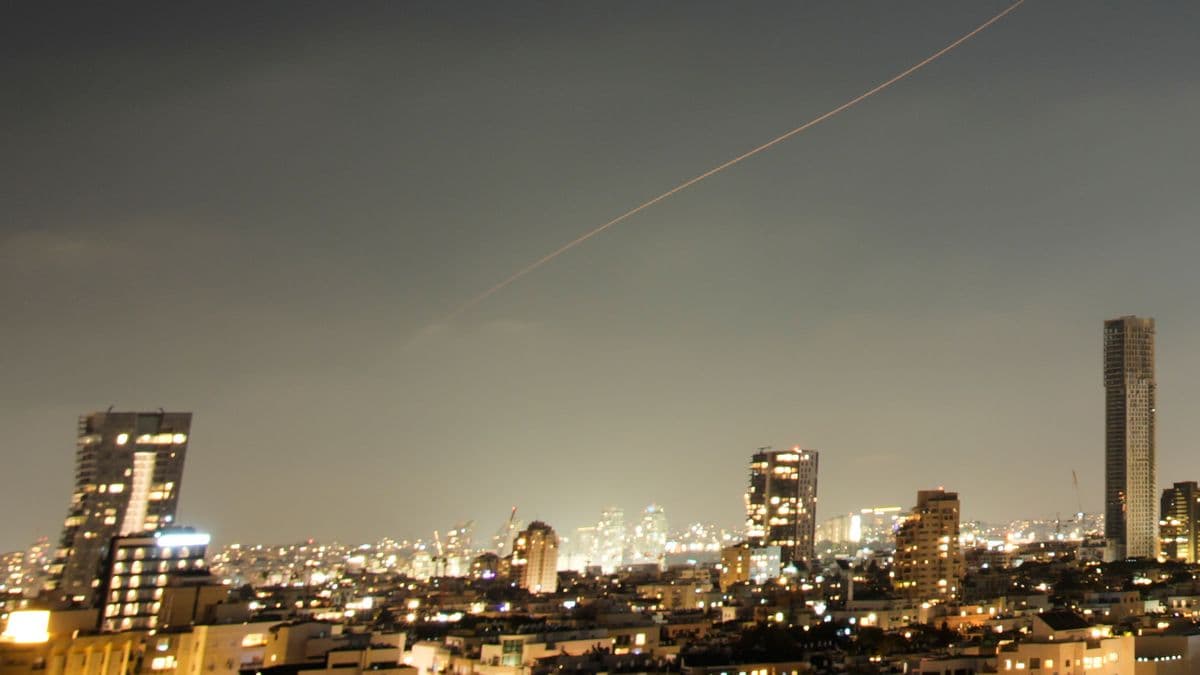
Escalating missile attacks between Israel and Iran, compounded by failed US diplomacy, signal deepening regional war that echoes biblical prophecies of nations arrayed against each other in the last days.
Joel 3:9-10
Prophetic Fulfillment“Proclaim this among the nations: Prepare war; stir up the mighty men. Let all the men of war draw near; let them come up. Beat your plowshares into swords, and your pruning hooks into spears; let the weak say, 'I am a warrior.'”
Why this passage
Joel 3 is a prophecy of the Lord's judgment on the nations gathered against Israel in the Valley of Jehoshaphat. The original context envisions a time when God summons all nations to account for their treatment of His people, calling them to prepare for war rather than peace.
The language of beating plowshares into swords inverts Isaiah's vision of peace, signaling a season of divine judgment through conflict.
This passage legitimately extends to the current escalation because it describes the very pattern now visible: nations (Iran, Israel, and the US) being stirred to war, with diplomacy failing and military posturing intensifying. The prophecy does not require a single end-times battle to be fulfilled—it describes a recurring pattern that intensifies as history approaches its consummation.
Behold, the prophet Joel declares, "Proclaim this among the nations: Prepare war; stir up the mighty men. Let all the men of war draw near; let them come up" (Joel 3:9).
The missile exchanges between Israel and Iran are not random violence—they are the nations being stirred as Scripture foretold.
Take heed, for the failure of man's diplomacy only magnifies the urgency of Christ's promise: "And you will hear of wars and rumors of wars. See that you are not alarmed, for this must take place, but the end is not yet" (Matthew 24:6).
These events are not cause for panic but for watchfulness.
Today's Prayer
Pray for peace in Jerusalem and the surrounding nations, that hearts would turn to Christ before the day of the Lord draws nearer.
Further Scripture
Additional passages that illuminate this event, each grounded in a distinct interpretive lens.
“Why do the nations rage and the peoples plot in vain? The kings of the earth set themselves, and the rulers take counsel together, against the Lord and against his Anointed, saying,”
Why this passage
Psalm 2 is a royal psalm describing the rebellion of earthly rulers against God's sovereign rule and His anointed king (ultimately Christ). The 'raging' of nations and 'plotting' of rulers is a timeless principle: human power structures inevitably resist divine authority, especially when they involve the land and people God has claimed.
The original hearers understood this as a warning against trusting in political alliances or military might to secure peace. The principle applies directly to the current situation: US diplomacy fails because it operates apart from submission to God's purposes for Israel and the nations.
How it applies
The article describes Trump's 'crucial error' on Iran and rising tensions with Netanyahu—a classic example of rulers taking counsel together against the Lord's purposes. The US attempts to manage the Middle East through threats and missiles, while Iran and Israel rage against each other, all in vain apart from God's decree.
This verse judges the entire diplomatic framework: no human strategy can bring lasting peace when nations set themselves against God's Anointed and His covenant people. The failure of US diplomacy is not a policy problem but a spiritual reality.
“The oracle concerning Damascus. Behold, Damascus will cease to be a city and will become a heap of ruins.”
Why this passage
Isaiah 17 is an oracle of judgment against Damascus (Syria) and, by extension, the northern kingdom of Israel's alliance with Syria. Historically, this was fulfilled in the Assyrian conquest, but the prophecy also carries a future-eschatological dimension, as Damascus remains a city today and the oracle's language of complete desolation has not been fully realized.
The connection to the current conflict is that Iran, as the primary backer of the Assad regime in Syria, is directly involved in the missile exchanges with Israel. The escalation described in the article—missile attacks between Israel and Iran—inevitably involves Syrian territory and Iranian proxies there, making Isaiah's ancient oracle newly relevant.
How it applies
The article's focus on Iran's missile capabilities and the worsening conflict with Israel directly implicates Syria, where Iran has entrenched military positions. Isaiah's warning that Damascus will become 'a heap of ruins' looms over the current escalation, as Iranian-backed forces in Syria continue to threaten Israel.
This is not a prediction of imminent fulfillment, but a reminder that God's judgments against nations that oppose His purposes are certain. The missile attacks are a step toward the larger regional shaking Isaiah foresaw.
Related by Scripture
Other events we've interpreted through the same passage or hermeneutical lens.
Israeli attack on Tyre in Lebanon kills eight as evacuation ordered for Christian quarter
Wars & Rumors of WarsShares Joel 3:9-10Eight killed in south Lebanon strike as Israel warns entire city to evacuate
Wars & Rumors of WarsShares Joel 3:9-10Middle East crisis live: People flee Lebanese city of Tyre after Israel orders evacuation ahead of strikes
Wars & Rumors of WarsShares Joel 3:9-10Israel and Iran trade strikes, threatening to drag the region back into full-scale war
Wars & Rumors of WarsShares Psalm 2:1-2NATO drills aimed at practicing coordination during potential anti-Russia operation — MP
Wars & Rumors of WarsShares Joel 3:9-10
Community launching soon
Get the invite by email when the Watchman's Wall opens
Share this article
Source: Chris Hughes— we link to the original for full context.