The Struggle for Justice in Islamabad’s Christian Slums
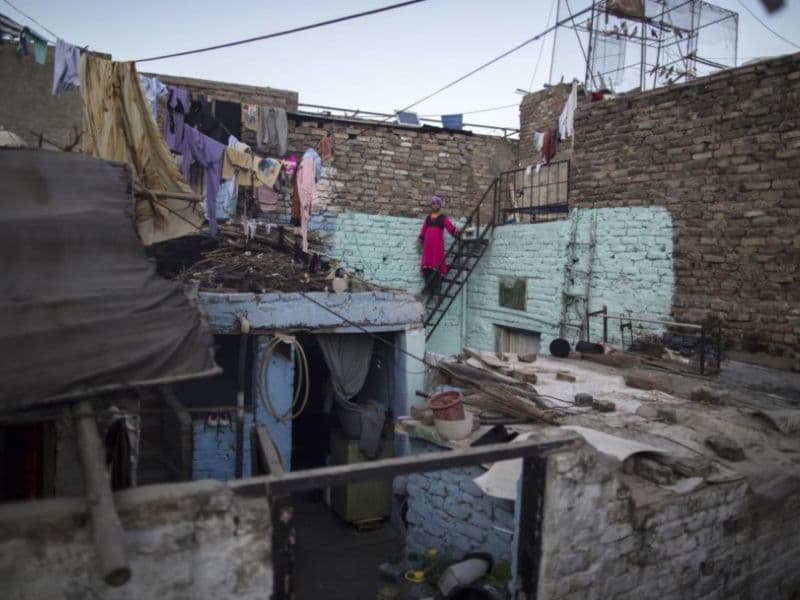
Pakistani authorities in Islamabad are demolishing informal Christian settlements under the banner of urban development, displacing vulnerable believers who have no other housing options — a pattern of state-enabled marginalization of Christians consistent with biblical warnings about persecution of the faithful.
James 2:5-6
Direct Principle“Listen, my beloved brothers, has not God chosen those who are poor in the world to be rich in faith and heirs of the kingdom, which he has promised to those who love him? But you have dishonored the poor man. Are it not the rich who oppress you, and the ones who drag you into court?”
Why this passage
James writes to Jewish Christians scattered under social and economic pressure, directly naming a recurring pattern: the powerful use legal and judicial mechanisms to oppress the poor and the faithful. The grammatical-historical sense is plain — wealth and institutional authority are frequently weaponized against those with no recourse.
This is not metaphor; James is describing a structural reality his readers were living. The principle requires no reinterpretation to apply wherever state power is used to dispossess poor Christians.
James 2:6 warns that it is 'the rich' who 'oppress you and the ones who drag you into court' — a word that lands with striking force when we see a government's legal machinery deployed not against powerful landholders, but against the poorest Christian families in Islamabad. The 'anti-encroachment' language is precisely the kind of respectable cover James anticipates: institutional power dressed in the language of order and progress, while the vulnerable are scattered.
These Pakistani believers are experiencing what countless Christians throughout history have known — that the world's systems are rarely arranged in their favor. Yet Scripture reminds us that God hears the cry of the oppressed, and that the church worldwide is called to feel that cry as its own.
Today's Prayer
Pray that Pakistani Christian families facing demolition and displacement would find legal advocates, safe housing, and a witness of solidarity from the global church, and that God would restrain the hands of those who use institutional power to marginalize His people.
Further Scripture
Additional passages that illuminate this event, each grounded in a distinct interpretive lens.
“Blessed are those who are persecuted for righteousness' sake, for theirs is the kingdom of heaven. Blessed are you when others revile you and persecute you and utter all kinds of evil against you falsely on my account.”
Why this passage
Jesus in the Sermon on the Mount explicitly promises that His followers will face persecution, and pronounces blessing over those who endure it. The original audience understood this as both immediate (Jewish Christians facing synagogue exclusion) and enduring prophetic reality — the church throughout history would face systemic hostility.
The phrase 'persecuted for righteousness' sake' encompasses structural and civic oppression, not only violent martyrdom.
How it applies
Pakistani Christians are targeted not for criminal activity but because they are Christians occupying land in a Muslim-majority capital city. The displacement is framed legally, but the community being displaced is specifically Christian.
This echoes the exact pattern Jesus foretold — His people treated as obstacles to 'progress' while the real motive is their identity in Christ.
“Do not rob the poor, because he is poor, or crush the afflicted at the gate, for the LORD will plead their cause and rob of life those who rob them.”
Why this passage
This Proverb addresses a specific recurring human pattern: those with power exploiting the vulnerability of the poor precisely because they cannot fight back. 'At the gate' refers to the civic and legal space where cases are decided — the exact venue where the powerless are most exposed.
The warning is covenantal in force: God himself becomes the advocate of those who have no advocate. This is not culturally limited wisdom but a moral constant rooted in God's character as defender of the vulnerable.
How it applies
Islamabad's Christian slum dwellers have no political standing, no legal title, and no voice in Pakistan's planning apparatus. The CDA is crushing them 'at the gate' — using the formal legal process itself as the instrument of dispossession.
This Proverb stands as both a warning to the Pakistani government and a promise of divine advocacy to the families being displaced.
“When he opened the fifth seal, I saw under the altar the souls of those who had been slain for the word of God and for the witness they had borne. They cried out with a loud voice, 'O Sovereign Lord, holy and true, how long before you will judge and avenge our blood on those who dwell on the earth?'”
Why this passage
The fifth seal in Revelation depicts the accumulated suffering of Christian martyrs and the persecuted, crying out to God for justice. The original prophetic context envisions the full arc of Christian suffering throughout history — not only first-century martyrdom but the ongoing pattern of believers suffering unjustly at the hands of earthly powers.
The cry 'how long?' is the canonical voice of the persecuted church in every generation.
How it applies
While the Pakistani Christians in Islamabad have not yet been killed, their cry — homes demolished, livelihoods destroyed, communities scattered — joins the larger chorus of the persecuted church throughout history asking God how long injustice will continue unopposed. Their situation is a present-tense echo of the condition Revelation depicts: God's people suffering at the hands of earthly authorities, with no redress except divine justice.
Related by Scripture
Other events we've interpreted through the same passage or hermeneutical lens.
Community launching soon
Get the invite by email when the Watchman's Wall opens
Source: International Christian Concern— we link to the original for full context.