8 Christians Killed During Overnight Attacks in Plateau State
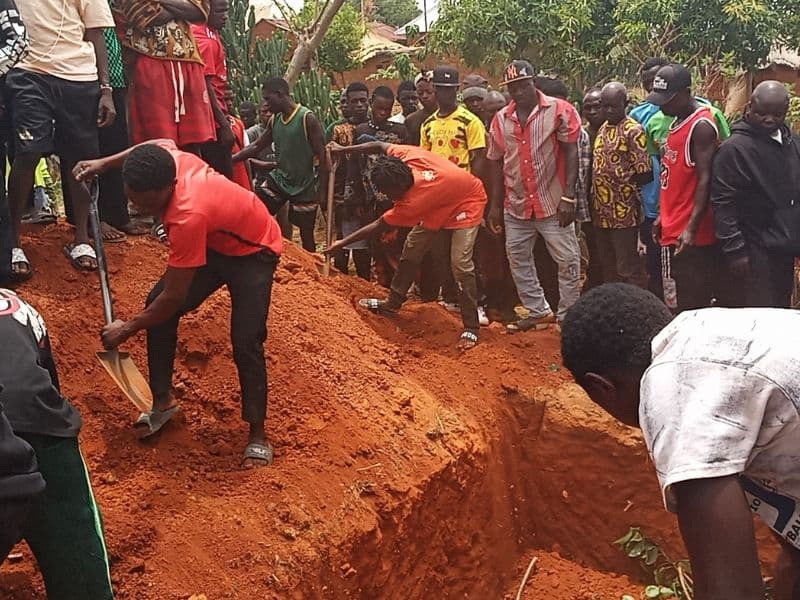
At least eight Christians were killed and ten injured in coordinated overnight attacks across three local government areas in Plateau State, Nigeria, continuing a pattern of systematic, targeted violence against Christian communities in a region that has endured years of such assaults.
Revelation 6:9-10
Prophetic Fulfillment“When he opened the fifth seal, I saw under the altar the souls of those who had been slain for the word of God and for the witness they had borne. They cried out with a loud voice, 'O Sovereign Lord, holy and true, how long before you will judge and avenge our blood on those who dwell on the earth?'”
Why this passage
The fifth seal vision in Revelation 6 addresses the reality of martyrdom as a feature of the entire church age, not merely a single end-times moment. John depicts souls already gathered under the altar — people killed specifically because of their identification with God's word and their testimony — crying for divine vindication.
The vision's original horizon encompassed Roman persecution but was framed broadly enough ('those who dwell on the earth') to encompass all such killing throughout history. The promise given is that the number of martyrs is known to God and that justice will come at his appointed time.
Historical context, theological significance, application today — denomination-neutral, ~1,000-word walk-through.
The apostle John writes in Revelation 6:9 of souls 'slain for the word of God and for the witness they had borne' — martyrs who cry out from beneath the altar asking how long God will delay justice. The eight believers killed overnight in Plateau State are not nameless statistics; they are precisely the kind of witnesses this vision portrays: people who died not in battle but simply because they were Christians in their own homes and villages.
Their blood joins a chorus rising from Nigeria's Middle Belt, where years of coordinated attacks have silenced communities without bringing perpetrators to account. Scripture assures us that God hears every one of those cries — and that his justice, though it tarries, is certain.
Today's Prayer
Pray that God would comfort the survivors and displaced families of Plateau State, bring swift justice against those orchestrating these coordinated attacks, and raise up Nigerian leaders with the courage to protect their Christian citizens.
Further Scripture
Additional passages that illuminate this event, each grounded in a distinct interpretive lens.
“Yet for your sake we are killed all the day long; we are regarded as sheep to be slaughtered.”
Why this passage
Psalm 44 is a communal lament in which Israel, suffering military defeat and national humiliation, protests to God that they have not been unfaithful — and yet they are dying. Verse 22 is the anguished climax: death is continuous ('all the day long') and the killings are systematic ('regarded as sheep to be slaughtered').
Paul quotes this verse in Romans 8:36 and explicitly extends its application to New Covenant believers facing mortal danger, establishing its legitimacy as a description of the church under persecution in any era.
How it applies
The ongoing, years-long nature of attacks in Plateau State maps precisely onto the psalm's phrase 'all the day long' — this is not a single tragedy but a sustained campaign. The image of being 'regarded as sheep to be slaughtered' speaks to the dehumanizing logic of the perpetrators, who treat Christian villagers as prey rather than persons.
This psalm gives the Nigerian church a scriptural voice for their suffering and assures them that bringing this grief directly and boldly before God is itself an act of faith.
“And do not fear those who kill the body but cannot kill the soul. Rather fear him who can destroy both soul and body in hell.”
Why this passage
In Matthew 10, Jesus is commissioning the Twelve for mission and explicitly preparing them for violent rejection. His instruction not to fear those who 'kill the body' is not abstract comfort — it is given in a context where physical death at human hands is treated as a realistic near-term possibility for his messengers.
The command reorients ultimate allegiance: bodily killers have limited, temporal power; God's authority is ultimate and eternal. This principle governs the posture of any persecuted believer.
How it applies
The Christians killed in Plateau State faced exactly the threat Jesus named — people with weapons who can kill the body. For the survivors and the bereaved, Christ's word offers the only framework that gives these deaths meaning without minimizing their horror: the attackers' power is real but bounded, the victims' souls are beyond their reach, and ultimate accountability belongs to God alone.
This verse is a pastoral anchor for a community that has suffered this kind of loss repeatedly across many years.
“But you, O LORD, know me; you see me, and test my heart toward you. Pull them out like sheep for the slaughter, and set them apart for the day of slaughter.”
Why this passage
Jeremiah 12 is the prophet's personal lament over the prosperity of the wicked and the suffering of the righteous, addressed directly to God. Jeremiah protests that he is known and examined by God, and then calls for divine retribution against those who harm the innocent.
The pattern — righteous sufferer known by God, wicked perpetrators seemingly unpunished, prayer for God's justice — is a recurring wisdom theme throughout the prophets and psalms. It represents the biblical vocabulary for processing exactly this kind of unresolved violence.
How it applies
The perpetrators of the Plateau State attacks have carried out coordinated killings across years with apparent impunity — precisely the situation that drove Jeremiah's lament. The persecuted Nigerian church, like Jeremiah, is known by God even when ignored or abandoned by earthly authorities.
This passage gives voice to the righteous anger of survivors and interceding believers worldwide, grounding the prayer for justice in the prophetic tradition rather than mere emotion.
Related by Scripture
Other events we've interpreted through the same passage or hermeneutical lens.
Fears doctors criticising Israel may be silenced as health watchdog adopts contested antisemitism definition
Persecution of ChristiansShares Matthew 10:28ADF Kills 17 Christians Amid Ebola Crisis
Persecution of ChristiansShares Revelation 6:9-10What they’ll do to you if they think you’re Jewish
Persecution of ChristiansShares Psalm 44:22ICC Releases Report Exposing Nigeria’s $10 Million Genocide Cover-Up
Persecution of ChristiansShares Revelation 6:9-10
Community launching soon
Get the invite by email when the Watchman's Wall opens
Share this article
Source: International Christian Concern— we link to the original for full context.