Powerful Philippine quake leaves at least 32 feared dead
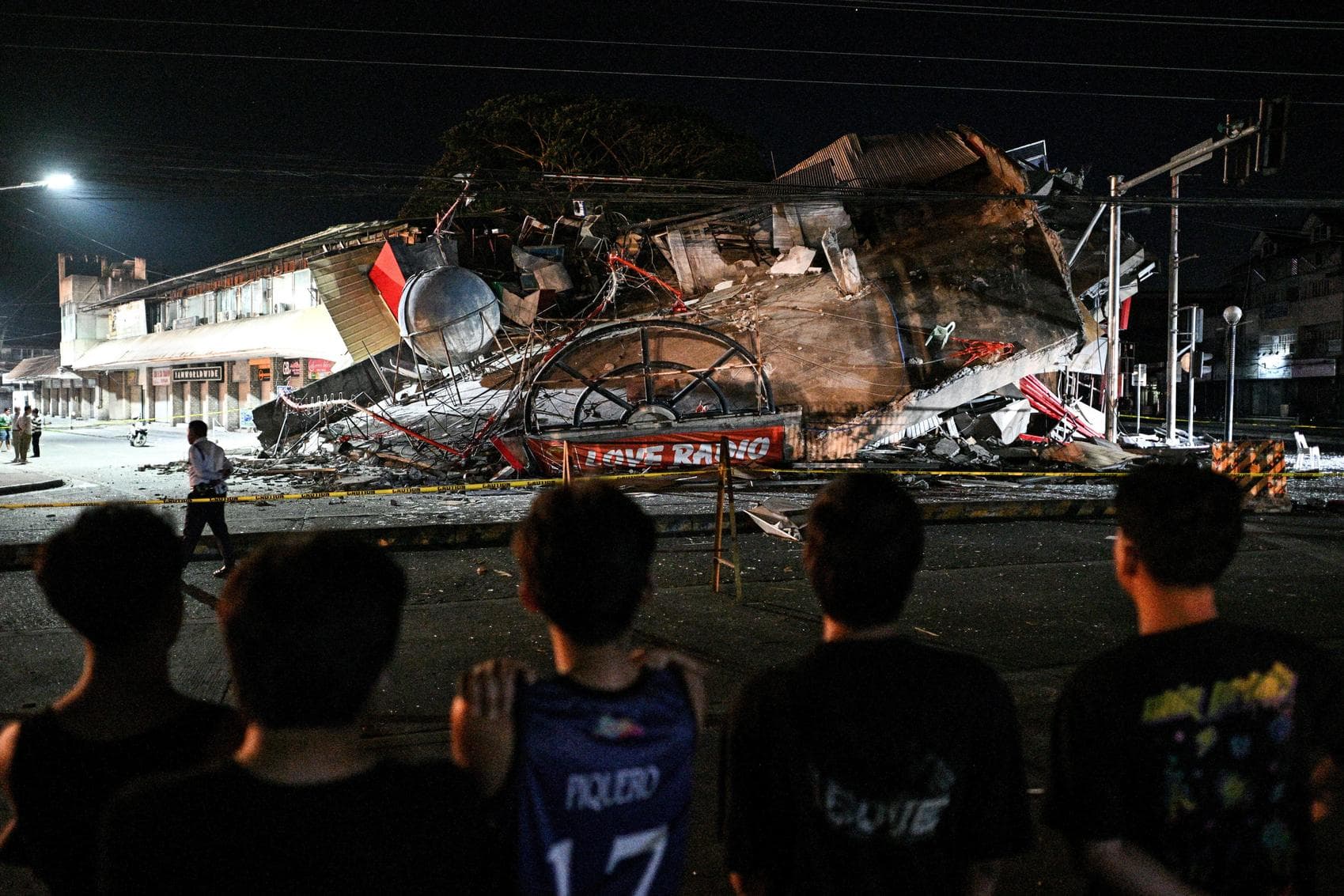
A powerful 7.8-magnitude earthquake in the Philippines has killed at least 32 people and triggered tsunami warnings, echoing Jesus' prophecy of 'earthquakes in various places' as a sign of His coming and the end of the age.
Luke 21:11
Prophetic Fulfillment“There will be great earthquakes, and in various places famines and pestilences. And there will be terrors and great signs from heaven.”
Why this passage
In Luke 21, Jesus is answering the disciples' question about the sign of His coming and the end of the age. He lists specific events that will precede His return, including 'great earthquakes' (Greek: seismoí megáloi).
The original audience understood this as a literal prediction of seismic upheavals, not merely metaphor. The phrase 'in various places' (katà tópous) indicates multiple locations, not a single global event, making this a pattern of increasing frequency and intensity.
This verse is part of the Olivet Discourse, which has both a near-term horizon (the destruction of Jerusalem in AD 70) and a far-term horizon (the final tribulation before Christ's return). The 'great earthquakes' are a recurring sign throughout the church age, intensifying toward the end.
The 7.8-magnitude quake in the Philippines, with its tsunami warnings and significant casualties, fits this pattern precisely.
Historical context, theological significance, application today — denomination-neutral, ~1,000-word walk-through.
Behold, the earth trembles and the nations are shaken. Our Lord Jesus Christ foretold that 'there will be great earthquakes' (Luke 21:11) as one of the birth pains preceding His return.
This 7.8-magnitude quake off Mindanao, claiming at least 32 lives and triggering tsunami warnings across several countries, is not a random tragedy but a sobering fulfillment of His prophetic word.
Take heed, O reader: these events are not merely natural disasters—they are heralds. As the ground shakes beneath the Philippines, let it shake your soul awake.
The same Lord who spoke peace to the storm has spoken these signs to prepare His people. Do not be troubled, but be watchful, for your redemption draws near.
Today's Prayer
Pray for the grieving families and rescue workers in the Philippines, and that this earthquake would awaken many to the reality of Christ's soon return.
Further Scripture
Additional passages that illuminate this event, each grounded in a distinct interpretive lens.
“The earth quakes before them; the heavens tremble. The sun and the moon are darkened, and the stars withdraw their shining.”
Why this passage
Joel 2 describes the Day of the Lord as a time of cosmic and terrestrial upheaval. The phrase 'the earth quakes' (Hebrew: ra'ashah ha'aretz) is a vivid depiction of seismic activity accompanying divine judgment.
In its original context, Joel was warning Judah of a locust plague as a precursor to the greater Day of the Lord, but the language is deliberately apocalyptic, pointing to a future eschatological event. The Minor Prophets, including Joel, are a primary source for understanding the signs of the end.
This verse is part of a broader passage (Joel 2:1-11) that describes an invading army and cosmic disturbances, which many conservative interpreters see as a type of the final tribulation. The earthquake imagery here is not isolated but connected to the full array of end-times signs.
How it applies
The Philippine earthquake is a microcosm of the global shaking Joel prophesied. While this quake is not the final Day of the Lord itself, it is a foretaste—a warning that the earth itself groans under the weight of sin and judgment.
For the believer, such events are not reasons for despair but calls to repentance and readiness, as Joel himself urges: 'Return to the Lord your God, for he is gracious and merciful' (Joel 2:13).
“God is our refuge and strength, a very present help in trouble. Therefore we will not fear though the earth gives way, though the mountains be moved into the heart of the sea, though its waters roar and foam, though the mountains tremble at its swelling.”
Why this passage
Psalm 46 is a song of trust in God's sovereignty over creation and nations. The imagery of the earth giving way and mountains being moved into the sea is poetic language for catastrophic natural disasters—earthquakes, landslides, tsunamis.
The psalmist's point is not that these events won't happen, but that God's people need not be terrified because He is their refuge. This is a wisdom principle: the righteous anchor their hope in God, not in the stability of the physical world.
The original hearers would have understood this as a liturgical declaration of faith during times of national crisis or natural calamity. It is a direct-principle text that applies to any era, including our own.
How it applies
As the Philippine quake caused the earth to 'give way' and triggered tsunami warnings ('waters roar and foam'), this psalm speaks directly to the believer's response. The death toll of 32 and the fear of further destruction are real, but the Christian's ultimate security is not in seismic stability—it is in the unchanging God.
This event calls the church to demonstrate that faith by praying for the afflicted and pointing them to the only refuge that cannot be shaken.
Related by Scripture
Other events we've interpreted through the same passage or hermeneutical lens.
Magnitude 5.7 aftershock hits off Sarangani — PHIVOLCS
Earthquakes & Natural DisastersShares Luke 21:11Man from Digos City dies after powerful Mindanao earthquake
Earthquakes & Natural DisastersShares Luke 21:11Philippines earthquake kills 15, prompts tsunami fears: All to know
Earthquakes & Natural DisastersShares Luke 21:11Philippines Earthquake: CCTV Footage Of The Moment Tremor Hit Davao City
Earthquakes & Natural DisastersShares Luke 21:11Powerful earthquake in the Philippines claims lives of at least 15 people - | 24.KG
Earthquakes & Natural DisastersShares Luke 21:11
Community launching soon
Get the invite by email when the Watchman's Wall opens
Share this article
Source: Japan Today— we link to the original for full context.