Pope sends new shipment of humanitarian aid to Lebanon and Ukraine
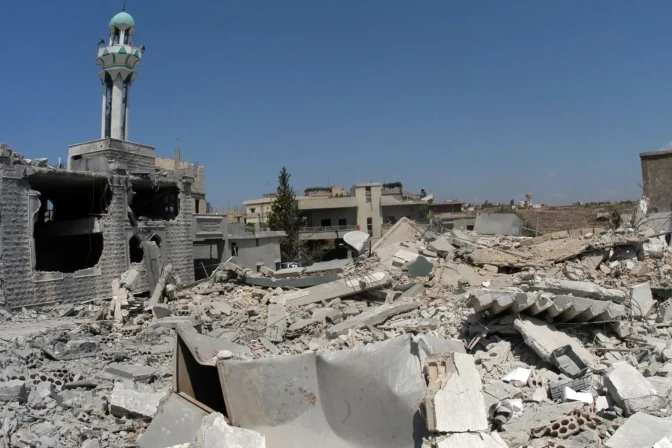
As wars continue to devastate Lebanon and Ukraine, the Pope dispatches humanitarian aid — medications, food, and clothing — to civilian populations caught in the destruction, a scene Scripture repeatedly describes as the bitter fruit of war among the nations.
Hebrews 13:3
Direct Principle“Remember those who are in prison, as though in prison with them, and those who are mistreated, as though you also were being mistreated.”
Why this passage
The author of Hebrews issues a direct command to the covenant community: solidarity with those suffering is not optional charity but a mark of the Body's identity. The original context addresses those imprisoned for faith, but the principle of empathetic, active solidarity is stated in general moral terms — 'those who are mistreated.'
The grammatical-historical force is clear: Christian communities are to act as though the suffering of distant others is their own suffering, which is precisely the logic driving institutional mercy toward war zones.
Historical context, theological significance, application today — denomination-neutral, ~1,000-word walk-through.
The prophet Jeremiah, watching Jerusalem's enemies descend, cried out: 'Woe to us, for we are ruined!' — and the fields of Lebanon and Ukraine echo that ancient anguish today. Medications, food, and clothing are being rushed to people who had ordinary lives before the thunder of war consumed them.
Yet even in devastation, the Body of Christ is called to be hands of mercy in the rubble. The same Scripture that warns of wars among the nations also commands us to remember those in chains as though bound with them — and those in bombed hospitals are bound just as surely.
Today's Prayer
Pray that the Church's mercy reaches the most vulnerable in Lebanon and Ukraine, and that the God of all comfort would bring both wars to a swift and just end.
Further Scripture
Additional passages that illuminate this event, each grounded in a distinct interpretive lens.
“My anguish, my anguish! I writhe in pain! Oh the walls of my heart! My heart is beating wildly; I cannot keep silent, for I hear the sound of the trumpet, the alarm of war. Crash follows hard on crash; the whole land is laid waste. Suddenly my tents are laid waste, my curtains in a moment.”
Why this passage
Jeremiah 4 is an oracle of coming invasion against Judah, in which the prophet himself is stricken with visceral grief at the devastation war brings upon ordinary people — tents, curtains, the domestic fabric of life — not merely armies and kings.
The passage's far horizon extends to any season in which the nations are given over to violence and civilian populations bear the crushing weight of that violence. Lebanon and Ukraine represent precisely this pattern: cities laid waste, hospitals emptied of medicine, families stripped of food and shelter.
How it applies
The rushing of medications, food, and clothing to Lebanon and Ukraine is humanitarian testimony to the reality Jeremiah describes — war does not merely move borders, it destroys the ordinary shelters of human life.
That aid must be sent at all is its own indictment of what war produces; that it is being sent is a small mercy in a large darkness.
“Desolation is left in the city; the gates are battered into ruins.”
Why this passage
Isaiah 24 is the great 'Isaiah Apocalypse,' an oracle against the whole earth in which war, political collapse, and the shattering of covenantal order leave cities in ruin — gates destroyed, populations scattered, the ordinary mechanisms of society undone.
While the original oracle addressed God's judgment upon a corrupt world order in Isaiah's era, its pattern of urban desolation and societal collapse speaks honestly and directly to what war does to cities across every generation.
How it applies
Beirut and the cities of Ukraine have experienced exactly what Isaiah's oracle describes — gates battered, infrastructures shattered, populations dependent on outside mercy for survival.
That the need is for basic medications, food, and clothing tells the whole story: what was once ordinary has become impossible, and the ruins require the attention of those who still stand.
Related by Scripture
Other events we've interpreted through the same passage or hermeneutical lens.
UK on verge of joining EU's £78bn loan for Ukraine as Starmer seeks reset with Brussels
Wars & Rumors of WarsShares Jeremiah 4:19-20Sirens in Misgav Am: Interceptors launched at suspicious aerial objects
Wars & Rumors of WarsShares Jeremiah 4:19-20Journalist Andrzej Poczobut freed as part of US-brokered Polish-Belarusian prisoner swap – as it happened
Persecution of ChristiansShares Hebrews 13:3CEOs of persecution ministries launch joint prayer effort, emphasize unity at global consultation - www.christiandaily.com
Persecution of ChristiansShares Hebrews 13:3Lebanon family 'feared they would die' and think Israel could bomb at any moment
Wars & Rumors of WarsShares Jeremiah 4:19-20
Community launching soon
Get the invite by email when the Watchman's Wall opens
Share this article
Source: ewtnnews— we link to the original for full context.