Morning Mail: Iran launches missiles against Israel, homebuyers squeezed, Alexander Zverev wins French Open
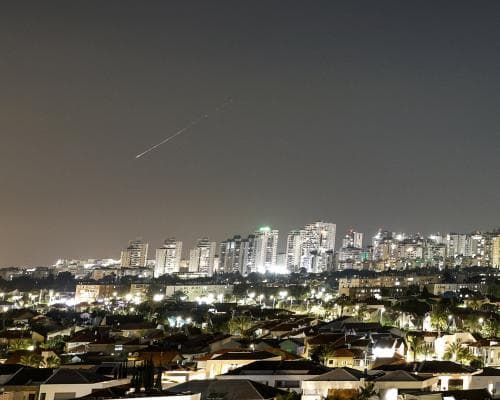
Iran's missile launch against Israel and Israel's interception of those missiles echo biblical prophecies of nations rising against Jerusalem in the last days, signaling the ongoing fulfillment of end-times conflict patterns.
Zechariah 12:2-3
Prophetic Fulfillment“Behold, I am about to make Jerusalem a cup of staggering to all the peoples around, and it will be a heavy stone for all the peoples; all who lift it will grievously hurt themselves. And all the nations of the earth will gather against it.”
Why this passage
Zechariah 12:2-3 is a prophecy concerning the last days when God would make Jerusalem a burdensome stone for all nations. In its original context, the prophet spoke to post-exilic Israel about a future siege of Jerusalem that would involve all nations.
The plain sense describes a time when Jerusalem becomes the focal point of global conflict, with nations attempting to move or destroy it but being injured in the process.
This prophecy finds direct resonance in Iran's missile attack against Israel—a nation-state that has repeatedly declared its intent to destroy the Jewish state. The missile salvo represents a concrete attempt to 'lift' Jerusalem as a burden, fulfilling the pattern Zechariah described of nations gathering against the city.
Historical context, theological significance, application today — denomination-neutral, ~1,000-word walk-through.
Behold, the ancient prophecy of Zechariah stirs again: 'I will make Jerusalem a cup of trembling unto all the people round about.' The missile salvo from Iran against Israel is not merely geopolitics—it is the stage upon which God's Word is being enacted before our eyes.
Take heed, O reader. The nations do not gather against Jerusalem by accident.
Scripture declares this pattern will intensify until the Lord Himself intervenes. Let this news drive you to your knees, not to fear, but to watchfulness and prayer.
Today's Prayer
Pray for the peace of Jerusalem and for the protection of all who dwell within her gates, that God's purposes for Israel and the nations would unfold according to His sovereign timetable.
Further Scripture
Additional passages that illuminate this event, each grounded in a distinct interpretive lens.
“Why do the nations rage and the peoples plot in vain? The kings of the earth set themselves, and the rulers take counsel together, against the LORD and against his Anointed, saying, 'Let us burst their bonds apart and cast away their cords from us.'”
Why this passage
Psalm 2 is a royal psalm describing the rebellion of earthly rulers against Yahweh and His Messiah. The 'raging of the nations' is presented as a futile rebellion against divine authority.
The plain meaning is that human rulers, in their pride, conspire to throw off God's rule—a pattern that recurs throughout history whenever nations defy God's purposes for Israel.
Iran's missile attack against Israel fits this pattern precisely: the Iranian regime, which denies Israel's right to exist and calls for its destruction, is raging against God's Anointed by attacking the land and people He has chosen. The psalm's rhetorical question—'Why do the nations rage?'—exposes the futility of such rebellion.
How it applies
Iran's missile launch is a vivid contemporary example of the nations raging against the LORD and His Anointed. The Iranian leadership's stated goal of eliminating Israel is a direct assault on God's covenant purposes for the Jewish people.
Yet the psalm declares this raging is 'in vain'—as Israel's successful interception demonstrated, the attack did not succeed.
Believers can take comfort that no matter how the nations rage, God's purposes for His Anointed and His people will stand. The missile attack, while serious, is ultimately a futile gesture against the sovereign Lord who laughs at such plots (Psalm 2:4).
“For behold, in those days and at that time, when I restore the fortunes of Judah and Jerusalem, I will gather all the nations and bring them down to the Valley of Jehoshaphat. And I will enter into judgment with them there, on behalf of my people and my heritage Israel, because they have scattered them among the nations and have divided up my land.”
Why this passage
Joel 3:1-2 is a prophecy about the last days when God would restore the fortunes of Judah and Jerusalem and then gather all nations for judgment because of how they treated Israel. The 'Valley of Jehoshaphat' is a symbolic location for divine judgment.
The plain sense describes a time when nations are held accountable for scattering God's people and dividing His land.
Iran's missile attack against Israel occurs in the context of a restored Jewish state in the land—a fulfillment of Joel's 'restoration of Judah and Jerusalem.' The Iranian regime's hostility, including its calls to divide the land and destroy the state, places it among the nations that Joel prophesied would face divine judgment.
How it applies
The missile attack from Iran is not merely a military event but a legal and spiritual matter before the throne of God. Joel's prophecy warns that nations which attack God's people and seek to divide His land will face judgment in the Valley of Jehoshaphat.
Iran's aggression places it squarely in that prophetic crosshairs.
This event should remind believers that God sees every missile launched against Israel and will hold the nations accountable. The restoration of Israel as a nation in the land sets the stage for Joel's promised judgment, and each attack brings that day closer.
Related by Scripture
Other events we've interpreted through the same passage or hermeneutical lens.
Iran seeks new regional norm with strikes on Israel | The Jerusalem Post
Wars & Rumors of WarsShares Zechariah 12:2-3Erdogan-Trump connection may moderate strained Israel-Turkey relations | The Jerusalem Post
Israel & JerusalemShares Zechariah 12:2-3Israel and Iran trade strikes, threatening to drag the region back into full-scale war
Wars & Rumors of WarsShares Psalm 2:1-2Chinese FM expresses deep concern over renewed Iran-Israel clashes
Wars & Rumors of WarsShares Psalm 2:1-2Middle East crisis live: Trump tells Israel and Iran to stop ‘shooting’ after countries launch first strikes since April ceasefire
Wars & Rumors of WarsShares Psalm 2:1-2
Community launching soon
Get the invite by email when the Watchman's Wall opens
Share this article
Source: The Guardian— we link to the original for full context.