May 1 war powers deadline lands: Will Trump end the Iran war or challenge Congress authority?
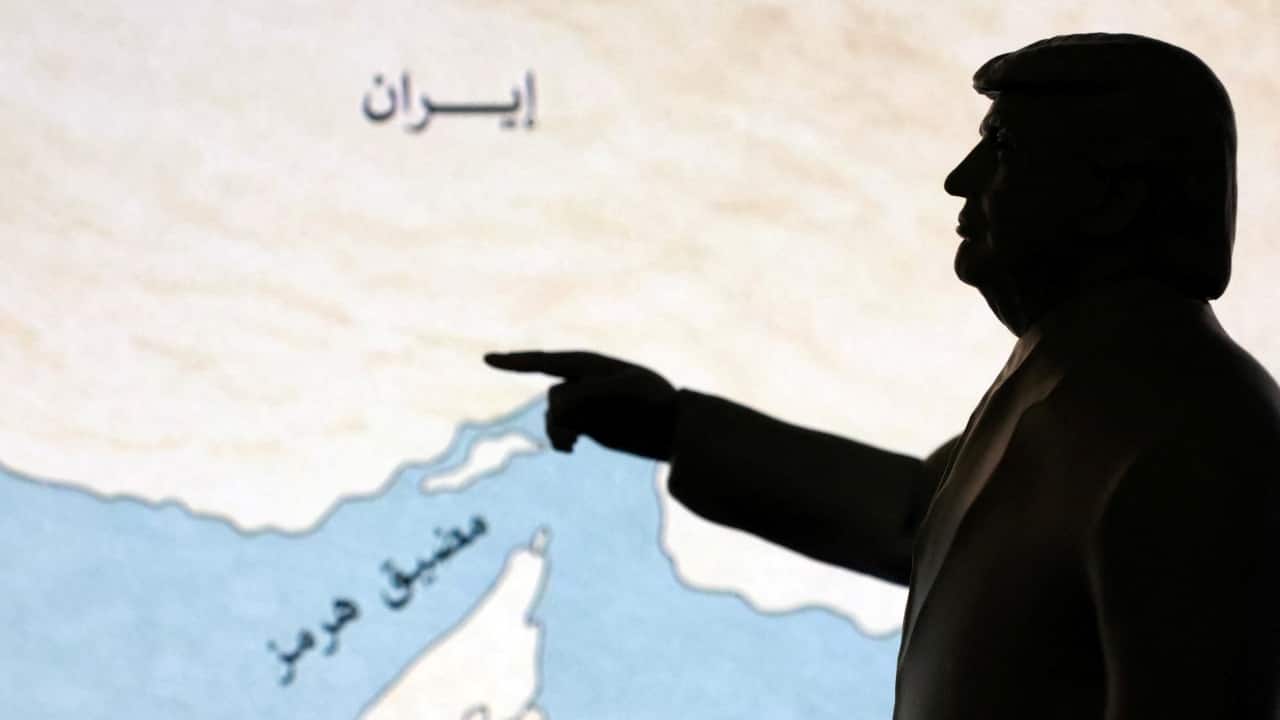
Active US-Israeli strikes on Iran collide with a congressional war-powers deadline, marking a significant escalation of Middle Eastern conflict that Scripture long associated with the gathering of nations in the last days.
Jeremiah 25:32
Prophetic Fulfillment“Thus says the LORD of hosts: Behold, evil is going forth from nation to nation, and a great tempest is stirring from the farthest parts of the earth!”
Why this passage
In its original context, Jeremiah 25 describes God's judgment rolling outward from Judah to encompass Babylon, Egypt, and all the surrounding nations — a divine tempest that no earthly power could contain or legislate away. The passage functions both as a near-horizon description of Babylonian conquest and as a far-horizon template for how God's judgments travel along the fault lines of international conflict.
The pattern here is not merely war, but war that metastasizes — beginning in one theater and pulling more nations in, even fracturing the internal governance of the powers involved. The US-Iran conflict, now straining constitutional structures at home while drawing in Israel, fits this pattern of a tempest that 'goes forth from nation to nation.'
The prophet Jeremiah beheld a vision of destruction sweeping from nation to nation, declaring in Jeremiah 25:32, 'Behold, evil is going forth from nation to nation, and a great tempest is stirring from the farthest parts of the earth.' What began as strikes between the United States, Israel, and Iran has rippled outward into a constitutional crisis at home — the tempest does not merely destroy abroad; it unsettles the order of nations from within.
The herald's task is not to despair but to be watchful. These cascading conflicts — wars multiplying and spreading — are precisely the pattern Christ warned His disciples to recognize as the beginning of birth pains.
Let the church pray, stand firm, and hold fast to the One who holds history in His hand.
Today's Prayer
Pray that God would restrain the escalating conflict between the United States, Israel, and Iran, that leaders on every side would be granted wisdom, and that the church would remain anchored in faith rather than fear as the nations rage.
Further Scripture
Additional passages that illuminate this event, each grounded in a distinct interpretive lens.
“Why do the nations rage and the peoples plot in vain? The kings of the earth set themselves, and the rulers take counsel together, against the LORD and against his Anointed, saying, 'Let us burst their bonds apart and cast away their cords from us.'”
Why this passage
Psalm 2 opens with the Psalmist's rhetorical question about the futility of nations raging and rulers conspiring — the Hebrew word for 'rage' (ragash) implies tumultuous, agitated plotting, not merely anger. The plain grammatical-historical meaning is that earthly powers — kings and rulers — strive against divine order and against God's appointed sovereign, ultimately in vain.
The principle is durable across history: rulers contending for supreme authority, whether against God's Anointed directly or against the moral order He has embedded in creation, are engaged in a futile enterprise that Scripture calmly declares will end in divine laughter (v.4) and then judgment.
How it applies
The showdown between presidential war powers and congressional authority is, at its root, rulers 'taking counsel together' over who holds ultimate power — each side straining against the bonds the other would impose. While this is not a direct conflict against God's Anointed in the messianic sense, it exemplifies the Psalm 2 pattern of earthly powers in agitated, futile struggle for supremacy.
Meanwhile the larger war — between major powers in the Middle East, with Israel at its center — reflects precisely the raging of nations that the Psalmist describes as the backdrop against which the Lord's sovereignty is finally declared.
“The great day of the LORD is near, near and hastening fast; the sound of the day of the LORD is bitter; the mighty man cries aloud there. A day of wrath is that day, a day of distress and anguish, a day of ruin and devastation, a day of darkness and gloom, a day of clouds and thick darkness.”
Why this passage
Zephaniah prophesied the Day of the LORD as a moment when the military power of nations — even 'mighty men' — cries out under judgment. The immediate context was the Assyrian-era threat to Judah, but the canonical function of the Day of the LORD passages is to establish a recurring pattern of divine intervention through geopolitical catastrophe that reaches its fullness at history's end.
The phrase 'near and hastening fast' carries urgency — not a slow drift but a rapid approach. The convergence of US, Israeli, and Iranian military forces in active conflict, now entangling constitutional governance, reflects the kind of geopolitical compression these passages describe.
How it applies
The collision of active warfare with a constitutional deadline is precisely the kind of distress-and-anguish scenario Zephaniah depicts — mighty powers in confrontation, internal order strained, and no clean political resolution in sight. The mighty man — whether executive or legislative — 'cries aloud' when the machinery of war outpaces the machinery of governance.
Let the reader hear in these events not merely a political story but a spiritual signal: the nations are not in control of what they have set in motion.
“And I will stir up Egyptians against Egyptians, and they will fight, each against his neighbor and each against his city, and kingdom against kingdom.”
Why this passage
Isaiah 19 is an oracle against Egypt, but its structural pattern — internal division and external conflict erupting simultaneously — speaks to a recurring divine judgment: when God gives a nation over to strife, conflict fractures both its foreign wars and its domestic unity at once. The original near-horizon meaning concerned Egypt's internal collapse preceding Assyrian domination.
The parallel here is structural, not national-identification: a great power engaged in foreign war while simultaneously its own governing institutions fracture against one another — Congress versus the executive — mirrors the pattern Isaiah describes as the mark of a nation under divine pressure.
How it applies
The United States finds itself fighting an active war against Iran while its own constitutional branches move toward confrontation over who holds war authority. This is the Isaiah 19 pattern: external conflict and internal division arriving together, neither containable by the other.
Take heed — a house divided against itself while simultaneously at war abroad is a nation under enormous strain, and Scripture marks such moments as occasions for solemn reflection, not partisan triumph.
Related by Scripture
Other events we've interpreted through the same passage or hermeneutical lens.
Report: US intelligence warns Netanyahu may sabotage Trump’s Iran deal
Wars & Rumors of WarsShares Psalm 2:1-3The End of the United Nations
One World Government / EconomyShares Psalm 2:1-3US strikes Iran for second day, as ceasefire appears close to collapse
Wars & Rumors of WarsShares Psalm 2:1-3United States Launches Renewed Attacks on Iran
Wars & Rumors of WarsShares Psalm 2:1-3Pope Leo tells Spanish parliament migrants must be respected
Moral DeclineShares Psalm 2:1-3
Community launching soon
Get the invite by email when the Watchman's Wall opens
Share this article
Source: Moneycontrol— we link to the original for full context.