Lindsey Graham urges Trump to flood Iran with guns
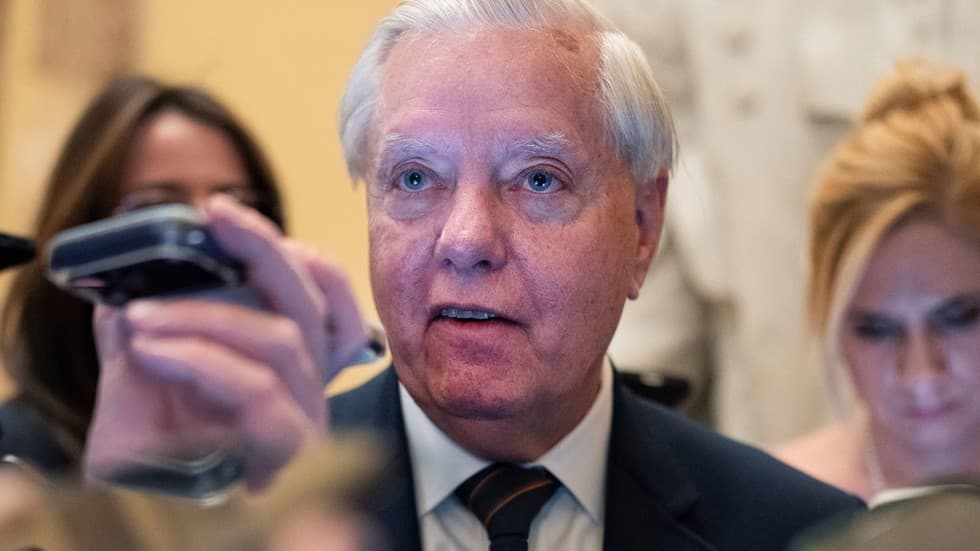
A senior US senator's public call to arm Iranian civilians to destabilize the Iranian government represents an escalation of war-rhetoric and regime-change strategy — a pattern Scripture describes as nations scheming against one another in the lead-up to the Day of the Lord.
Psalm 2:1-3
Direct Principle“Why do the nations rage and the peoples plot in vain? The kings of the earth set themselves, and the rulers take counsel together, against the LORD and against his Anointed, saying, 'Let us burst their bonds apart and cast away their cords from us.'”
Why this passage
Psalm 2 opens with the rhetorical question that frames all of human geopolitics from God's vantage point: why do the nations conspire and the rulers 'take counsel together'?
The Psalm's plain sense is that earthly rulers devise schemes — military, political, ideological — that they believe will succeed, while the enthroned LORD regards their plotting with sovereign authority. This is not merely an eschatological text; it is a timeless principle about the futility and spiritual character of great-power scheming.
The prophet Jeremiah heard the LORD declare, 'Behold, a people is coming from the north country... they lay hold on bow and javelin; they are cruel and have no mercy' — yet behind every nation's war counsel, the sovereign God of armies remains unmoved on His throne.
When powerful voices urge flooding a nation with weapons to ignite civil war, the Christian is not surprised: Scripture long declared that the nations would 'devise evil' and conspire in violence. Take heed — our call is not to panic at the counsel of men, but to cry out to the One whose purposes no senate chamber can overrule.
Today's Prayer
Pray that God would restrain the counsel of those who stir up bloodshed, and that His mercy would move upon the people of Iran — many of whom are hungering for the gospel — before the fires of war are lit.
Further Scripture
Additional passages that illuminate this event, each grounded in a distinct interpretive lens.
“Behold, he comes up like clouds; his chariots like the whirlwind; his horses are swifter than eagles — woe to us, for we are ruined! O Jerusalem, wash your heart from evil, that you may be saved. How long shall your wicked thoughts lodge within you? For a voice declares from Dan and proclaims trouble from Mount Ephraim. Warn the nations that he is coming; announce to Jerusalem, 'Besiegers come from a distant land; they shout against the cities of Judah.' Like keepers of a field are they against her all around, because she has rebelled against me, declares the LORD. Your ways and your deeds have brought this upon you. This is your doom, and it is bitter; it has reached your very heart. My anguish, my anguish! I writhe in pain! Oh the walls of my heart! My heart is beating wildly; I cannot keep silent, for I hear the sound of the trumpet, the alarm of war.”
Why this passage
Jeremiah 4 records the prophet's anguish at hearing the 'alarm of war' as foreign powers mass against the nations — chariots, swift horses, besiegers coming from a distant land.
The original context is the Babylonian threat against Judah, but the passage establishes a recurring pattern in God's governance of the nations: powerful distant forces are stirred up, war-counsels are formed, and the sound of the trumpet reaches even the prophet's chest. The escalating public rhetoric of a superpower senator calling for the arming of a civilian population to ignite regime collapse is precisely the kind of 'alarm of war' from a distant land that Jeremiah's imagery evokes.
How it applies
Senator Graham's call to flood Iran with weapons to spark civil war is a distant power formally deliberating the stoking of armed conflict inside another nation's borders.
The 'alarm of war' Jeremiah heard — counsel formed far away, weapons projected inward, siege-language against a city-state — echoes in this public political declaration. Whether policy becomes reality or not, Scripture marks these moments of war-counsel as spiritually significant: the nations are moving, and the God of hosts is watching.
“For behold, I begin to work disaster at the city that is called by my name, and shall you go unpunished? You shall not go unpunished, for I am summoning a sword against all the inhabitants of the earth, declares the LORD of hosts. You, therefore, shall prophesy against them all these words, and say to them: 'The LORD will roar from on high, and from his holy habitation utter his voice; he will roar mightily against his fold, and shout, like those who tread grapes, against all the inhabitants of the earth. The din will resound to the ends of the earth, for the LORD has an indictment against the nations; he is entering into judgment with all flesh, and the wicked he will put to the sword, declares the LORD.' Thus says the LORD of hosts: Behold, disaster is going forth from nation to nation, and a great tempest is stirring from the farthest parts of the earth!”
Why this passage
Jeremiah 25 presents one of Scripture's most panoramic pictures of multinational conflict: 'disaster is going forth from nation to nation, and a great tempest is stirring from the farthest parts of the earth.'
The original context is Jeremiah's declaration of God's judgment on Babylon and the surrounding nations after the Babylonian crisis — but the language deliberately reaches beyond that single moment to describe a pattern of cascading, nation-to-nation catastrophe that characterizes the end of ages. 'A sword against all the inhabitants of the earth' is universal in scope.
How it applies
Graham's proposal — a superpower deliberately engineering instability inside a nation already at the center of Middle Eastern geopolitical tension — fits the Jeremiah 25 pattern of disaster 'going forth from nation to nation,' each act of aggression or destabilization feeding the next.
The 'great tempest stirring from the farthest parts of the earth' is not hyperbole to ignore; it is Scripture's way of saying that when great powers begin deliberate meddling, the ripples do not stay contained. The Christian reads such proposals knowing that no statesman's strategy operates outside God's ultimate governance.
Related by Scripture
Other events we've interpreted through the same passage or hermeneutical lens.
Report: US intelligence warns Netanyahu may sabotage Trump’s Iran deal
Wars & Rumors of WarsShares Psalm 2:1-3The End of the United Nations
One World Government / EconomyShares Psalm 2:1-3US strikes Iran for second day, as ceasefire appears close to collapse
Wars & Rumors of WarsShares Psalm 2:1-3United States Launches Renewed Attacks on Iran
Wars & Rumors of WarsShares Psalm 2:1-3Pope Leo tells Spanish parliament migrants must be respected
Moral DeclineShares Psalm 2:1-3
Community launching soon
Get the invite by email when the Watchman's Wall opens
Share this article
Source: Russia Today— we link to the original for full context.