‘Makes no sense’: experts doubt pause in US arms sale to Taiwan is due to Iran war
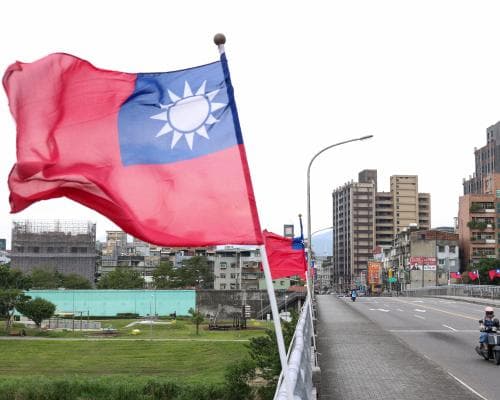
Delays in US arms sales to Taiwan, amid speculation about a shift in military focus toward Iran, reflect the escalating great-power rivalries and rumors of war that Scripture warns will characterize the last days.
Psalm 2:1-2
Direct Principle“Why do the nations rage and the peoples plot in vain? The kings of the earth set themselves, and the rulers take counsel together, against the LORD and against his Anointed, saying,”
Why this passage
Psalm 2 is a royal psalm describing the rebellion of earthly rulers against God's sovereign rule. The 'raging' and 'plotting' of the nations is not random chaos but a deliberate, collective defiance of divine authority.
The psalm's original context was likely the coronation of a Davidic king, but its canonical placement as the introduction to the Psalter gives it a universal, eschatological horizon.
This principle applies directly to the great-power maneuvering over Taiwan. The US, China, and Iran are not merely pursuing national interests—they are 'taking counsel together' in a pattern of rebellion that Scripture identifies as the fundamental posture of fallen nations.
The arms deal delay is not merely bureaucratic; it is part of the nations' ongoing 'plotting' that Psalm 2 diagnoses.
Behold, the nations rage and the kingdoms take counsel together against the Lord and His anointed. The delay of arms to Taiwan, coupled with whispers of a new front in Iran, reveals how quickly the world's powers shift their postures and prepare for conflict.
Yet the Psalmist reminds us that He who sits in the heavens laughs; the Lord holds them in derision. In the midst of these geopolitical maneuvers, let your trust not be in chariots or in horses, but in the name of the Lord your God.
Today's Prayer
Pray for the peace of Jerusalem and for the nations, that the Lord would restrain the spirit of war and grant wisdom to leaders before the day of His wrath draws near.
Further Scripture
Additional passages that illuminate this event, each grounded in a distinct interpretive lens.
“Proclaim this among the nations: Consecrate for war; stir up the mighty men. Let all the men of war draw near; let them come up. Beat your plowshares into swords, and your pruning hooks into spears; let the weak say, 'I am a warrior.'”
Why this passage
Joel 3 is a prophecy of the gathering of all nations for judgment in the Valley of Jehoshaphat. The call to 'beat plowshares into swords' is a deliberate inversion of the messianic peace of Micah 4:3—it signals a time when the world abandons peacemaking and prepares for war.
The original audience understood this as a divine summons to the nations to face judgment.
This prophecy finds a contemporary echo in the arms race over Taiwan. The US is preparing to sell $14 billion in weapons to Taiwan, while China views such sales as a provocation.
The 'consecration for war' Joel describes is visible in the military buildup, the strategic posturing, and the willingness of both sides to escalate. The delay in deliveries does not diminish the reality that the nations are actively 'stirring up' for conflict.
How it applies
The article's focus on arms sales and military readiness around Taiwan reflects Joel's call to 'consecrate for war.' The US and China are not merely negotiating—they are preparing for potential conflict. The delay in deliveries, attributed to Iran, only underscores how multiple theaters of tension are converging, as the nations 'beat their plowshares into swords' in multiple regions simultaneously.
“At the time of the end, the king of the south shall attack him, but the king of the north shall rush upon him like a whirlwind, with chariots and horsemen, and with many ships. And he shall come into countries and shall overflow and pass through.”
Why this passage
Daniel 11 is a detailed prophecy of conflicts between the 'king of the north' and 'king of the south,' widely understood by dispensational interpreters as referring to end-times geopolitical alignments involving a northern power (often associated with Russia or a confederation) and a southern power (often associated with Egypt or an Arab coalition). The 'time of the end' marks the final phase of history before the resurrection and judgment.
While the article does not name Russia or Egypt, the pattern of great-power competition over Taiwan and the Middle East fits the Danielic framework of rival kings maneuvering for strategic advantage. The US arms sale to Taiwan can be seen as part of the 'king of the south's' preparations, while China's opposition aligns with the 'king of the north's' posture.
The mention of Iran as a potential distraction further echoes the multi-front conflict Daniel describes.
How it applies
The article's discussion of US arms to Taiwan and the potential diversion to Iran illustrates the kind of multi-theater great-power rivalry Daniel 11:40 describes. The 'king of the south' (potentially a US-led coalition) and the 'king of the north' (potentially a China-led bloc) are positioning for conflict.
The delay in arms deliveries, attributed to Iran, shows how these powers are 'rushing upon' each other in a complex geopolitical dance that Daniel's prophecy anticipated.
Related by Scripture
Other events we've interpreted through the same passage or hermeneutical lens.
Israeli attack on Tyre in Lebanon kills eight as evacuation ordered for Christian quarter
Wars & Rumors of WarsShares Joel 3:9-10Eight killed in south Lebanon strike as Israel warns entire city to evacuate
Wars & Rumors of WarsShares Joel 3:9-10Middle East crisis live: People flee Lebanese city of Tyre after Israel orders evacuation ahead of strikes
Wars & Rumors of WarsShares Joel 3:9-10Israel and Iran trade strikes, threatening to drag the region back into full-scale war
Wars & Rumors of WarsShares Psalm 2:1-2NATO drills aimed at practicing coordination during potential anti-Russia operation — MP
Wars & Rumors of WarsShares Joel 3:9-10
Community launching soon
Get the invite by email when the Watchman's Wall opens
Share this article
Source: The Guardian— we link to the original for full context.