Israeli strikes kill dozens in southern Lebanon as Netanyahu expands ground campaign
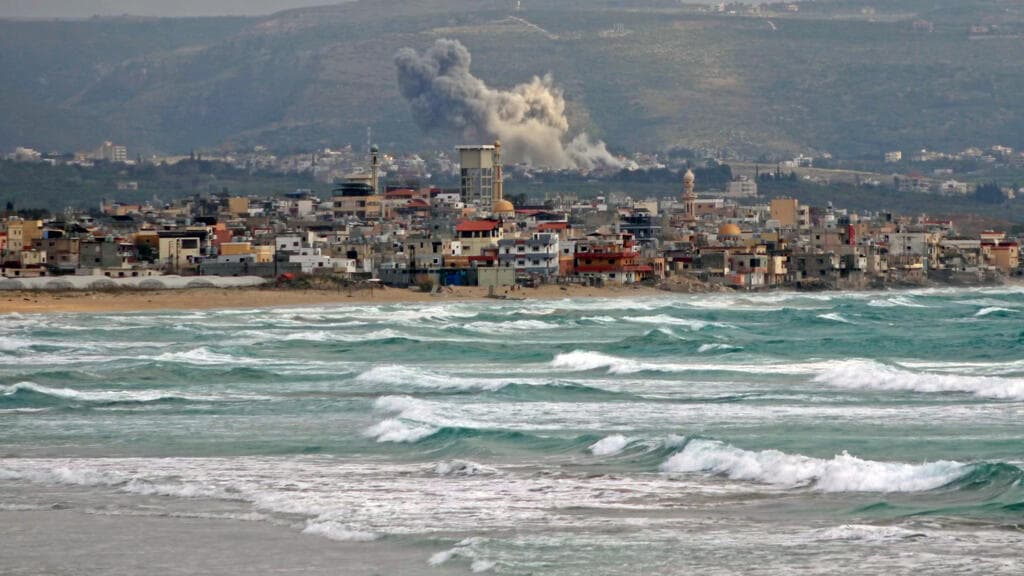
Israeli airstrikes in southern Lebanon killed dozens, including children, as Netanyahu expanded ground operations despite a truce with Hezbollah, echoing biblical prophecies of ongoing conflict in the region.
Psalm 2:1-2
Direct Principle“Why do the nations rage and the peoples plot in vain? The kings of the earth set themselves, and the rulers take counsel together, against the Lord and against his Anointed, saying,”
Why this passage
Psalm 2 is a royal psalm describing the rebellion of earthly rulers against God's anointed king (ultimately Christ). The "raging" of nations and plotting of rulers is a timeless principle: human governments and powers often unite in opposition to God's purposes, especially regarding His chosen people and His Messiah.
The psalm's plain sense is a declaration of God's sovereignty over the futile conspiracies of men.
This principle applies directly to the Israel-Lebanon conflict, where nations and militant groups (Hezbollah, Iran, and their proxies) rage against Israel, a nation through whom God's covenant purposes unfold. The expansion of ground operations despite a truce shows the futility of human peace efforts apart from submission to God's Anointed.
Behold, the sword of the Lord is never idle against the nations that defy His covenant. As Isaiah 17:1 declares, "Behold, Damascus will cease to be a city and will become a heap of ruins" — a sobering reminder that God's judgments against ancient enemies of His people echo through history.
Yet even amidst the thunder of war, the believer is called to watch and pray, knowing that such conflicts are birth pangs, not the end. Take heed, for the Prince of Peace will one day make wars cease to the ends of the earth.
Today's Prayer
Pray for the protection of innocent civilians caught in the crossfire and for the peace of Jerusalem, that leaders may turn from violence to seek the Lord.
Further Scripture
Additional passages that illuminate this event, each grounded in a distinct interpretive lens.
“An oracle concerning Damascus. Behold, Damascus will cease to be a city and will become a heap of ruins.”
Why this passage
Isaiah 17 is an oracle against Damascus, the capital of Syria, pronouncing judgment that it would be reduced to ruins. Historically, this was fulfilled in part by the Assyrian conquest, but the prophecy also carries a future horizon, as the context includes judgment on Israel's northern neighbors and a day when "the glory of Jacob shall be brought low" (v.
4). The plain sense is a divine decree of destruction against a city that has long opposed God's people.
This oracle extends to the broader region of Syria and Lebanon, which were part of ancient Aram. Modern Israeli strikes in southern Lebanon, near the Syrian border, and the ongoing campaign against Hezbollah (backed by Damascus) echo the pattern of judgment against those who threaten Israel.
The prophecy's language of ruins and desolation finds a grim parallel in the civilian casualties and destruction reported.
How it applies
The Israeli strikes killing dozens in southern Lebanon, including children, reflect the ongoing reality of conflict in the region that Isaiah foretold. While the specific prophecy against Damascus is not yet fully consummated, the pattern of warfare and judgment against Israel's adversaries continues, reminding readers that God's word stands sure.
“Proclaim this among the nations: Consecrate for war; stir up the mighty men. Let all the men of war draw near; let them come up. Beat your plowshares into swords, and your pruning hooks into spears; let the weak say, 'I am a warrior.'”
Why this passage
Joel 3 describes a gathering of nations for judgment in the Valley of Jehoshaphat, where God will contend with the nations that have scattered His people. The call to "beat plowshares into swords" is a reversal of the messianic peace prophecy (Micah 4:3), indicating a time of intensified warfare before the Lord's final intervention.
The original hearers understood this as a divine summons to battle against the enemies of Israel.
This passage applies to the current escalation because it depicts a period when nations prepare for war rather than peace. Israel's expansion of ground operations in Lebanon, despite a truce, and Hezbollah's continued resistance, mirror the prophetic call to arms.
The involvement of Iran-backed forces aligns with the gathering of nations against Jerusalem's region.
How it applies
The Israeli campaign in southern Lebanon, with dozens killed and a truce broken, exemplifies the Joel 3 pattern of nations consecrating for war. The weak declaring themselves warriors echoes Hezbollah's rhetoric and the cycle of violence that precedes the Lord's final judgment on the nations.
Related by Scripture
Other events we've interpreted through the same passage or hermeneutical lens.
Israeli attack on Tyre in Lebanon kills eight as evacuation ordered for Christian quarter
Wars & Rumors of WarsShares Joel 3:9-10Eight killed in south Lebanon strike as Israel warns entire city to evacuate
Wars & Rumors of WarsShares Joel 3:9-10Middle East crisis live: People flee Lebanese city of Tyre after Israel orders evacuation ahead of strikes
Wars & Rumors of WarsShares Joel 3:9-10Israel and Iran trade strikes, threatening to drag the region back into full-scale war
Wars & Rumors of WarsShares Psalm 2:1-2NATO drills aimed at practicing coordination during potential anti-Russia operation — MP
Wars & Rumors of WarsShares Joel 3:9-10
Community launching soon
Get the invite by email when the Watchman's Wall opens
Share this article
Source: © Kawnat Haju, AFP— we link to the original for full context.