Israeli strike in Gaza City kills new head of Hamas's military wing
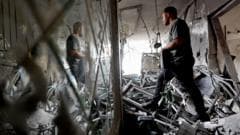
An Israeli airstrike in Gaza City killed the new head of Hamas's military wing, violating a ceasefire and signaling continued conflict in the region—a pattern of war and unrest that Scripture warns will mark the last days.
Joel 3:9-10
Prophetic Fulfillment“Proclaim this among the nations: Consecrate for war; stir up the mighty men. Let all the men of war draw near; let them come up. Beat your plowshares into swords, and your pruning hooks into spears; let the weak say, 'I am a warrior.'”
Why this passage
Joel 3:9-10 is a prophetic summons to the nations for war in the Valley of Jehoshaphat, a passage that anticipates a final gathering of hostile powers against God's people. The original context is a call to prepare for divine judgment on the nations that have scattered Israel.
This oracle's imagery—turning agricultural tools into weapons—describes a world where peace is abandoned for conflict. The verse's pattern of nations consecrating for war against Israel finds a direct echo in the ongoing military actions between Israel and Hamas, where ceasefires are broken and new leaders are targeted.
Behold, the sword does not rest. Even as men speak of peace, the sound of war echoes in Gaza.
The Lord Jesus warned, 'Ye shall hear of wars and rumours of wars: see that ye be not troubled' (Matthew 24:6).
This strike reminds us that human ceasefires are fragile, but God's peace is not. Let your heart not be shaken by the news of conflict, but anchor your hope in the Prince of Peace who will one day still all wars.
Today's Prayer
Pray for the peace of Jerusalem and for the protection of civilians caught in the crossfire of this ongoing conflict.
Further Scripture
Additional passages that illuminate this event, each grounded in a distinct interpretive lens.
“Why do the nations rage and the peoples plot in vain? The kings of the earth set themselves, and the rulers take counsel together, against the LORD and against his Anointed, saying,”
Why this passage
Psalm 2 is a royal psalm describing the futile rebellion of earthly rulers against God and His Messiah. The 'raging' of nations and 'plotting' of rulers is a timeless pattern of human pride and opposition to divine authority.
This wisdom principle applies whenever nations or militant groups take up arms against God's purposes, especially in the land of Israel. The psalm's rhetorical question—'Why do the nations rage?'—exposes the irrationality of persistent conflict when God's sovereignty is absolute.
How it applies
Hamas's continued military leadership and Israel's targeted strikes, even under a ceasefire, exemplify the 'raging of the nations' described in Psalm 2. Both sides 'set themselves' against each other, but ultimately their conflict is part of a larger rebellion against the Prince of Peace.
The news of this killing, coming after a ceasefire, shows how human plots 'in vain' attempt to secure peace through violence. The psalm calls the reader to recognize that true peace comes only through submission to God's Anointed, not through military strikes or political agreements.
Related by Scripture
Other events we've interpreted through the same passage or hermeneutical lens.
Israeli attack on Tyre in Lebanon kills eight as evacuation ordered for Christian quarter
Wars & Rumors of WarsShares Joel 3:9-10Eight killed in south Lebanon strike as Israel warns entire city to evacuate
Wars & Rumors of WarsShares Joel 3:9-10Middle East crisis live: People flee Lebanese city of Tyre after Israel orders evacuation ahead of strikes
Wars & Rumors of WarsShares Joel 3:9-10Israel and Iran trade strikes, threatening to drag the region back into full-scale war
Wars & Rumors of WarsShares Psalm 2:1-2NATO drills aimed at practicing coordination during potential anti-Russia operation — MP
Wars & Rumors of WarsShares Joel 3:9-10
Community launching soon
Get the invite by email when the Watchman's Wall opens
Share this article
Source: bbc— we link to the original for full context.