Iran War: Hezbollah Rejects Israel-Favoring Ceasefire, Casting More Doubt on “Deal”: Iran Agrees to Inspection of Bushear Plant but No Enriched Uranium Concessions; Trump Warned of Oil Cliff as Private Debt Fund Wobbles Rise
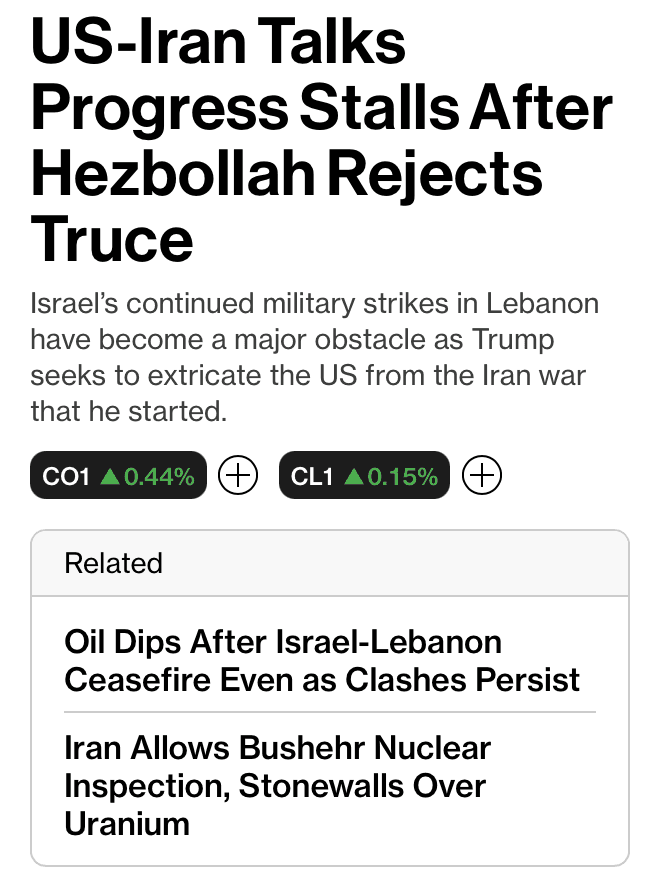
Hezbollah's rejection of a ceasefire favoring Israel and Iran's limited nuclear inspection concessions signal deepening regional tensions, echoing biblical warnings of nations gathering for war and the peril of false peace declarations.
Psalm 2:1-3
Prophetic Fulfillment“Why do the nations rage and the peoples plot in vain? The kings of the earth set themselves, and the rulers take counsel together, against the LORD and against his Anointed, saying, 'Let us burst their bonds apart and cast away their cords from us.'”
Why this passage
Psalm 2 is a royal coronation psalm describing the rebellion of earthly rulers against Yahweh and His Messiah. In its original context, it likely celebrated the Davidic king's enthronement, but the New Testament (Acts 4:25-28, Hebrews 1:5) applies it directly to Christ and the opposition of Gentile rulers against His kingdom.
The pattern of nations conspiring, rejecting divine authority, and seeking to throw off God's 'bonds' (His moral law and covenant order) is precisely what we see in the Iran deal impasse: Hezbollah, Iran, and Israel each set themselves against a comprehensive peace that would honor God's purposes for the land.
Behold, the nations rage and the peoples plot in vain, as Psalm 2 declares. The Lord who sits in heaven laughs at the confederacies of men who think their treaties and inspections can secure lasting peace.
Yet take heart, O reader: the same Psalm that speaks of raging nations also declares God's King set upon Zion. Every rejection of a ceasefire, every wobble in the markets, every inspection that yields no real concession — these are not random headlines but the groaning of a world that has not yet bowed the knee.
Today's Prayer
Pray for the peace of Jerusalem and for the nations of the Middle East to turn from their warring ways before the day of the Lord's wrath arrives.
Further Scripture
Additional passages that illuminate this event, each grounded in a distinct interpretive lens.
“Proclaim this among the nations: Consecrate for war; stir up the mighty men. Let all the men of war draw near; let them come up. Beat your plowshares into swords, and your pruning hooks into spears; let the weak say, 'I am a warrior.'”
Why this passage
Joel 3 is a prophecy of the Lord's judgment on the nations that have scattered His people and divided His land. The call to 'beat plowshares into swords' is the opposite of Isaiah's peace vision (Isa 2:4) — here, God summons the nations to war because their hearts are set on conflict, not peace.
The original context is the Valley of Jehoshaphat (likely the Kidron Valley near Jerusalem), where God will judge the nations for their treatment of Israel. The imagery is deliberately martial: even the weak boast of warrior strength.
How it applies
Hezbollah's rejection of a ceasefire and Iran's refusal to make meaningful nuclear concessions are not diplomatic setbacks — they are the nations consecrating themselves for war. The 'oil cliff' and debt fund wobbles are the economic tremors that accompany such martial preparations.
When the weak say 'I am a warrior,' we see it in Hezbollah's rhetoric and Iran's defiance. Joel's prophecy is not merely ancient poetry; it is the script the nations are reading from today.
“They have healed the wound of my people lightly, saying, 'Peace, peace,' when there is no peace.”
Why this passage
Jeremiah 6:14 is a prophetic indictment of false prophets and leaders who assure the people of safety while judgment is imminent. In its original context, Jeremiah was warning Judah that their religious and political leaders were deceiving them with promises of peace when Babylon's invasion was at the door.
The principle is timeless: human diplomacy that ignores God's covenant and prophetic warnings produces a false peace that leads to destruction.
How it applies
The article describes a 'deal' that is unraveling — Hezbollah rejects it, Israel balks, Iran offers only cosmetic inspections. Yet the language of 'deal' and 'ceasefire' persists.
This is the 'peace, peace' of Jeremiah: leaders on all sides speak of agreements while the reality is escalating war preparations.
The oil cliff and debt wobbles are the economic wounds being 'healed lightly' — papered over with diplomatic language while the underlying crisis deepens. True peace will not come through inspections and concessions, but through the Prince of Peace.
Related by Scripture
Other events we've interpreted through the same passage or hermeneutical lens.
Israeli attack on Tyre in Lebanon kills eight as evacuation ordered for Christian quarter
Wars & Rumors of WarsShares Joel 3:9-10Eight killed in south Lebanon strike as Israel warns entire city to evacuate
Wars & Rumors of WarsShares Joel 3:9-10Middle East crisis live: People flee Lebanese city of Tyre after Israel orders evacuation ahead of strikes
Wars & Rumors of WarsShares Joel 3:9-10NATO drills aimed at practicing coordination during potential anti-Russia operation — MP
Wars & Rumors of WarsShares Joel 3:9-10Will Iran give up on ceasefire talks as strait of Hormuz blockade continues?
Wars & Rumors of WarsShares Joel 3:9-10
Community launching soon
Get the invite by email when the Watchman's Wall opens
Share this article
Source: Nakedcapitalism.com— we link to the original for full context.