Iran says US violated ceasefire with strikes near Hormuz
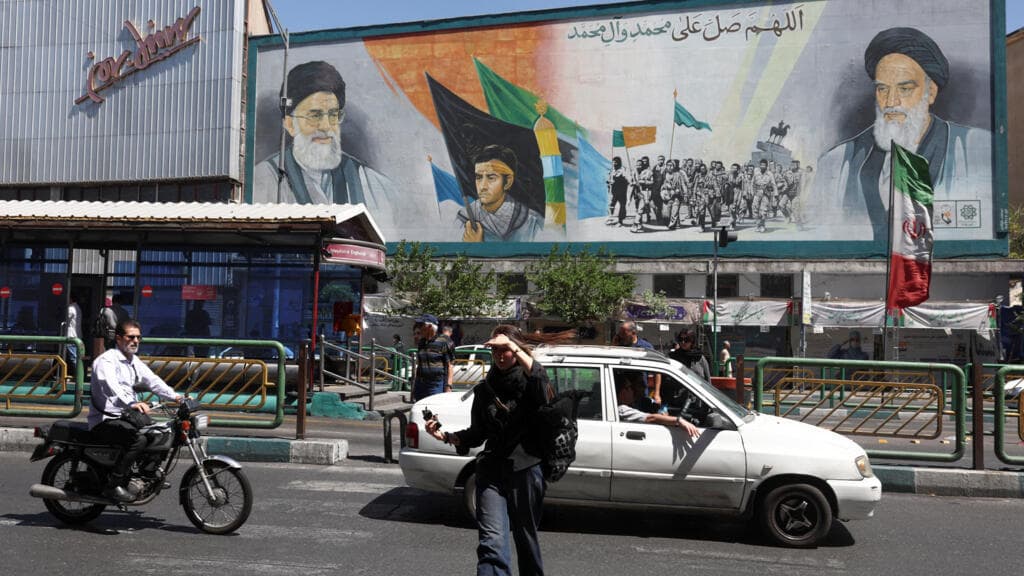
Iran accuses the US of violating a fragile ceasefire with strikes near the Strait of Hormuz, threatening to reignite conflict and expand regional war.
Joel 3:9-10
Prophetic Fulfillment“Proclaim this among the nations: Consecrate for war; stir up the mighty men. Let all the men of war draw near; let them come up. Beat your plowshares into swords, and your pruning hooks into spears; let the weak say, 'I am a warrior.'”
Why this passage
Joel 3:9-10 is a prophetic summons to the nations to prepare for the final gathering of armies in the Valley of Jehoshaphat—a reversal of the peace of Micah 4:3. In its original context, Joel calls surrounding nations to account for their treatment of Israel and Judah, declaring that God will judge them in war.
The passage's call to 'beat plowshares into swords' describes a deliberate turning from peace to conflict, which mirrors the current event: a fragile ceasefire near the Strait of Hormuz is shattered by accusations and strikes, with both sides preparing for renewed hostilities.
Behold, the nations rage and the kings of the earth set themselves against the Lord and against His Anointed. The ceasefire near Hormuz is broken, and the drums of war beat again—not by accident, but as part of the pattern Scripture has long declared.
Yet take heart, O reader: the Lord sits in the heavens and laughs. He who gathers the nations like dust in His balance is not surprised by this escalation.
Your hope is not in fragile human truces but in the Prince of Peace who will one day speak, and wars shall cease to the ends of the earth.
Today's Prayer
Pray for the peace of Jerusalem and for restraint among the nations, that the Lord would turn the hearts of leaders away from the path of destruction and toward the gospel of peace.
Further Scripture
Additional passages that illuminate this event, each grounded in a distinct interpretive lens.
“Why do the nations rage and the peoples plot in vain? The kings of the earth set themselves, and the rulers take counsel together, against the Lord and against his Anointed, saying,”
Why this passage
Psalm 2 is a royal psalm describing the rebellion of earthly rulers against God's sovereign rule. The 'raging' of nations and 'plotting' of kings is not merely political ambition but a spiritual rebellion against the Lord's Anointed—ultimately Christ.
The psalmist asks rhetorically why they bother, since God's decree stands firm.
The pattern of nations breaking truces and escalating conflict—especially in the volatile Middle East—fits this perennial human rebellion. The US and Iran, each accusing the other of bad faith, illustrate how even ceasefires become occasions for renewed plotting.
How it applies
The fragile ceasefire near Hormuz, now broken by mutual accusations, exemplifies the nations' rage that Psalm 2 describes. Both Washington and Tehran 'set themselves'—one claiming defensive strikes, the other claiming violation—but both acting in defiance of the Prince of Peace.
The psalm reminds readers that such conflicts are ultimately futile; the Lord's Anointed will one day dash the nations like a potter's vessel.
“At the time of the end, the king of the south shall attack him, but the king of the north shall rush upon him like a whirlwind, with chariots and horsemen, and with many ships. And he shall come into countries and shall overflow and pass through.”
Why this passage
Daniel 11 describes a detailed prophecy of conflict between the 'king of the south' (often identified with Egypt or a southern power) and the 'king of the north' (a northern coalition, historically Seleucid, but in the eschatological horizon a final Antichrist figure). The passage speaks of a sudden attack 'at the time of the end,' involving ships and swift military movement.
While the Strait of Hormuz is not explicitly named, the region—between the Persian Gulf (north) and the Arabian Sea (south)—is a natural theater for such north-south conflict. Iran (historically Persia, often aligned with northern powers in prophecy) and the US (a western power operating in the region) fit the pattern of escalating confrontation near strategic waterways.
How it applies
The US strikes near Hormuz, and Iran's accusation of ceasefire violation, mirror the sudden, whirlwind-like attack described in Daniel 11:40. The 'king of the north' (a prophetic figure often associated with Iran or a northern coalition) is threatened by a southern power, and conflict erupts with ships and swift military action.
While the full fulfillment awaits the end-times, this event is a dress rehearsal—a sign that the stage is being set for the final conflict Daniel foresaw.
Related by Scripture
Other events we've interpreted through the same passage or hermeneutical lens.
Israeli attack on Tyre in Lebanon kills eight as evacuation ordered for Christian quarter
Wars & Rumors of WarsShares Joel 3:9-10Eight killed in south Lebanon strike as Israel warns entire city to evacuate
Wars & Rumors of WarsShares Joel 3:9-10Middle East crisis live: People flee Lebanese city of Tyre after Israel orders evacuation ahead of strikes
Wars & Rumors of WarsShares Joel 3:9-10Israel and Iran trade strikes, threatening to drag the region back into full-scale war
Wars & Rumors of WarsShares Psalm 2:1-2NATO drills aimed at practicing coordination during potential anti-Russia operation — MP
Wars & Rumors of WarsShares Joel 3:9-10
Community launching soon
Get the invite by email when the Watchman's Wall opens
Share this article
Source: © Majid Asgaripour, Reuters— we link to the original for full context.