Iran pauses strikes but warns of escalation as Trump urges foes to ‘immediately stop’ attacks
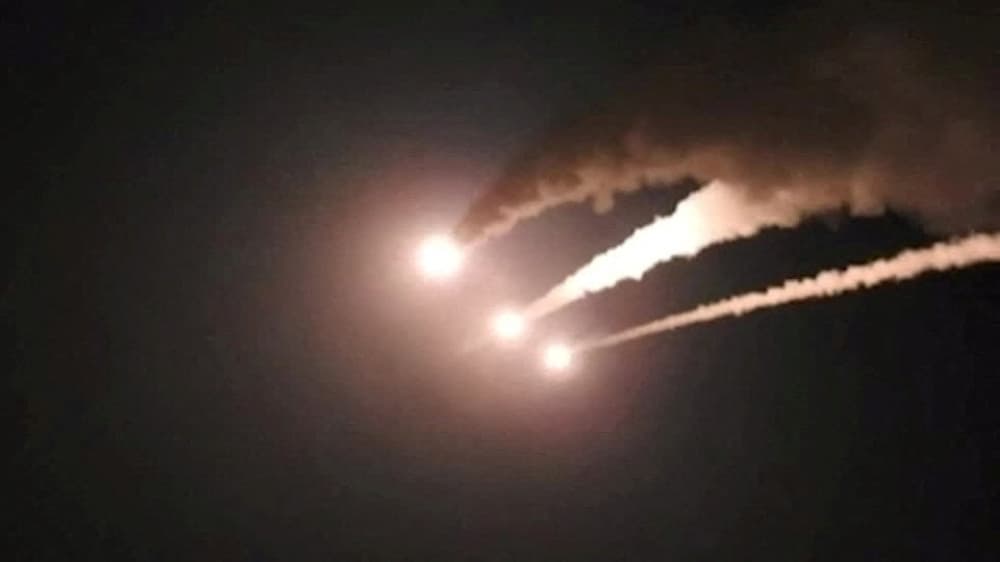
Iran and Israel exchange direct military strikes, with Iran pausing but threatening escalation, while President Trump calls for an immediate ceasefire — echoing biblical patterns of nations arrayed against Israel and the Lord's sovereignty over the nations.
Psalm 2:1-4
Prophetic Fulfillment“Why do the nations rage and the peoples plot in vain? The kings of the earth set themselves, and the rulers take counsel together, against the Lord and against his Anointed, saying, 'Let us burst their bonds apart and cast away their cords from us.' He who sits in the heavens laughs; the Lord holds them in derision.”
Why this passage
Psalm 2 is a royal coronation psalm describing the rebellion of earthly rulers against Yahweh and His Messiah. In its original context, it celebrated the Davidic king's installation and warned surrounding nations against futile opposition.
The New Testament applies this psalm to the collective opposition against Christ (Acts 4:25-28), establishing it as a pattern that recurs throughout history and culminates in the last days.
The psalm's structure — nations raging, rulers conspiring, divine laughter, then judgment — precisely mirrors the current cycle: Iran's missile strikes, Israel's retaliatory petrochemical plant attack, Trump's diplomatic intervention, and the underlying threat of wider war. The 'raging' of Iran and its proxies against Israel, the Lord's Anointed people, fits the psalm's prophetic pattern.
Behold, the nations rage and the kingdoms plot, yet the Lord sits in the heavens and laughs (Psalm 2:1-4). The sound of explosions over Tehran and the threat of wider war remind us that no ruler's fury exceeds the bounds set by the Almighty.
Take heart, believer: these tremors are not random chaos but the steady unfolding of what Scripture has long declared. The same God who stills the roaring seas will one day break the nations with a rod of iron.
Until that day, we watch and pray.
Today's Prayer
Pray for the peace of Jerusalem and for the Lord to restrain the fury of Iran and all who seek Israel's destruction, that many may yet come to know the Prince of Peace before the final storm.
Further Scripture
Additional passages that illuminate this event, each grounded in a distinct interpretive lens.
“Proclaim this among the nations: Consecrate for war; stir up the mighty men. Let all the men of war draw near; let them come up. Beat your plowshares into swords, and your pruning hooks into spears; let the weak say, 'I am a warrior.'”
Why this passage
Joel 3 is a prophecy of the Lord's judgment on the nations that have scattered and divided His land (Israel). The passage calls for a gathering of all nations to the Valley of Jehoshaphat for divine judgment.
The imagery of beating agricultural tools into weapons reverses Isaiah's vision of peace (Isa 2:4), signaling a time when war, not peace, dominates the earth.
The article describes exactly this pattern: Iran, having launched missile strikes, now pauses but warns of escalation; Israel strikes a petrochemical plant; the region mobilizes for potential wider conflict. The 'weak saying I am a warrior' echoes Iran's rhetoric of defiance despite economic and military pressure.
How it applies
The exchange of strikes between Iran and Israel, with both sides preparing for further escalation, mirrors Joel's call to 'consecrate for war' and 'beat plowshares into swords.' The article's detail that Iran 'warns of escalation' while pausing reflects the temporary restraint that precedes fuller conflict — a pattern Joel identifies as the gathering of nations for the Lord's final controversy. Believers should recognize this as a sign that the Prince of Peace has not yet returned, and that the world's default state is war until He does.
“An oracle concerning Damascus. Behold, Damascus will cease to be a city and will become a heap of ruins.”
Why this passage
Isaiah 17 is an oracle against Damascus (capital of Syria) and the northern kingdom of Israel, predicting their destruction due to alliance with Syria against Judah. Historically, this was fulfilled by the Assyrian conquest in 732 BC.
However, the prophecy's language — 'Damascus will cease to be a city' — has a dual resonance in the context of ongoing conflict involving Iran, which is Syria's primary ally and has used Syrian territory to threaten Israel.
The article's mention of Israel striking a petrochemical plant in southwestern Iran, combined with Iran's threats against Israel via its Syrian proxies, echoes the pattern of Isaiah 17: nations allied against Israel face judgment. While not a direct fulfillment, the geopolitical alignment (Iran-Syria axis vs.
Israel) mirrors the ancient coalition Isaiah addressed.
How it applies
Isaiah's oracle against Damascus and its allies serves as a sobering reminder that every coalition formed against God's people ultimately faces divine judgment. The article's report of Israeli strikes on Iranian assets, and Iran's threats of escalation, reflects the same pattern of nations conspiring against Israel that Isaiah condemned.
Though the specific prophecy concerns ancient Syria, the principle endures: those who 'set themselves against the Lord and His Anointed' (Psalm 2) will not ultimately prevail.
Related by Scripture
Other events we've interpreted through the same passage or hermeneutical lens.
Israeli attack on Tyre in Lebanon kills eight as evacuation ordered for Christian quarter
Wars & Rumors of WarsShares Joel 3:9-10Eight killed in south Lebanon strike as Israel warns entire city to evacuate
Wars & Rumors of WarsShares Joel 3:9-10Iranian missile strikes may boost Hezbollah’s leverage in Lebanon | The Jerusalem Post
Wars & Rumors of WarsShares Psalm 2:1-4Middle East crisis live: People flee Lebanese city of Tyre after Israel orders evacuation ahead of strikes
Wars & Rumors of WarsShares Joel 3:9-10NATO drills aimed at practicing coordination during potential anti-Russia operation — MP
Wars & Rumors of WarsShares Joel 3:9-10
Community launching soon
Get the invite by email when the Watchman's Wall opens
Share this article
Source: Malay Mail— we link to the original for full context.