Iran Launches Missiles on Israel Amid Escalating Tensions; Southwest US Faces Prolonged Weather Alerts
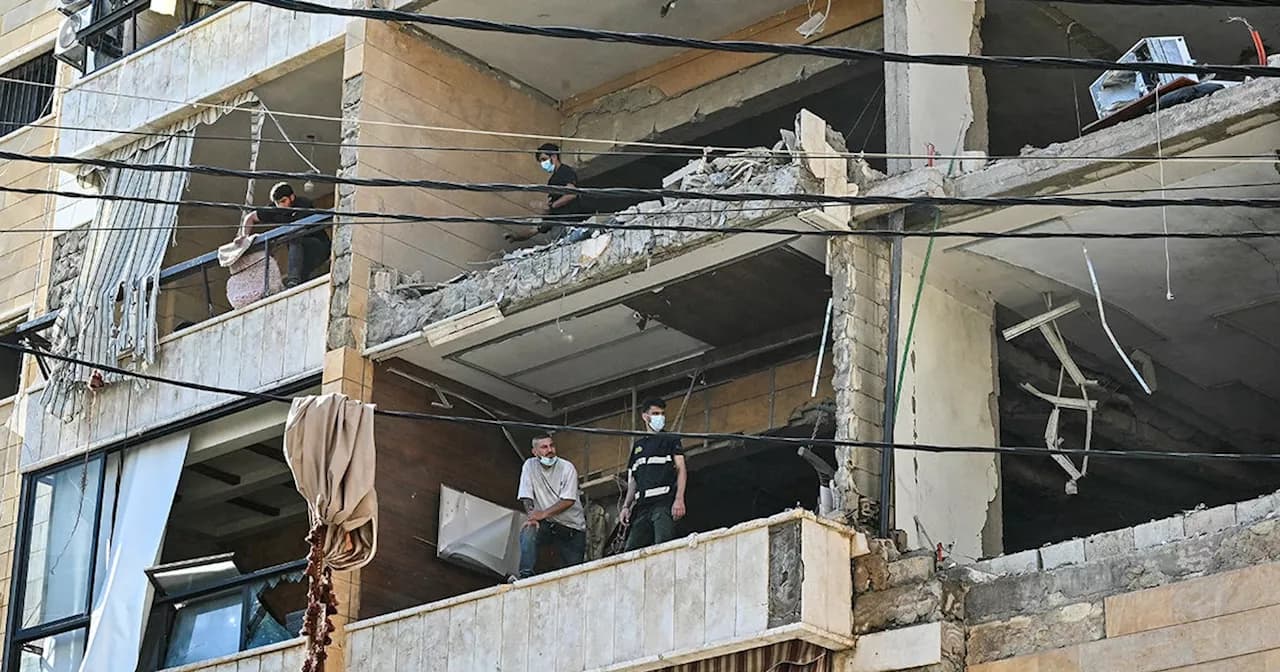
Iran's missile attack on Israel, breaking a ceasefire, echoes biblical prophecies of nations gathering against Jerusalem in the last days, while severe weather in the US Southwest serves as a secondary sign of global upheaval.
Joel 3:9-10
Prophetic Fulfillment“Proclaim this among the nations: Prepare war; stir up the mighty men. Let all the men of war draw near; let them come up. Beat your plowshares into swords, and your pruning hooks into spears; let the weak say, 'I am a warrior.'”
Why this passage
Joel 3:9-10 is a prophetic summons to the nations to gather for war against God's people in the valley of Jehoshaphat (Jerusalem). In its original context, it was a near-term oracle against Tyre, Sidon, and Philistia (Joel 3:4), but the language of 'all the nations' and the cosmic setting (Joel 3:15-16) point to an eschatological horizon.
The command to reverse Isaiah's peace (beat plowshares into swords) signals a time when war, not peace, dominates the nations' agenda.
Iran's missile attack on Israel, breaking a ceasefire, is a direct instance of a nation 'preparing war' and 'stirring up mighty men' against Jerusalem. The pattern matches Joel's prophecy: a nation from the east (ancient Elam/Persia, modern Iran) rising against God's covenant people, with the call to arms echoing through the region.
Behold, the prophet Joel declares, 'Proclaim this among the nations: Prepare war; stir up the mighty men. Let all the men of war draw near; let them come up' (Joel 3:9).
This ancient call to arms finds a chilling echo in Iran's missile barrage against Israel, breaking a fragile ceasefire.
As the nations rage against Jerusalem, the believer is called not to fear but to watch. The same God who ordains the end from the beginning holds both the missile and the storm in His hand.
Let this news stir your heart to prayer, not panic, for our redemption draws near.
Today's Prayer
Pray for the peace of Jerusalem and for protection over civilians amid Iran's missile attacks, and for the church to remain watchful and faithful in these turbulent times.
Further Scripture
Additional passages that illuminate this event, each grounded in a distinct interpretive lens.
“Why do the nations rage and the peoples plot in vain? The kings of the earth set themselves, and the rulers take counsel together, against the LORD and against his Anointed, saying,”
Why this passage
Psalm 2 is a royal psalm describing the rebellion of the nations against Yahweh and His Messiah (the Anointed). In its original context, it likely celebrated the coronation of a Davidic king, but the New Testament applies it to Christ (Acts 4:25-26, 13:33).
The 'raging' of the nations is a recurring principle: human rulers and peoples naturally rebel against God's authority and His chosen king.
Iran's missile attack on Israel is a concrete instance of a nation 'raging' against God's Anointed and His covenant people. The 'plotting in vain' is evident in the futility of opposing God's purposes for Israel, yet the nations persist.
This principle holds across history and intensifies in the last days.
How it applies
Iran's leaders, by attacking Israel, are participating in the age-old rebellion of the nations against God's Anointed. Their plotting is ultimately 'in vain' because God's decree stands firm: He has set His King on Zion (Psalm 2:6).
This event reminds believers that no missile or political scheme can thwart God's plan for Israel and the coming reign of Christ.
“Behold, I am about to make Jerusalem a cup of staggering to all the surrounding peoples. The siege of Jerusalem will also be against Judah. On that day I will make Jerusalem a heavy stone for all the peoples. All who lift it will surely hurt themselves. And all the nations of the earth will gather against it.”
Why this passage
Zechariah 12:2-3 is an oracle about Jerusalem becoming a source of divine judgment and stumbling for the nations that attack it. The 'cup of staggering' and 'heavy stone' imagery indicates that those who assault Jerusalem will be injured by their own actions.
The prophecy has both a near-term horizon (the post-exilic period) and an eschatological fulfillment when 'all the nations of the earth' gather against Jerusalem.
Iran's missile attack on Israel, targeting Jerusalem and its surrounding areas, fits this pattern of nations 'lifting' the stone of Jerusalem and being hurt by it. The breaking of a ceasefire to resume attacks shows the persistent, self-destructive nature of the nations' hostility toward God's city.
How it applies
Iran's missile barrage against Israel is a modern instance of nations gathering against Jerusalem, fulfilling Zechariah's prophecy. The 'heavy stone' is being lifted again, and those who lift it will 'surely hurt themselves.' This event should strengthen the believer's confidence that God is sovereign over the nations' rage and that Jerusalem's ultimate deliverance is assured in Christ's return.
Related by Scripture
Other events we've interpreted through the same passage or hermeneutical lens.
Israeli attack on Tyre in Lebanon kills eight as evacuation ordered for Christian quarter
Wars & Rumors of WarsShares Joel 3:9-10Eight killed in south Lebanon strike as Israel warns entire city to evacuate
Wars & Rumors of WarsShares Joel 3:9-10Iran seeks new regional norm with strikes on Israel | The Jerusalem Post
Wars & Rumors of WarsShares Zechariah 12:2-3Erdogan-Trump connection may moderate strained Israel-Turkey relations | The Jerusalem Post
Israel & JerusalemShares Zechariah 12:2-3Middle East crisis live: People flee Lebanese city of Tyre after Israel orders evacuation ahead of strikes
Wars & Rumors of WarsShares Joel 3:9-10
Community launching soon
Get the invite by email when the Watchman's Wall opens
Share this article
Source: Headtopics— we link to the original for full context.