Iran blames US over renewed clash with Israel, but continues talks
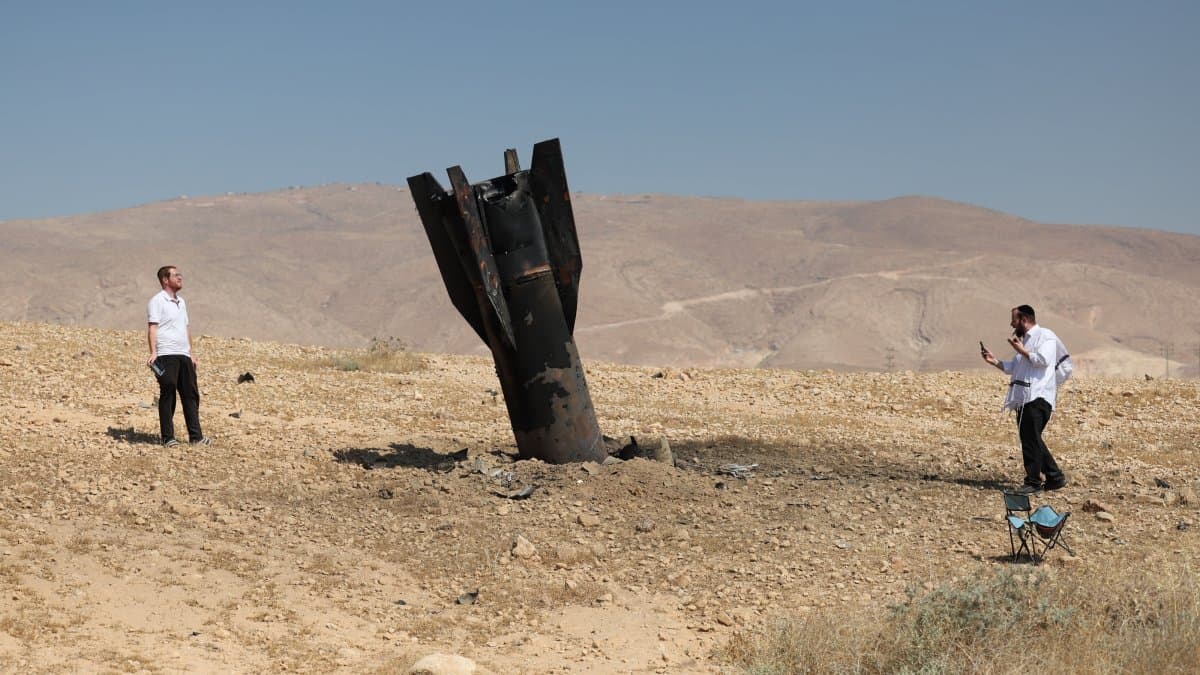
Iran's accusation that the U.S. bears responsibility for renewed clashes with Israel, even as talks continue, echoes the biblical pattern of nations aligning against God's purposes and the persistent rumors of war that precede the end.
Psalm 2:1-2
Prophetic Fulfillment“Why do the nations rage and the peoples plot in vain? The kings of the earth set themselves, and the rulers take counsel together, against the Lord and against his Anointed, saying,”
Why this passage
Psalm 2 is a royal psalm describing the rebellion of the nations against Yahweh and His Messiah. In its original context, it likely celebrated the Davidic king's coronation, but the New Testament (Acts 4:25-28) applies it directly to the conspiracy of Herod, Pilate, Gentiles, and Jews against Jesus.
The psalm's pattern—nations raging, rulers taking counsel together—is a recurring prophetic motif that culminates in the last days (Revelation 11:18, 19:19).
Here, Iran's accusation against the U.S. and its continued talks with Israel reflect the same pattern: nations aligning and blaming, yet ultimately opposing God's purposes. The psalm's question—'Why do the nations rage?'—exposes the futility of human power plays against divine sovereignty.
Behold, the nations rage and the peoples plot in vain (Psalm 2:1). Yet even as Iran blames the U.S. for cease-fire breaches, talks continue—a reminder that man's diplomacy cannot secure lasting peace.
Take heed, O reader: the Lord sits in the heavens and laughs at the futile schemes of earthly powers. Our hope is not in treaties or accusations, but in the King who will one day break the nations with a rod of iron.
Today's Prayer
Pray for the peace of Jerusalem and for the leaders of Iran, Israel, and the U.S. to be turned from wrath toward the fear of the Lord.
Further Scripture
Additional passages that illuminate this event, each grounded in a distinct interpretive lens.
“Proclaim this among the nations: Consecrate for war; stir up the mighty men. Let all the men of war draw near; let them come up. Beat your plowshares into swords, and your pruning hooks into spears; let the weak say, 'I am a warrior.'”
Why this passage
Joel 3 is a prophecy of the gathering of all nations for judgment in the Valley of Jehoshaphat (likely the Kidron Valley near Jerusalem). The call to 'beat plowshares into swords' inverts the messianic peace of Isaiah 2:4, signaling a time when war preparation dominates.
In its original context, this was a warning to the nations that had scattered Israel and divided God's land (Joel 3:2).
The renewed clash between Iran (via proxies) and Israel, with the U.S. blamed, fits this pattern: nations are being stirred up for conflict in the region surrounding Jerusalem. The article's mention of 'cease-fire breaches' and 'renewed clash' echoes the prophetic call to consecrate for war.
How it applies
Iran's accusation against the U.S. and its continued talks with Israel reflect the very dynamic Joel describes: nations being stirred up for war in the land of Israel. The 'cease-fire breaches' show that peace efforts are fragile, while the underlying hostility points to the gathering of nations prophesied in Joel 3.
This is not a random skirmish but part of the prophetic pattern leading to the final judgment of the nations.
Related by Scripture
Other events we've interpreted through the same passage or hermeneutical lens.
Israeli attack on Tyre in Lebanon kills eight as evacuation ordered for Christian quarter
Wars & Rumors of WarsShares Joel 3:9-10Eight killed in south Lebanon strike as Israel warns entire city to evacuate
Wars & Rumors of WarsShares Joel 3:9-10Middle East crisis live: People flee Lebanese city of Tyre after Israel orders evacuation ahead of strikes
Wars & Rumors of WarsShares Joel 3:9-10Israel and Iran trade strikes, threatening to drag the region back into full-scale war
Wars & Rumors of WarsShares Psalm 2:1-2NATO drills aimed at practicing coordination during potential anti-Russia operation — MP
Wars & Rumors of WarsShares Joel 3:9-10
Community launching soon
Get the invite by email when the Watchman's Wall opens
Share this article
Source: Daily Sabah— we link to the original for full context.