Indian seafarer among crew of ship held by Iran in Strait of Hormuz
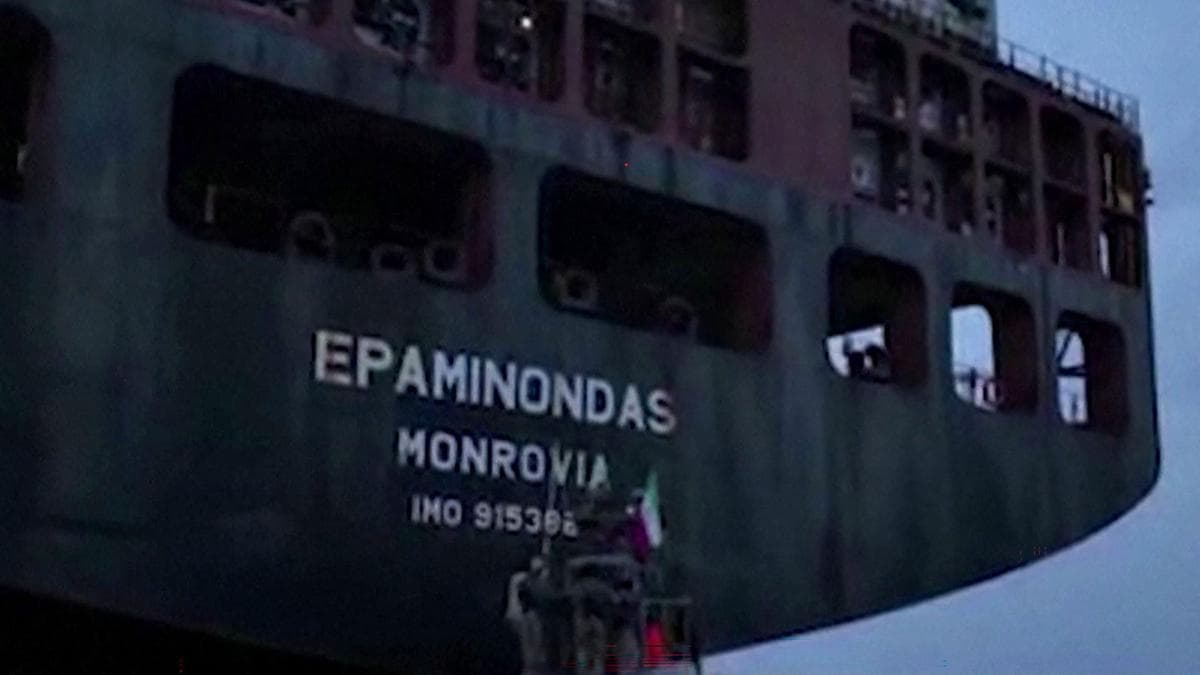
Iran's seizure of a commercial vessel and its international crew in the Strait of Hormuz continues a pattern of maritime aggression that tightens the coil of tension in one of the world's most volatile regions, echoing biblical warnings of nations that use the sea and its commerce as instruments of intimidation and conflict.
Jeremiah 49:35-36
Prophetic Fulfillment“Thus says the LORD of hosts: Behold, I will break the bow of Elam, the mainstay of their might. And I will bring upon Elam the four winds from the four quarters of heaven. And I will scatter them to all those winds, and there shall be no nation to which those driven out of Elam shall not come.”
Why this passage
Jeremiah 49:34-39 is a distinct oracle specifically against Elam — the ancient territory covering southwestern Iran, including the region around what is today the Persian Gulf and the approaches to the Strait of Hormuz. God declares He will shatter Elam's primary source of military might ('the bow') and scatter its power among the nations.
While the oracle had a near-horizon fulfillment in ancient geopolitics, the far-horizon trajectory — a diminishing and eventual judgment of Persian-territory power — is part of the prophetic framework for the region. This is the only oracle in Jeremiah directed exclusively at the territory of modern Iran.
The prophet Jeremiah warned of a terrifying foe who comes 'like clouds' with 'chariots like the whirlwind' — swift, overwhelming, designed to make 'our hearts faint.' Iran's repeated seizures of civilian vessels in the Strait of Hormuz exemplify exactly this pattern: a nation using sudden, overwhelming force against the vulnerable to project power and sow dread across the nations. The crew members detained — ordinary men doing ordinary work on the open sea — are pawns in a geopolitical game that edges the region closer to open war.
Yet Scripture reminds us that the God who 'stirs up the sea so that its waves roar' also holds the nations in His hand, and no act of aggression, however calculated, escapes His sovereign reckoning.
Today's Prayer
Pray for the detained seafarers — including the Indian national — that they would be released swiftly and unharmed, and that God would restrain the ambitions of those nations whose aggression in critical waterways threatens to ignite broader war.
Further Scripture
Additional passages that illuminate this event, each grounded in a distinct interpretive lens.
“Behold, he comes up like clouds; his chariots like the whirlwind; his horses are swifter than eagles— woe to us, for we are ruined!”
Why this passage
Jeremiah 4:13 is part of a sustained oracle (4:5-31) in which the prophet describes a terrifying northern power advancing against Judah with sudden, overwhelming force — seizing, destabilizing, and leaving populations paralyzed with dread. The grammatical-historical sense is Babylon's swift military advance, but the structural pattern Jeremiah captures — a regional aggressor using rapid, unexpected seizure to dominate and intimidate — is a recurring geopolitical reality Scripture repeatedly describes and judges.
The verse's imagery of speed, overpowering force, and the despair it produces ('woe to us, for we are ruined') maps directly onto the psychological and strategic logic of Iran's maritime seizures.
How it applies
Iran's pattern of detaining commercial vessels in the Strait of Hormuz — striking swiftly, holding crews hostage, and projecting regional dominance — mirrors the structural dynamic Jeremiah described: a coercive power using sudden force against the vulnerable to project strength and instill dread. The international crew aboard this vessel, including an Indian national, are the human cost of exactly this kind of aggression.
The oracle's conclusion — 'woe to us, for we are ruined' — captures the anxiety of nations dependent on this critical chokepoint for global trade.
“And they will say of you, 'How you have perished, you who were inhabited from the seas, O city renowned, who was mighty on the sea, she and her inhabitants, who imposed their terror on all her inhabitants!'”
Why this passage
Ezekiel 26 is a lament oracle against Tyre, a maritime power that used its dominance over sea lanes to impose economic and political terror on surrounding nations. The verse captures a recurring human pattern — a power that derives its leverage precisely from its ability to control access to the sea and threaten those who use it.
This pattern of maritime coercion as a form of statecraft recurs throughout human history and throughout Scripture's engagement with the nations. The wisdom embedded in the oracle is that empires built on terrorizing the sea lanes are themselves judged.
How it applies
Iran's strategic leverage over the Strait of Hormuz — through which roughly 20% of the world's oil transits — follows the exact pattern Ezekiel identifies in maritime powers that impose 'terror' on all who depend on the sea for commerce and survival. The seizure of this vessel and its crew is not an isolated incident but part of a deliberate strategy to make Iran's displeasure felt through the global economy.
Ezekiel's repeated observation that such powers ultimately 'perish' stands as a long-view warning to nations that weaponize chokepoints.
“A stern vision is told to me; the traitor betrays, and the destroyer destroys. Go up, O Elam; lay siege, O Media; all the sighing she has caused I bring to an end.”
Why this passage
Isaiah 21:1-10, known as the 'Oracle concerning the Wilderness of the Sea,' addresses ancient Persia (Elam and Media) and Babylon in a vision of military aggression and collapse. The command 'Go up, O Elam; lay siege, O Media' describes Persia's aggressive, siege-like posture toward surrounding powers.
Grammatical-historically, this oracle concerned the fall of Babylon to the Medes and Persians, but it frames Elam/Persia as an inherently aggressive, siege-minded power — a characterization that resonates with Iran's contemporary behavior in the region, particularly its willingness to 'lay siege' to commerce through maritime seizures.
How it applies
Iran's seizure of ships in the Strait of Hormuz is a modern maritime siege: cutting off access, detaining crews, and using economic pressure to extract geopolitical concessions. Isaiah's oracle captures the aggressive, coercive posture of this ancient territory — a posture that has not changed in kind across millennia.
The 'sighing she has caused' resonates with the anxiety of the international community as Iran repeatedly weaponizes the world's most critical oil corridor.
Related by Scripture
Other events we've interpreted through the same passage or hermeneutical lens.
Iran War Live Updates: Tehran Threatens U.S. Ships Over Trump Plan to Break Its Blockade in the Strait of Hormuz
Wars & Rumors of WarsShares Jeremiah 4:13CENTCOM: US destroys 6 Revolutionary Guard boats that attempted to attack commercial ships
Wars & Rumors of WarsShares Jeremiah 4:13Somali pirate and Houthi alliance targets $1T oil trade route with revived hijack tactic
Wars & Rumors of WarsShares Jeremiah 4:13Cargo ship attacked by small craft near Strait of Hormuz, UK maritime agency says
Wars & Rumors of WarsShares Jeremiah 4:13Ukraine shot down 33,000 Russian drones in 1 month: defence minister
Wars & Rumors of WarsShares Jeremiah 4:13
Community launching soon
Get the invite by email when the Watchman's Wall opens
Share this article
Source: The Hindu— we link to the original for full context.