‘I fear people will go to war over water’: as wells run dry, farmers struggle to survive in Bangladesh
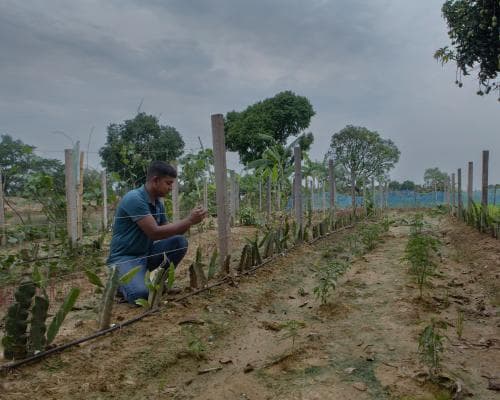
The collapse of water systems in Bangladesh's Barind region, driven by climate change and over-extraction, threatens agricultural collapse and potential conflict—echoing biblical warnings of drought and famine as signs of the last days.
Amos 4:7-8
Prophetic Fulfillment“"I also withheld the rain from you when there were yet three months to the harvest; I would send rain on one city, and send no rain on another city; one field would have rain, and the field on which it did not rain would wither; so two or three cities would wander to another city to drink water, and would not be satisfied; yet you did not return to me," declares the LORD.”
Why this passage
Amos 4:7-8 is part of a series of covenant judgments God brought upon Israel to call them to repentance—famine, drought, blight, locusts, pestilence, and military defeat. The passage describes a localized drought pattern where some fields receive rain and others do not, forcing people to wander for water without satisfaction.
This pattern directly parallels the situation in Bangladesh's Barind region, where aquifer depletion and climate change have created a patchwork of water availability—some wells still produce, others have run dry—and farmers must travel increasingly long distances for water that is often insufficient. The passage's theological point—that such judgments are meant to drive people back to God—applies as a warning to a world that trusts in human engineering rather than the Creator.
Behold, the Lord God declares through His prophet Amos: 'I also withheld the rain from you when there were yet three months to the harvest; I would send rain on one city, and send no rain on another city; one field would have rain, and the field on which it did not rain would wither' (Amos 4:7).
In Bangladesh's Barind region, the wells that once brought life are now running dry, and farmers watch their fields wither under a collapsing water system. This is not merely an environmental crisis—it is a sign that the creation groans under the weight of human sin and the curse, and a call to look to the One who alone sends rain and withholds it.
Today's Prayer
Pray for the farmers of Bangladesh and all who suffer from water scarcity, that they would turn to the living God who gives living water, and that the Church would be moved to compassion and action.
Further Scripture
Additional passages that illuminate this event, each grounded in a distinct interpretive lens.
“"How the beasts groan! The herds of cattle are perplexed because there is no pasture for them; even the flocks of sheep suffer. To you, O LORD, I call. For fire has devoured the pastures of the wilderness, and flame has burned all the trees of the field. Even the beasts of the field pant for you because the water brooks are dried up, and fire has devoured the pastures of the wilderness."”
Why this passage
Joel 1 describes a devastating locust plague and drought that strips the land of food and water, affecting both human and animal life. The imagery of cattle groaning, flocks suffering, and water brooks drying up is a vivid picture of agricultural collapse under divine judgment.
This directly matches the situation in Barind, where farmers report their cattle dying from lack of water and their crops failing as the aquifer drops. The passage's cry to the Lord in desperation reflects the same anguish expressed by the farmers in the article, who see no way forward without water.
How it applies
As the water brooks of Barind dry up and the cattle groan, the words of Joel become a contemporary lament. This is not merely an environmental story—it is a sign that the creation groans under the weight of human sin and the curse, and a call to look to the One who alone sends rain.
“"He turns rivers into a desert, springs of water into thirsty ground, a fruitful land into a salty waste, because of the evil of its inhabitants."”
Why this passage
Psalm 107:33-34 states a covenantal principle: God can transform a land of abundance into barrenness as a judgment on human wickedness. The psalmist presents this as a pattern of divine sovereignty over creation—God both blesses and curses the land according to His purposes.
The Barind region was once transformed by aquifer wells into a fruitful agricultural area, but now decades of over-extraction and the effects of the climate crisis are turning it back into a desert. The principle applies: human sin—whether greed, environmental exploitation, or neglect of God's commands—brings consequences that turn fruitful land to waste.
How it applies
The transformation of Barind from a thriving agricultural region to a water-scarce wasteland exemplifies this biblical principle. The article's description of farmers abandoning their land and wells running dry is a modern echo of the psalmist's warning that fruitful land becomes a salty waste because of the evil of its inhabitants.
Related by Scripture
Other events we've interpreted through the same passage or hermeneutical lens.
Community launching soon
Get the invite by email when the Watchman's Wall opens
Share this article
Source: The Guardian— we link to the original for full context.