From Surviving to Thriving
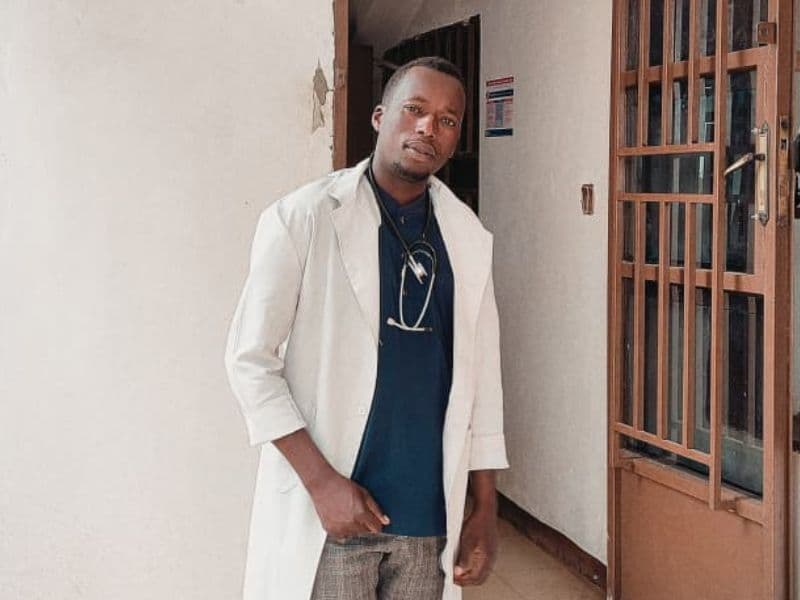
A survivor of an ADF Islamist militant massacre in eastern DRC describes losing everything in an attack targeting Christian communities — a vivid, ongoing example of the violent persecution of believers Jesus warned would mark the last days.
1 Peter 4:12-13
Direct Principle“Beloved, do not be surprised at the fiery trial when it comes upon you to test you, as though something strange were happening to you. But rejoice insofar as you share Christ's sufferings, that you may also rejoice and be glad when his glory is revealed.”
Why this passage
Peter wrote to believers scattered across Asia Minor who faced social hostility, economic marginalization, and physical threat precisely because of their faith in Christ. His central pastoral point is that violent suffering for the name of Christ is neither anomalous nor meaningless — it is a participation in Christ's own passion and a guarantee of eschatological glory.
The 'fiery trial' (pyrosis) is the refiner's fire of genuine persecution, not general hardship. This principle applies wherever and whenever believers are targeted because of their identity in Christ.
The apostle Peter warned believers: 'do not be surprised at the fiery trial when it comes upon you to test you, as though something strange were happening to you.' What this DRC survivor experienced — a village destroyed, family members killed, life upended by Islamist militants — is precisely the kind of 'fiery trial' Peter's readers in the Roman Empire also knew firsthand. The suffering is not incidental to faith; Peter frames it as a participation in Christ's own sufferings.
For American Christians sitting in comfort, this brother or sister in the DRC stands as a witness that the global Body of Christ is bleeding — and that our comfort is a stewardship, not a shield from solidarity.
Today's Prayer
Pray for survivors of ADF attacks in eastern DRC — that Christ's sustaining presence would carry them from mere survival into the flourishing He promises, and that the global Church would not look away from their suffering.
Further Scripture
Additional passages that illuminate this event, each grounded in a distinct interpretive lens.
“When he opened the fifth seal, I saw under the altar the souls of those who had been slain for the word of God and for the witness they had borne. They cried out with a loud voice, 'O Sovereign Lord, holy and true, how long before you will judge and avenge our blood on those who dwell on the earth?'”
Why this passage
In John's apocalyptic vision, the fifth seal reveals martyrs — believers killed specifically 'for the word of God and for the witness they had borne.' This is not generic death but death tied to Christian identity and testimony. The scene establishes that martyrdom is an ongoing reality throughout the Church age that accumulates before the final judgment.
John's original hearers, facing Roman imperial persecution, would have understood these souls as those already killed and those yet to come.
How it applies
Every believer killed by the ADF in eastern DRC — massacred because they belong to Christian communities — belongs to this company John saw under the altar. Their blood joins the cry of 'how long?' that rises to the Sovereign Lord.
The survivor's testimony is not merely a humanitarian story; it is a witness that the fifth-seal reality is active today, that the number of the martyrs is not yet complete, and that God's justice is coming.
“and you will be hated by all for my name's sake. But the one who endures to the end will be saved.”
Why this passage
Jesus spoke these words in the missionary discourse of Matthew 10, sending the Twelve out and warning them of the hostility they would face. The phrase 'for my name's sake' (dia to onoma mou) is the exegetical key — the hatred is specifically because of identification with Jesus, not for any political or ethnic reason.
The promise of salvation to 'the one who endures' frames perseverance under persecution as both the path and the proof of genuine faith. This warning has both a near-horizon application to the Twelve and a far-horizon application to the Church throughout the age.
How it applies
The ADF's targeting of Christian communities is precisely hatred 'for my name's sake' — these villages are attacked not for political allegiance or ethnicity alone but because they are known as Christian communities. The survivor who endures, rebuilds, and bears witness is living out the promise Jesus attached to this warning: endurance unto salvation.
Their story is a concrete, contemporary echo of what Jesus told His disciples to expect.
“Yet for your sake we are killed all the day long; we are regarded as sheep to be slaughtered.”
Why this passage
Psalm 44 is a corporate lament in which the covenant community cries out to God after suffering military defeat they did not deserve through apostasy. The psalmist insists: 'we have not forgotten you' (v.
17) — the suffering is not discipline for unfaithfulness but suffering borne because of covenant loyalty. The phrase 'for your sake' (aleneka) explicitly ties the suffering to identification with Yahweh.
Paul famously quotes this verse in Romans 8:36 to describe the condition of all who belong to Christ, establishing its applicability across the whole canon to any believer who suffers for faith.
How it applies
The Christian villagers of eastern DRC targeted by the ADF are, in the psalmist's language, 'regarded as sheep to be slaughtered' precisely because of their faith. Their suffering is not the result of abandoning God but of belonging to Him — exactly the lament of Psalm 44.
Paul's use of this verse in Romans 8 ensures it is not an overreach to apply it to New Covenant believers: it is the Scriptural template for understanding the death of the innocent faithful across every generation.
Related by Scripture
Other events we've interpreted through the same passage or hermeneutical lens.
ADF Kills 17 Christians Amid Ebola Crisis
Persecution of ChristiansShares Revelation 6:9-10What they’ll do to you if they think you’re Jewish
Persecution of ChristiansShares Psalm 44:22ICC Releases Report Exposing Nigeria’s $10 Million Genocide Cover-Up
Persecution of ChristiansShares Revelation 6:9-108 Christians Killed During Overnight Attacks in Plateau State
Persecution of ChristiansShares Revelation 6:9-10Raymond Koh’s family win landmark case
Persecution of ChristiansShares 1 Peter 4:12-13
Community launching soon
Get the invite by email when the Watchman's Wall opens
Share this article
Source: International Christian Concern— we link to the original for full context.