Ebola cases hit 900 in Congo DRC
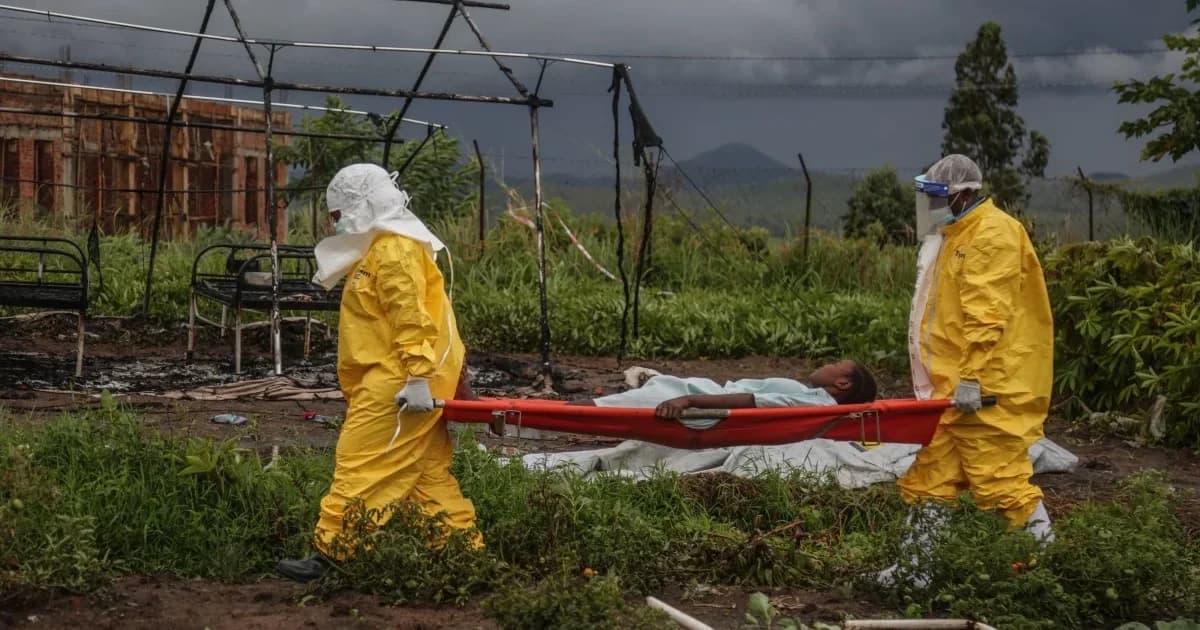
The Ebola outbreak in the Democratic Republic of Congo, with cases surpassing 900, echoes the biblical sign of pestilence that Christ said would mark the last days.
Matthew 24:7
Prophetic Fulfillment“For nation will rise against nation, and kingdom against kingdom, and there will be famines and earthquakes in various places.”
Why this passage
In its original context, Matthew 24 is Christ's Olivet Discourse, answering the disciples' question about the sign of His coming and the end of the age. Verse 7 lists pestilences (in many manuscripts) among the 'beginning of birth pains' (v.
8). The grammatical-historical sense is clear: these are not isolated tragedies but part of a pattern that intensifies before the end.
This passage does not predict a single pestilence but a recurring feature of the last days. The Ebola outbreak in the DRC, with its high mortality and spread across a region, fits this pattern as a contemporary instance of the pestilence Christ foretold.
Historical context, theological significance, application today — denomination-neutral, ~1,000-word walk-through.
Hear, O reader: the Lord Jesus Christ warned that 'there will be famines and pestilences and earthquakes in various places' (Matthew 24:7). The outbreak of the deadly Ebola virus in the Congo, now exceeding 900 cases, is not merely a medical bulletin—it is a signpost on the road He foretold.
Take heed, and let not your heart be troubled, but let your faith be stirred. These pestilences are the birth pangs of a new creation, reminding us that this present world groans under the curse, and our redemption draws near.
Today's Prayer
Pray for the people of the Democratic Republic of Congo, that God would grant wisdom to medical workers, comfort to the afflicted, and that many would turn to Christ in the midst of this plague.
Further Scripture
Additional passages that illuminate this event, each grounded in a distinct interpretive lens.
“"I sent among you a pestilence after the manner of Egypt; I killed your young men with the sword, along with your captured horses, and I made the stench of your camp go up into your nostrils; yet you did not return to me," declares the LORD.”
Why this passage
Amos 4 is a prophetic indictment of Israel's stubbornness, where God recounts the judgments He sent—including pestilence—as calls to repentance. The phrase 'after the manner of Egypt' recalls the plagues, showing pestilence as a divine warning.
The repeated refrain 'yet you did not return to me' reveals the purpose: to drive people back to God.
This principle applies universally: pestilence is not merely a natural event but a divine summons to repentance. The Ebola outbreak in the DRC, like all plagues, carries this same call.
How it applies
The Ebola outbreak in the DRC is a modern echo of the pestilence God used in Amos's day to call His people to repentance. As the virus spreads, it is a sobering reminder that all nations are under God's sovereign hand and that the proper response is not fear but turning to the Lord.
Related by Scripture
Other events we've interpreted through the same passage or hermeneutical lens.
10ID Deploys Rescuers After 7.8 Mindanao Quake
Earthquakes & Natural DisastersShares Matthew 24:7Philippines earthquake kills 15, prompts tsunami fears: All to know
Earthquakes & Natural DisastersShares Matthew 24:7Catastrophic Quake Shakes Mindanao: 7.8 Magnitude Causes Widespread Damage
Earthquakes & Natural DisastersShares Matthew 24:7Powerful earthquake in southern Philippines leaves at least 19 dead
Earthquakes & Natural DisastersShares Matthew 24:7Major quake off Philippines kills one, triggers tsunami warnings
Earthquakes & Natural DisastersShares Matthew 24:7
Community launching soon
Get the invite by email when the Watchman's Wall opens
Share this article
Source: The Punch— we link to the original for full context.