Dollar holds near 1-1/2-week high as Iran-US standoff persists
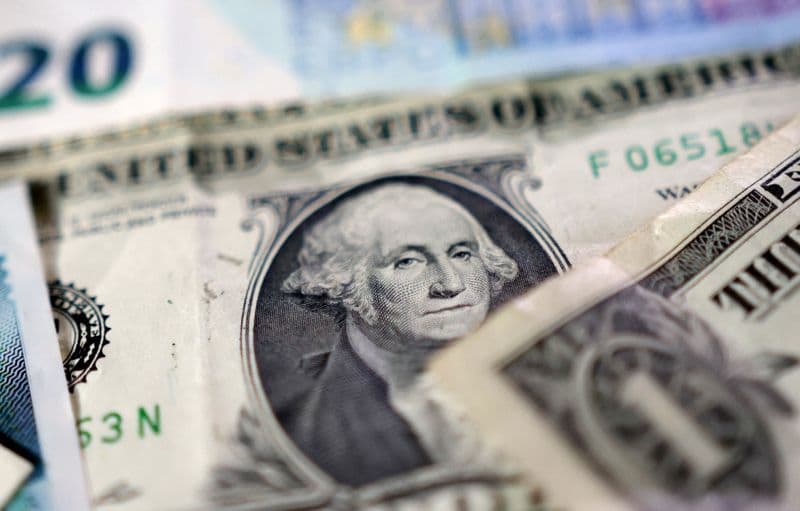
The ongoing US-Iran nuclear standoff is driving safe-haven demand for the dollar as global markets price in sustained geopolitical risk — a pattern of great-power confrontation in the Middle East that Scripture's prophets repeatedly associated with the instability preceding divine judgment on the nations.
Jeremiah 25:32-33
Prophetic Fulfillment“Thus says the LORD of hosts: Behold, disaster is going forth from nation to nation, and a great tempest is stirring from the farthest parts of the earth! And those slain by the LORD on that day shall extend from one end of the earth to the other. They shall not be lamented, or gathered, or buried; they shall be dung on the surface of the ground.”
Why this passage
Jeremiah 25 is Yahweh's cosmic indictment of all nations — not merely Babylon or Judah — delivered as a cup of wrath that passes from nation to nation (vv. 15-17).
The 'great tempest stirring from the farthest parts of the earth' describes a rolling, cascading geopolitical upheaval that no single diplomatic act arrests. The grammatical-historical sense is that God orchestrates international instability as a prelude to final judgment, with the tremors spreading outward like a storm from its origin point.
This prophecy has a near-horizon fulfillment in the Babylonian campaigns but explicitly transcends them ('all the kingdoms of the world,' v. 26), pointing to a pattern that reaches its ultimate expression in the last days.
Jeremiah warned of a time when 'disaster is spreading from nation to nation, and a great tempest is stirring from the farthest parts of the earth.' The US-Iran standoff is precisely that kind of rolling, unresolved tension — not a single explosion but a persistent storm moving through currency markets, military postures, and diplomatic corridors simultaneously. When even money flees toward safety in response to the mere threat of conflict, we are reminded that the instability of this age is not background noise but a signal.
God's people are called not to fear these things, but to recognize in them the fingerprints of a world groaning toward its appointed end.
Today's Prayer
Pray that believers living under the shadow of geopolitical brinkmanship between the US and Iran — especially Christians in the Middle East — would experience the peace of God that surpasses all understanding, and that world leaders would be moved toward restraint rather than escalation.
Further Scripture
Additional passages that illuminate this event, each grounded in a distinct interpretive lens.
“The word of the LORD that came to Jeremiah the prophet concerning Elam, in the beginning of the reign of Zedekiah king of Judah. Thus says the LORD of hosts: Behold, I will break the bow of Elam, the mainstay of their might. And I will bring upon Elam the four winds from the four corners of heaven. And I will scatter them to all those winds, and there shall be no nation to which those driven out of Elam shall not come.”
Why this passage
Elam is the ancient heartland of what is today southwestern Iran — the very region that housed Susa, the capital of the Persian Empire, and which corresponds geographically and ethnically to modern Iran. Jeremiah's oracle against Elam declares divine judgment specifically on their military power ('the bow of Elam, the mainstay of their might'), which in the ancient Near East was their defining strategic weapon.
The grammatical-historical sense is a specific divine intervention against this nation's military ambition. The dispersal 'to all winds' suggests a disruption so total it reaches international scope — strikingly applicable to a nation whose nuclear weapons program is its modern 'bow.'
How it applies
Iran's current nuclear standoff with the United States is fundamentally a dispute over Iran's 'bow' — its strategic military capability and the regional dominance it enables. Jeremiah's oracle against Elam establishes a biblical pattern of divine judgment specifically targeting Iranian military ambition.
The fact that this standoff is persistent and unresolved, generating global financial anxiety, reflects the ongoing tension between Iran's drive for regional supremacy and the restraints placed upon it — a tension Scripture suggests carries prophetic weight.
“And now I will show you the truth. Behold, three more kings shall arise in Persia, and a fourth shall be far richer than all of them. And when he has become strong through his riches, he will stir up all against the kingdom of Greece.”
Why this passage
Daniel 11 presents Persia — modern Iran's direct historical and geographical predecessor — as a power defined by its drive to stir up conflict against western kingdoms. The grammatical-historical meaning concerns the Achaemenid kings leading to Xerxes, but the text establishes a persistent theological-geopolitical pattern: Persian/Iranian power characteristically expresses itself through confrontation with western powers and through leveraging wealth for strategic aggression.
This is a direct-principle lens: the verse does not require eschatological fulfillment to apply — it describes a recurring pattern native to this geopolitical actor.
How it applies
The US represents the dominant western power in today's geopolitical order, and Iran (Persia) is once again using its resource leverage and strategic ambition to generate sustained confrontation. The standoff that is moving dollar markets is structurally identical to the pattern Daniel identifies: a Persian power using strength and wealth to 'stir up all' against the western kingdom.
This is not typology or prophecy-forcing — it is the same geopolitical actor, the same geographic region, and the same behavioral pattern Scripture documented millennia ago.
“And I will shake all nations, so that the treasures of all nations shall come in, and I will fill this house with glory, says the LORD of hosts.”
Why this passage
Haggai 2:6-7 is a declaration that God will 'shake the heavens and the earth and the sea and the dry land' and will 'shake all nations' — language picked up in Hebrews 12:26-28 and applied eschatologically to the things that cannot be shaken remaining after the final shaking. The grammatical-historical context is encouragement to the post-exilic community rebuilding the temple, but the theological scope is explicitly cosmic and eschatological.
The 'shaking of the nations' is presented not as random chaos but as purposeful divine activity that ultimately redirects the wealth and attention of the world toward God's purposes.
How it applies
Currency markets shifting in response to an Iran-US standoff is a concrete, measurable instance of nations being 'shaken' — wealth moving, alliances recalibrating, financial confidence destabilizing around the Middle East. The dollar's safe-haven status in this moment reflects how the shaking of one geopolitical confrontation ripples into the economic architecture of all nations.
For the believer, Haggai's word is not a counsel of despair but a reminder that the shaking serves a sovereign purpose — ultimately directing history toward the glory of God.
Related by Scripture
Other events we've interpreted through the same passage or hermeneutical lens.
Iran's Nuclear Weapon Timeline Remains Unchanged Despite Weeks Of Strikes: Report
Wars & Rumors of WarsShares Jeremiah 49:34-36US attempt to open Strait of Hormuz tests fragile Iran war ceasefire
Wars & Rumors of WarsShares Jeremiah 49:34-36Iran targets UAE and a tanker in Strait of Hormuz as U.S. guides ships
Wars & Rumors of WarsShares Jeremiah 49:34-36Middle East crisis live: UAE says it has intercepted three Iran fired drones; US denies that Iran hit warship near strait of Hormuz
Wars & Rumors of WarsShares Jeremiah 49:34-36Oil is surging on fears that the Iran War is about to heat up again
Wars & Rumors of WarsShares Jeremiah 25:32-33
Community launching soon
Get the invite by email when the Watchman's Wall opens
Share this article
Source: Investing South Africa— we link to the original for full context.