Christian Sites Damaged, Destroyed in Southern Lebanon
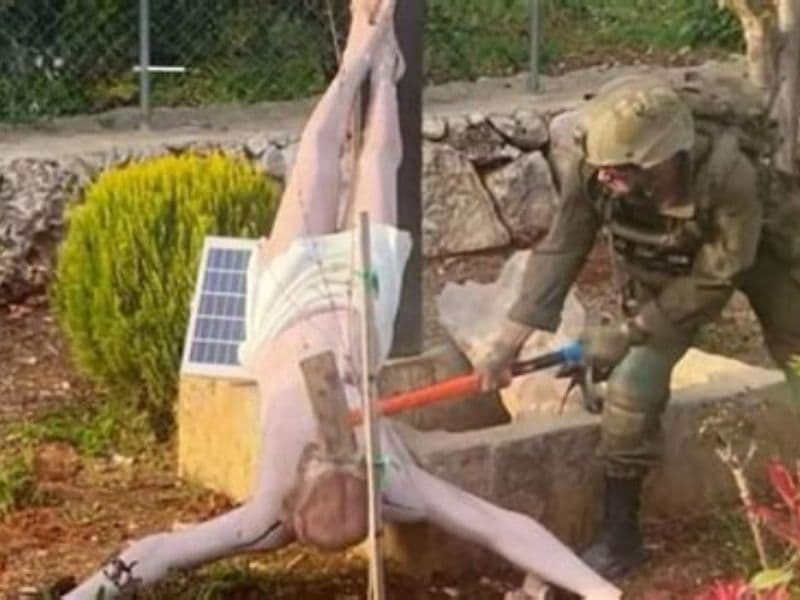
Christian villages and sacred sites in southern Lebanon have been damaged or destroyed amid the Hezbollah-Israel conflict, displacing believers and erasing physical markers of a Christian presence that has existed in the region since the early church era.
Isaiah 64:11
Narrative Parallel“Our holy and beautiful house, where our fathers praised you, has been burned by fire, and all our pleasant places have become ruins.”
Why this passage
Isaiah 64 is a corporate lament addressed to God in the aftermath of national devastation, specifically mourning the destruction of the Jerusalem temple and the desolation of sacred places central to Israel's covenant worship. The grammatical-historical context is exile and military conquest — a foreign military power has left places of worship in ruins and God's people displaced.
The parallel structure here is genuinely precise: a minority covenant community's sacred sites destroyed by warfare, worshippers driven from their homes, and the community crying out amid the rubble.
The prophet Isaiah wrote of a day when God's people would cry, 'Our holy and beautiful house, where our fathers praised you, has been burned by fire, and all our pleasant places have become ruins.' The images of damaged churches and Christian villages in southern Lebanon echo this ancient lament with striking force. When the sanctuaries where generations of believers worshipped are reduced to rubble by the crossfire of armies, it reminds us that the Church's true home is not in buildings but in Christ — yet the loss is real, the grief is legitimate, and God hears it.
These Lebanese Christians are not forgotten by the One who numbers every hair and marks every sparrow's fall, and their suffering calls the global Body of Christ to intercessory action.
Today's Prayer
Pray for the displaced Christian communities of southern Lebanon — that God would protect their lives, preserve their faith, and raise up international advocates who will ensure their villages and sacred sites are not quietly erased from the region's landscape.
Further Scripture
Additional passages that illuminate this event, each grounded in a distinct interpretive lens.
“Direct your steps to the perpetual ruins; the enemy has destroyed everything in the sanctuary! Your foes have roared in the midst of your meeting place; they set up their own signs for signs.”
Why this passage
Psalm 74 is an Asaphite lament composed in response to the destruction of the Jerusalem temple, likely by Babylon. The psalmist calls on God to 'direct his steps to the perpetual ruins' — to look upon the desolation of places set apart for worship.
The language of enemies roaring 'in the midst of your meeting place' describes military forces desecrating sacred space, a pattern the psalm treats as an affront to God Himself, not merely to the worshipping community. This is a recurring pattern in redemptive history, not a one-time event.
How it applies
The damaged and destroyed churches in southern Lebanon are precisely the 'perpetual ruins' the psalmist asks God to visit and judge. Military operations between Hezbollah and the IDF have left 'meeting places' of Lebanese Christians in ruin, with 'signs' of warfare replacing the signs of worship.
The psalm's structure — lament addressed to a God who sees and who has historically acted — gives Christians a tested, biblical vocabulary for responding to this news with faith rather than despair.
“When he opened the fifth seal, I saw under the altar the souls of those who had been slain for the word of God and for the witness they had borne. They cried out with a loud voice, 'O Sovereign Lord, holy and true, how long before you will judge and avenge our blood on those who dwell on the earth?'”
Why this passage
The fifth seal in Revelation 6 depicts the ongoing reality of Christian martyrdom and suffering across history, presenting it as a recognized category within God's eschatological program. John's vision establishes that the suffering and displacement of believers — those persecuted 'for the word of God and for the witness they had borne' — is not incidental but is counted before the throne of God.
The 'how long' cry reflects a pattern of prolonged, recurring suffering that characterizes the church age preceding Christ's return.
How it applies
The destruction of Christian sites and forced displacement of Christian communities in southern Lebanon fits squarely within the category of suffering that Revelation 6 places before God's throne. These Lebanese believers bear witness to Christ in one of the most contested regions on earth and are paying a price for their presence and testimony.
Their situation is a tangible, present-day instance of the ongoing 'how long, O Lord' cry that Revelation identifies as a defining feature of the last days before divine judgment.
“But before all this they will lay their hands on you and persecute you, delivering you over to the synagogues and prisons, and you will be brought before kings and governors for my name's sake.”
Why this passage
In Luke 21, Jesus specifically predicts that persecution of his followers will be one of the first and consistent signs preceding the end of the age. The grammatical-historical context is Jesus's Olivet Discourse addressed to his disciples, warning them of coming tribulations.
While the immediate context addresses judicial persecution, the broader category Jesus establishes is that his followers will suffer in the world as a direct consequence of bearing his name, particularly as geopolitical upheaval intensifies.
How it applies
The Lebanese Christian community being caught in crossfire, having their sacred sites destroyed, and being displaced from ancestral villages is a form of the suffering Jesus warned his followers to expect 'for my name's sake' in a world at war. Their existence as an ancient Christian witness in the Middle East places them at the intersection of precisely the kind of geopolitical conflict Jesus described as signs of the age.
This is not coincidental suffering — these communities are targeted and vulnerable in significant part because of their Christian identity in a Muslim-majority conflict theater.
Related by Scripture
Other events we've interpreted through the same passage or hermeneutical lens.
Community launching soon
Get the invite by email when the Watchman's Wall opens
Source: International Christian Concern— we link to the original for full context.