Christian Man Dies Doing Forced Labor in Pakistan
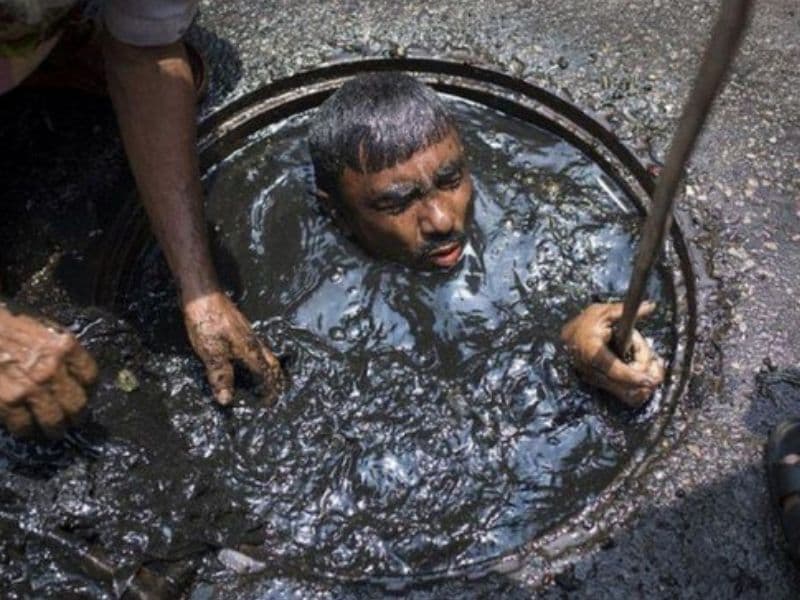
A Pakistani Christian sanitation worker died from toxic gas inhalation while performing forced labor, highlighting the ongoing persecution and exploitation of Christians in Pakistan's discriminatory legal and social systems.
Hebrews 11:36-38
Narrative Parallel“Others suffered mocking and flogging, and even chains and imprisonment. They were stoned, they were sawn in two, they were killed with the sword. They went about in skins of sheep and goats, destitute, afflicted, mistreated—of whom the world was not worthy.”
Why this passage
The author of Hebrews catalogs the sufferings of Old Testament saints who endured persecution for their faith. The list includes violent deaths, deprivation, and mistreatment by the world.
The phrase 'of whom the world was not worthy' indicates that these believers were rejected by earthly systems precisely because they belonged to a better kingdom.
Shabbir Masih's death mirrors this pattern exactly. He was a Christian in a nation where blasphemy laws and social caste systems marginalize believers.
Forced into the most degrading labor, he died not from accident alone but from the systematic devaluation of Christian life in Pakistan. The world that forced him into a sewer pipe deemed him unworthy—but heaven counted him worthy.
Historical context, theological significance, application today — denomination-neutral, ~1,000-word walk-through.
Behold the cost of discipleship in a fallen world. As Shabbir Masih breathed his last in a sewer, he joined the great cloud of witnesses who 'were stoned, they were sawn in two, they were killed with the sword' (Hebrews 11:37).
His death was not merely an industrial accident but a testament to how the world treats those deemed lowest.
Yet take heart, for 'precious in the sight of the Lord is the death of his saints' (Psalm 116:15). The Lord who sees every sparrow fall sees His servant Shabbir.
His labor was forced by men, but his reward is from the Master who says, 'Well done, good and faithful servant.'
Today's Prayer
Pray for the family of Shabbir Masih—his widow and children—that they would know the comfort of Christ and receive justice from earthly authorities, and pray for an end to the systemic persecution and forced labor of Christians in Pakistan.
Further Scripture
Additional passages that illuminate this event, each grounded in a distinct interpretive lens.
“Precious in the sight of the Lord is the death of his saints.”
Why this passage
This psalm of thanksgiving declares a theological principle: God does not view the death of His faithful ones as meaningless or unnoticed. The Hebrew word for 'precious' (yaqar) conveys weight, value, and costliness.
The death of a saint is not a tragedy that escapes God's attention but an event of profound significance in His sight.
This principle applies directly to Shabbir Masih. Though his death was hidden in a sewer pipe in Pakistan, it was fully seen by the Lord.
The world may have treated his life as cheap labor, but God treats his death as costly and valuable. This verse comforts the persecuted church by assuring them that no martyrdom is forgotten.
How it applies
The death of Shabbir Masih, though ignored by many, is 'precious in the sight of the Lord.' His forced labor and toxic death did not escape the Father's gaze. This truth both comforts his grieving family and warns persecutors that God keeps a record of every injustice done to His children.
“Indeed, all who desire to live a godly life in Christ Jesus will be persecuted.”
Why this passage
Paul writes to Timothy as a certainty, not a possibility: persecution is the normative experience for those who follow Christ. The Greek word for 'persecuted' (diōkthēsontai) implies active pursuit and harassment.
This is not limited to overt religious violence but includes systemic oppression, economic marginalization, and social exclusion.
Shabbir Masih's death fits this pattern. As a Christian in Pakistan, he was subject to the country's discriminatory blasphemy laws and social caste system that relegates Christians to the most dangerous sanitation work.
His death was not merely an industrial accident but a consequence of living as a Christian in a system that devalues Christian life.
How it applies
Shabbir Masih's death exemplifies Paul's warning that godly living invites persecution. His faith did not protect him from exploitation—it marked him for it.
The global church must recognize that such deaths are not anomalies but fulfillments of Scripture's promise that the world will hate those who belong to Christ.
Related by Scripture
Other events we've interpreted through the same passage or hermeneutical lens.
Cardinal Koch: ‘Today there are more martyrs than in the early centuries of the Church’
Persecution of ChristiansShares 2 Timothy 3:12Belarus frees journalist Andrzej Poczobut in prisoner swap, a possible step in warming relations with the West
Persecution of ChristiansShares Hebrews 11:36-38Belarus frees prominent journalist Andrzej Poczobut in a 10-person prisoner swap
Persecution of ChristiansShares Hebrews 11:36-38On centenary of Cristero War, bishop invites Catholics to ‘defend your faith by knowing it better’
Persecution of ChristiansShares Hebrews 11:36-38Threat to Christian mission work in India
Persecution of ChristiansShares 2 Timothy 3:12
Community launching soon
Get the invite by email when the Watchman's Wall opens
Share this article
Source: persecution— we link to the original for full context.