Border Battles Heat Up between Israel, Hezbollah as Trump Announces Progress on Iran Deal
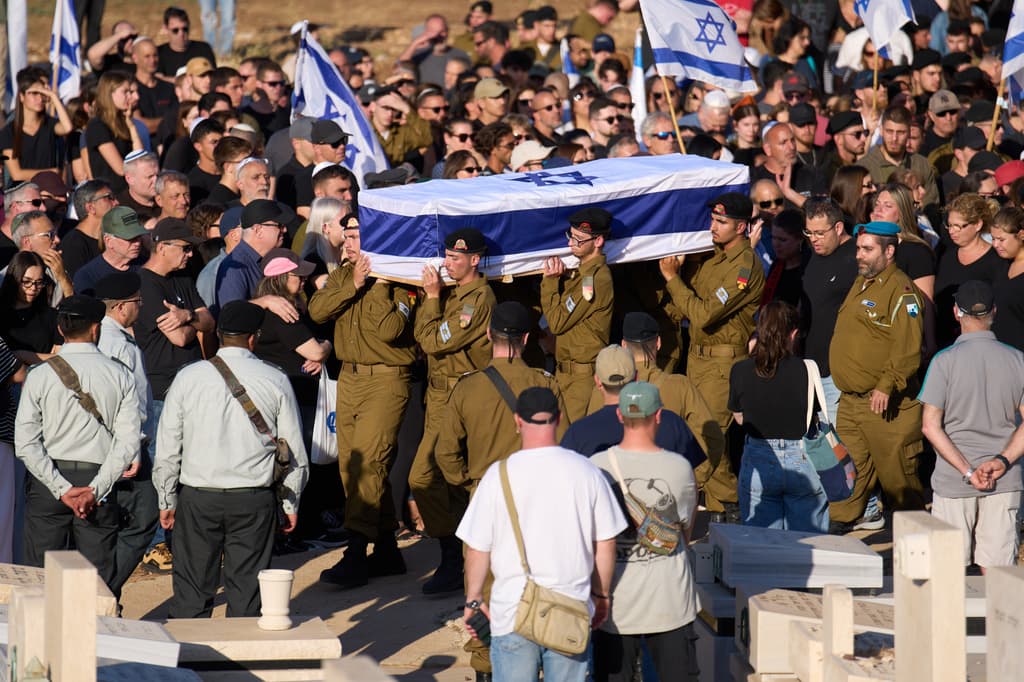
Escalating border clashes between Israel and Hezbollah, alongside US-Iran deal progress, echo biblical prophecies of nations gathering against Israel and the sound of war from the north.
Joel 3:9-10
Prophetic Fulfillment“Proclaim this among the nations: Consecrate for war; stir up the mighty men. Let all the men of war draw near; let them come up. Beat your plowshares into swords, and your pruning hooks into spears; let the weak say, 'I am a warrior.'”
Why this passage
Joel 3 is a prophecy of the Lord's judgment on the nations that gather against Israel in the Valley of Jehoshaphat. The command to 'beat plowshares into swords' is a deliberate inversion of Isaiah's peace prophecy (Isa 2:4), signaling a time when war, not peace, is the order of the day.
The original hearers understood this as a call to prepare for divine judgment on hostile nations.
This passage applies to the current escalation because Hezbollah, backed by Iran, is precisely the kind of 'nation' being stirred up against Israel. The border battles are not merely political—they are the rattling of swords in the valley of decision, a precursor to the larger gathering Joel describes.
Behold, the Lord declares through Joel: 'Proclaim this among the nations: Prepare war; stir up the mighty men. Let all the men of war draw near; let them come up.' The border battles between Israel and Hezbollah are not random skirmishes—they are a trumpet call to the watching Church.
When the nations rage against Jerusalem, the believer's refuge is not in treaties or ceasefires, but in the God who thunders from Zion. Let this news drive you to your knees, not to fear, but to faith in the One who holds the nations as a drop in a bucket.
Today's Prayer
Pray for the peace of Jerusalem and for the protection of Israeli civilians and soldiers along the northern border, that the Lord would confound the plans of those who seek her harm.
Further Scripture
Additional passages that illuminate this event, each grounded in a distinct interpretive lens.
“Why do the nations rage and the peoples plot in vain? The kings of the earth set themselves, and the rulers take counsel together, against the LORD and against his Anointed, saying,”
Why this passage
Psalm 2 is a royal psalm describing the rebellion of earthly rulers against Yahweh and His Messiah. The 'raging' of nations and 'plotting' of kings is a timeless principle: human power structures inevitably oppose God's rule.
The psalmist mocks their futility—God laughs from heaven.
This principle applies directly to the Iran-Hezbollah axis. Iran's nuclear ambitions and Hezbollah's border attacks are not merely geopolitical—they are a 'taking counsel together' against God's covenant people and, by extension, against His Anointed.
The Trump administration's deal-making is the latest 'counsel' of earthly rulers, but the psalm declares it vain.
How it applies
The article reports both border battles and diplomatic progress on an Iran deal. Psalm 2 exposes the futility of both: the rage of Hezbollah's rockets and the counsel of diplomats are equally subject to the Lord's derision.
The 'Anointed' against whom they rage is ultimately Christ, and Israel is the apple of His eye.
Believers should not be alarmed by the raging of nations or the shifting of diplomatic winds. The psalm ends with the promise: 'Blessed are all who take refuge in him.' The border battles are a reminder that refuge is found in the Lord, not in treaties.
“Behold, he comes up like clouds; his chariots like the whirlwind; his horses are swifter than eagles—woe to us, for we are ruined! O Jerusalem, wash your heart from evil, that you may be saved. How long shall your wicked thoughts lodge within you?”
Why this passage
Jeremiah 4 describes a foe from the north coming against Judah as divine judgment. The language of 'clouds' and 'whirlwind' evokes sudden, overwhelming invasion.
Jeremiah's call to 'wash your heart from evil' shows that the threat is not merely military but spiritual—a summons to repentance.
Hezbollah's position in Lebanon, directly north of Israel, and its ability to strike with rockets and drones 'like eagles' creates a structural parallel to Jeremiah's northern invader. The article's mention of 'border battles heating up' mirrors the escalating tension Jeremiah described before the Babylonian invasion.
How it applies
While Jeremiah's prophecy was fulfilled historically by Babylon, the pattern of a northern threat against Jerusalem recurs. Hezbollah's arsenal and Iran's backing represent a modern 'foe from the north' that can strike swiftly.
The call to 'wash your heart from evil' applies to Israel as a nation and to the Church: when the northern border burns, it is time for spiritual examination, not just military readiness.
The progress on an Iran deal may offer temporary respite, but Jeremiah's warning is that security treaties cannot save when the Lord sends the whirlwind.
Related by Scripture
Other events we've interpreted through the same passage or hermeneutical lens.
Israeli attack on Tyre in Lebanon kills eight as evacuation ordered for Christian quarter
Wars & Rumors of WarsShares Joel 3:9-10Eight killed in south Lebanon strike as Israel warns entire city to evacuate
Wars & Rumors of WarsShares Joel 3:9-10Middle East crisis live: People flee Lebanese city of Tyre after Israel orders evacuation ahead of strikes
Wars & Rumors of WarsShares Joel 3:9-10Israel and Iran trade strikes, threatening to drag the region back into full-scale war
Wars & Rumors of WarsShares Psalm 2:1-2NATO drills aimed at practicing coordination during potential anti-Russia operation — MP
Wars & Rumors of WarsShares Joel 3:9-10
Community launching soon
Get the invite by email when the Watchman's Wall opens
Share this article
Source: www1— we link to the original for full context.