Another Day Of Uncertainty In The Strait After U.S. Claims Strikes On Iranian Minelayers
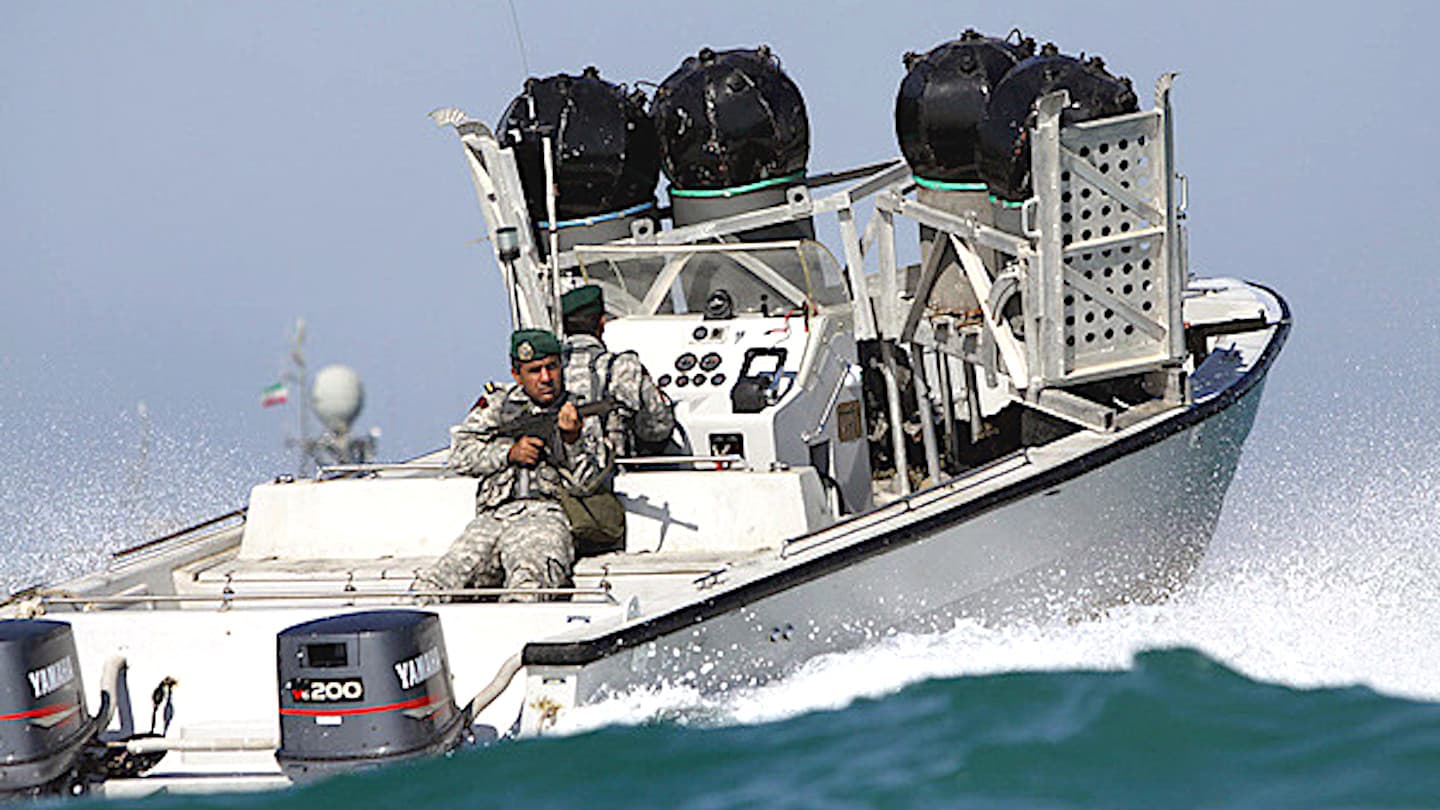
U.S. strikes on Iranian minelayers in the Strait of Hormuz and the ongoing crisis there echo biblical prophecies of nations rising against nations and the sound of war in strategic places, as Scripture warns of escalating conflicts before the end.
Joel 3:9-10
Prophetic Fulfillment“Proclaim this among the nations: Consecrate for war; stir up the mighty men. Let all the men of war draw near; let them come up. Beat your plowshares into swords, and your pruninghooks into spears; let the weak say, 'I am a warrior.'”
Why this passage
In its original context, Joel 3 is a prophecy of the Lord's judgment against the nations gathered in the Valley of Jehoshaphat, calling them to prepare for divine warfare. The imagery of beating agricultural tools into weapons reverses the messianic peace of Micah 4:3, signaling a time when God summons the nations to account.
This passage legitimately extends to the current crisis because it describes a global pattern of nations mobilizing for war—not merely a single ancient battle. The Strait of Hormuz, a strategic chokepoint where economic and military tensions converge, exemplifies how nations consecrate themselves for conflict, turning the tools of commerce (oil tankers, shipping lanes) into instruments of naval warfare.
Behold, the prophet Joel calls the nations to prepare for war, saying, "Beat your plowshares into swords, and your pruninghooks into spears" (Joel 3:10). The Strait of Hormuz, a narrow throat of global commerce, now churns with the noise of naval strikes and hidden mines—a vivid picture of how quickly the world's instruments of peace are reforged into weapons of conflict.
This is not a distant rumor but a present crisis, reminding the faithful that the Prince of Peace alone can still the roaring of the seas and the tumult of the peoples. Let not your heart be troubled, but watch and pray, for these things must come to pass.
Today's Prayer
Pray for the peace of Jerusalem and for the Lord to restrain the spirit of war in the Persian Gulf, that many souls might be saved before the final trumpet sounds.
Further Scripture
Additional passages that illuminate this event, each grounded in a distinct interpretive lens.
“He makes wars cease to the end of the earth; he breaks the bow and shatters the spear; he burns the chariots with fire. 'Be still, and know that I am God. I will be exalted among the nations, I will be exalted in the earth!'”
Why this passage
Psalm 46 is a song of confidence in God's sovereign protection over His city, even when the nations rage and kingdoms totter. Verses 9-10 contrast human warfare with God's ultimate power to end all conflict, calling the nations to stillness before His majesty.
This principle applies directly to the Strait crisis: the U.S. and Iran are locked in a cycle of strikes and counter-strikes, yet the psalm reminds believers that only God can truly break the bow and shatter the spear. Human negotiations drag on without resolution, but the Lord's exaltation over the nations is certain.
How it applies
As the article reports 'another day of uncertainty' and stalled negotiations, Psalm 46 calls the reader to a posture of stillness and trust. The crisis in the Strait is a microcosm of the world's futile warfare, which will only cease when God Himself intervenes.
Christians are to watch and pray, knowing that the Lord will ultimately be exalted.
“At the time of the end, the king of the south shall attack him, but the king of the north shall rush upon him like a whirlwind, with chariots and horsemen, and with many ships. And he shall come into countries and shall overflow and pass through.”
Why this passage
Daniel 11 details a series of conflicts between the king of the South (often associated with Egypt or a southern power) and the king of the North (a northern coalition, historically the Seleucid Empire, but with eschatological extension). Verse 40 describes a final end-time attack involving ships and a whirlwind-like invasion.
While the precise identification of 'king of the South' and 'king of the North' is debated, the pattern of naval conflict and rapid military escalation in a strategic maritime corridor fits the prophecy's description. The Strait of Hormuz, a waterway connecting the Persian Gulf (north) to the Arabian Sea (south), is a plausible theater for such end-times naval warfare.
How it applies
The U.S. strikes on Iranian minelayers and the ongoing crisis in the Strait can be seen as a foreshadowing of the end-time conflict Daniel describes. The involvement of ships and the 'whirlwind' speed of escalation—where negotiations fail and military action intensifies—aligns with the prophetic pattern.
Believers should recognize this as a sign that the end is nearer than when we first believed.
Related by Scripture
Other events we've interpreted through the same passage or hermeneutical lens.
Israeli attack on Tyre in Lebanon kills eight as evacuation ordered for Christian quarter
Wars & Rumors of WarsShares Joel 3:9-10Eight killed in south Lebanon strike as Israel warns entire city to evacuate
Wars & Rumors of WarsShares Joel 3:9-10Middle East crisis live: People flee Lebanese city of Tyre after Israel orders evacuation ahead of strikes
Wars & Rumors of WarsShares Joel 3:9-10NATO drills aimed at practicing coordination during potential anti-Russia operation — MP
Wars & Rumors of WarsShares Joel 3:9-10Will Iran give up on ceasefire talks as strait of Hormuz blockade continues?
Wars & Rumors of WarsShares Joel 3:9-10
Community launching soon
Get the invite by email when the Watchman's Wall opens
Share this article
Source: The War Zone— we link to the original for full context.