US attempt to open Strait of Hormuz tests fragile Iran war ceasefire | BreakingNews
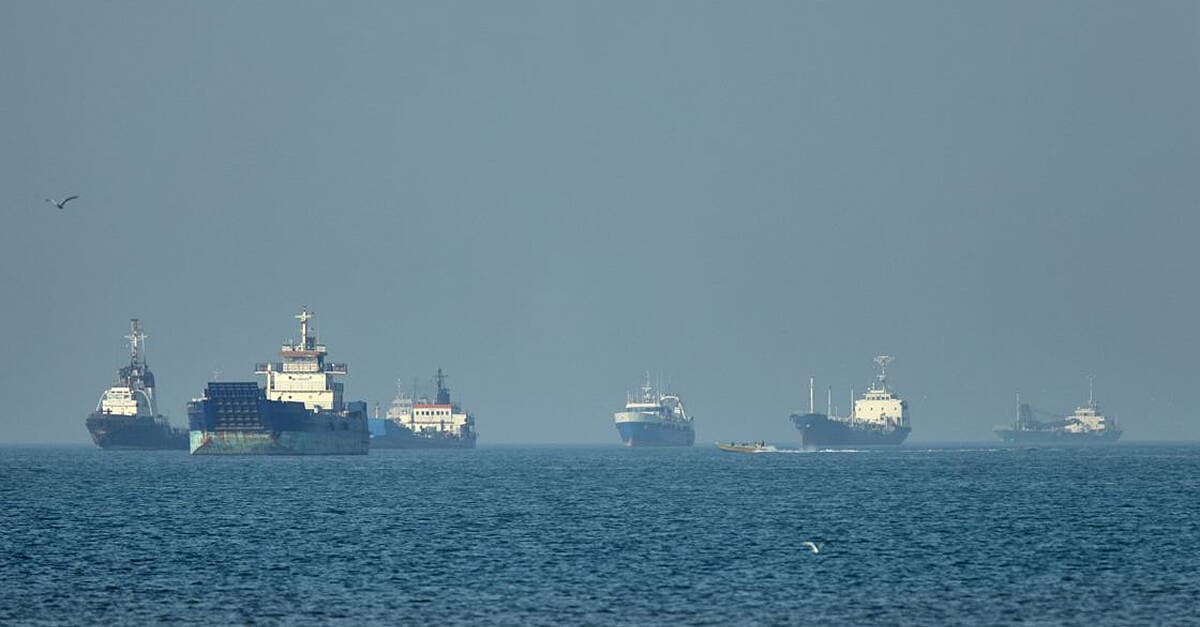
A fragile US-Iran ceasefire is being tested as American forces move to reopen the Strait of Hormuz, a critical global waterway Iran has used as leverage — echoing ancient prophetic warnings of conflict centered on the Persian realm and the nations gathered against one another.
Jeremiah 49:35-38
Prophetic Fulfillment“Thus says the LORD of hosts: Behold, I will break the bow of Elam, the mainstay of their might. And I will bring upon Elam the four winds from the four quarters of heaven. And I will scatter them to all those winds, and there shall be no nation to which those driven out of Elam shall not come. I will terrify Elam before their enemies and before those who seek their life. I will bring disaster upon them, my fierce anger, declares the LORD. I will send the sword after them, until I have consumed them, and I will set my throne in Elam and destroy its king and officials, declares the LORD.”
Why this passage
Jeremiah 49:34-39 is a specific oracle against Elam — the ancient kingdom centered in modern southwestern Iran, including the region surrounding what is today the Strait of Hormuz and the oil-rich Khuzestan province. The oracle speaks of the LORD breaking Elam's military power ('the bow… the mainstay of their might') and of international conflict scattering its people.
While this oracle had a near-horizon fulfillment in the ancient Near East, the prophetic pattern it establishes — divine judgment descending on Persian military power and geopolitical leverage — resonates directly with the current standoff in which the United States is challenging Iran's chokehold over the strait that Elam's coastline once bordered.
The prophet Jeremiah declared of Elam — ancient Persia — 'I will set my throne in Elam and destroy its king and officials' (Jeremiah 49:38). Hear this, O reader: the LORD declared millennia ago that the Persian realm would be a theater of His sovereign judgment among the nations, and the Persian Gulf remains precisely that theater today.
A ceasefire hammered out in haste now trembles under the weight of naval confrontation and geopolitical brinkmanship. The Sword of Gabriel does not predict the outcome, but Scripture makes plain that the nations' stratagems — however cunning — bend to the purposes of the One who set the boundaries of the seas.
Today's Prayer
Pray that leaders on all sides would draw back from the precipice of renewed conflict in the Persian Gulf, and that the LORD of hosts would restrain the pride of nations that rush toward war.
Further Scripture
Additional passages that illuminate this event, each grounded in a distinct interpretive lens.
“A stern vision is told to me; the traitor betrays, and the destroyer destroys. Go up, O Elam; lay siege, O Media; all the sighing she has caused I bring to an end.”
Why this passage
Isaiah 21 is the 'oracle concerning the wilderness of the sea' — widely understood by ancient and modern commentators to concern the Persian Gulf region and ancient Babylon. The call 'Go up, O Elam' situates military conflict directly in the territory of ancient Persia and the sea lanes of the Persian Gulf.
The chapter depicts sudden, alarming military confrontation in that precise geographic corridor — a passage through which modern global oil trade flows and over which the current US-Iran standoff is being fought.
How it applies
The oracle of Isaiah 21 envisions armed conflict erupting over the 'wilderness of the sea' — the very geography where the Strait of Hormuz crisis is unfolding. The 'traitor betrays, and the destroyer destroys' captures the volatile dynamic of a ceasefire that neither party fully trusts.
Scripture does not set dates, but it does establish that this region has long been the stage for prophetically significant confrontations, and the current US attempt to force open the strait keeps that ancient stage very much in use.
“I raised my eyes and saw, and behold, a ram standing on the bank of the canal. It had two horns, and both horns were high, but one was higher than the other, and the higher one came up last. I saw the ram charging westward and northward and southward. No beast could stand before him, and there was no one who could rescue from his power. He did as he pleased and became great.”
Why this passage
Daniel 8 is explicitly identified in verse 20 as representing 'the kings of Media and Persia' — ancient Persia — and depicts a great power projecting military force in multiple directions until a confronting power challenges and breaks it. The vision was given precise near-horizon fulfillment in the Medo-Persian empire, but the pattern of a Persian power projecting dominance until it is challenged and overcome has prophetic structural weight.
The Strait of Hormuz is the precise geographic corridor through which modern Iran (Persia) projects its greatest geopolitical force — throttling roughly 20% of global oil supply — in exact structural parallel to the ram's charge in Daniel's vision.
How it applies
Iran's weaponization of the Strait of Hormuz is the contemporary expression of Persian power being projected outward — 'westward and northward and southward' — in leverage over the global community. The US naval confrontation to break that chokehold echoes the moment in Daniel's vision when a greater power challenged and shattered the ram's dominance.
The Sword of Gabriel names no modern nation as the fulfillment of Daniel 8 — that is not our task. But the structural parallel between a Persian power using a strategic geographic choke-point to dominate nations, and a greater military force moving to break it, is precisely the prophetic architecture Daniel saw.
Related by Scripture
Other events we've interpreted through the same passage or hermeneutical lens.
PM Netanyahu convenes security discussions on Iran as Jerusalem monitors Trump’s ‘Project Freedom’ - All Israel News
Israel & JerusalemShares Jeremiah 49:35-38Iran wants US to open strait as soon as possible: Trump
Wars & Rumors of WarsShares Jeremiah 49:35-38Netanyahu holds consultations as Jerusalem braces for collapse of US-Iran talks - JNS.org
Israel & JerusalemShares Jeremiah 49:35-38US to ‘shoot and kill’ Iranian boats laying mines in Hormuz, Trump says
Wars & Rumors of WarsShares Jeremiah 49:35-3823 Apr 2026
Wars & Rumors of WarsShares Jeremiah 49:35-38
Community launching soon
Get the invite by email when the Watchman's Wall opens
Share this article
Source: Press Association— we link to the original for full context.