UN condemns child death toll from Israel's West Bank operations
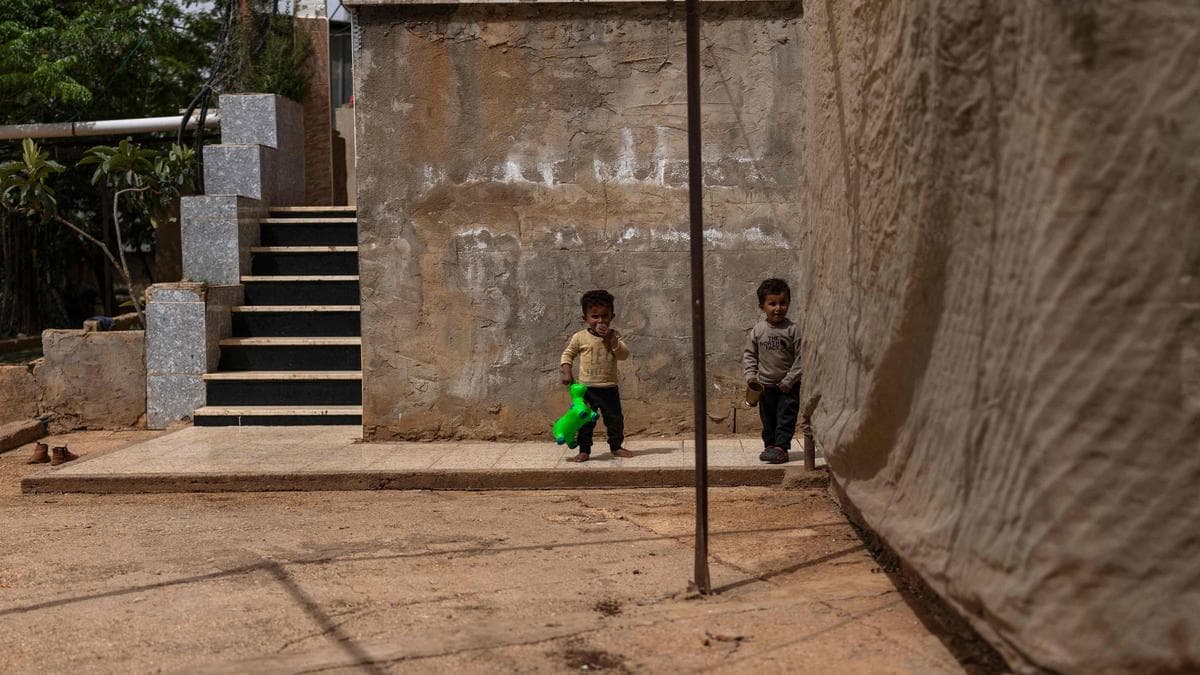
The UN reports that Israeli forces are responsible for 93% of child deaths in the West Bank since January 2025, highlighting the devastating human cost of ongoing military operations and pointing to the fulfillment of biblical warnings about the horrors of war and the suffering of the innocent.
Matthew 18:6
Direct Principle“but whoever causes one of these little ones who believe in me to sin, it would be better for him to have a great millstone fastened around his neck and to be drowned in the depth of the sea.”
Why this passage
Jesus speaks this warning in the context of His disciples' question about greatness in the kingdom. He places a child before them and declares that causing 'little ones' to stumble—whether through sin, harm, or neglect—incurs severe divine judgment.
The millstone imagery is deliberately violent: it is better to die a brutal death than to face God's wrath for harming the vulnerable.
The principle is absolute and transcultural: those in power bear a terrifying responsibility for the spiritual and physical welfare of children. The verse does not require prophetic fulfillment; it is a standing moral law of the kingdom.
Behold, the prophet Joel cried out, 'Let the nations bestir themselves, and come up to the valley of Jehoshaphat' (Joel 3:12). The valley of decision is not a distant prophecy—it is the ground where children fall under the weight of adult conflict.
Scripture does not grow weary of warning that war devours the young. When we read of 93% of child deaths attributed to one side in a conflict, we are seeing the ancient pattern: the innocent crushed between the millstones of national ambition.
Take heed, O reader, and let not your heart grow hard to the cries of the little ones.
Today's Prayer
Pray for the children of the West Bank and all conflict zones, that the Lord of Hosts would shield the innocent and bring the peace that passes understanding to those who mourn.
Further Scripture
Additional passages that illuminate this event, each grounded in a distinct interpretive lens.
“Proclaim this among the nations: Consecrate for war; stir up the mighty men. Let all the men of war draw near; let them come up. Beat your plowshares into swords, and your pruning hooks into spears; let the weak say, 'I am a warrior.' Hasten and come, all you surrounding nations, and gather yourselves there. Bring down your warriors, O LORD. Let the nations bestir themselves, and come up to the valley of Jehoshaphat; for there I will sit to judge all the surrounding nations.”
Why this passage
Joel 3 is a prophetic oracle concerning the gathering of nations for judgment in the valley of Jehoshaphat (meaning 'Yahweh judges'). In its original context, it addresses the nations that have scattered God's people and divided His land (Joel 3:2).
The call to 'consecrate for war' and the inversion of agricultural tools into weapons depicts a world consumed by conflict.
The plain grammatical-historical sense is that this is a day of divine judgment against nations that have harmed Israel. The modern West Bank—biblical Judea and Samaria—is the very land over which nations have contended for generations.
The UN's report of child casualties in this specific territory echoes the prophetic pattern: the nations (including Israel as a nation among nations) are gathered in conflict, and the weak—even children—are drawn into the vortex of war.
How it applies
The UN report that 93% of child deaths in the West Bank are attributed to Israeli forces is a stark reminder that war does not discriminate by age. Joel's prophecy warns that when nations consecrate for war, the innocent are swept up in the judgment.
This is not a political statement but a biblical observation: the valley of decision is a place of bloodshed, and the Lord sees every tear of the child.
“O LORD, how long shall the wicked, how long shall the wicked exult? They pour out their arrogant words; all the evildoers boast. They crush your people, O LORD, and afflict your heritage. They kill the widow and the sojourner, and murder the fatherless.”
Why this passage
Psalm 94 is a lament and imprecatory psalm, crying out to God for justice against the wicked who oppress the vulnerable. The psalmist lists the victims: the widow, the sojourner, the fatherless—those without human protectors.
The question 'how long' is a plea for divine intervention when human justice fails.
The wisdom pattern is that the wicked often prosper temporarily, crushing the weak, but the psalmist trusts that God will eventually repay. This is not a specific prophecy about Israel or the West Bank but a recurring human reality that Scripture addresses.
How it applies
The UN report highlights that children—the fatherless in potential—are being killed in the West Bank. The psalmist's cry 'how long shall the wicked exult?' finds fresh voice in this statistic.
Whether one identifies the 'wicked' as specific actors or the system of war itself, the pattern is biblical: the vulnerable are crushed, and the righteous cry out for God to arise and judge.
Related by Scripture
Other events we've interpreted through the same passage or hermeneutical lens.
Community launching soon
Get the invite by email when the Watchman's Wall opens
Share this article
Source: thehindu— we link to the original for full context.