Ukraine accuses Israel of receiving shipments of grain 'stolen' by Russia
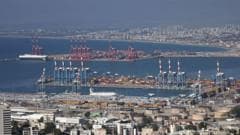
Ukraine has accused Israel of receiving grain allegedly stolen by Russia from occupied Ukrainian territories, a charge Israel denies — illustrating how modern warfare weaponizes food supplies and strips the vulnerable of their harvests.
Amos 3:10
Direct Principle“'They do not know how to do right,' declares the Lord, 'those who store up violence and robbery in their strongholds.'”
Why this passage
Amos delivered these oracles against the northern kingdom of Israel, but the surrounding context (Amos 1–2) makes plain that God holds all nations — not Israel alone — to account for how they treat the vulnerable and how they handle plunder.
The phrase 'store up violence and robbery in their strongholds' describes a systemic pattern: goods seized through violence are accumulated, normalized, and traded. The verse condemns not merely the act of seizure but the institutional hoarding and distribution of what was taken by force.
Historical context, theological significance, application today — denomination-neutral, ~1,000-word walk-through.
The prophet Amos thundered against the nations that 'sold the righteous for silver, and the needy for a pair of sandals' — and against those who dealt in the plunder of the weak. When armies harvest what they did not sow and nations quietly receive what conquest has seized, the ancient pattern repeats: the powerful consume the bread of the powerless.
Scripture does not let silence serve as innocence. Proverbs 31:9 commands, 'Open your mouth, judge righteously, defend the rights of the poor and needy.' The fields of Ukraine, stripped by occupying forces, are not merely a geopolitical footnote — they are a test of whether the nations will speak or look away.
Today's Prayer
Pray that the nations of the earth would refuse complicity in the plunder of the weak, and that those who strip the hungry of their harvest would be brought to account before a just God.
Further Scripture
Additional passages that illuminate this event, each grounded in a distinct interpretive lens.
“They covet fields and seize them, and houses, and take them away; they oppress a man and his house, a man and his inheritance.”
Why this passage
Micah addressed the powerful landowners of Judah who used legal and physical force to dispossess families of their ancestral fields. The near horizon is Israel's internal injustice; the far horizon is that the same pattern of covetous territorial seizure is a recurring human evil that God judges across every generation.
The verb 'seize' (Heb. gazal) carries the connotation of violent, forcible taking — not mere legal manipulation. The verse describes the full arc: covetousness, military or political seizure, and dispossession of inheritance.
How it applies
Russia's occupation of Ukrainian agricultural land and the alleged export of its harvests is a modern iteration of what Micah condemns: fields coveted, seized by force, and the inheritance of their people stripped away.
The prophet's warning that God sees this pattern and will not overlook it stands as a word to every occupying power that trades in the bread of those it has dispossessed.
“You shall not have in your bag two kinds of weights, a large and a small. You shall not have in your house two kinds of measures, a large and a small.”
Why this passage
The Mosaic covenant demanded that commercial exchange be conducted with honest, uniform weights and measures — a principle that extended to the integrity of what is bought and sold. The underlying moral logic is that commerce must not become a vehicle for laundering injustice.
When stolen goods enter international trade networks, the entire system of exchange becomes an instrument of the original crime, however many hands the goods pass through.
How it applies
Grain allegedly stripped from Ukrainian farmers through military occupation and sold or shipped internationally represents precisely the kind of dishonest measure this passage condemns — the produce of one party's labor is weighed on the scales of another's military power.
Nations that receive such shipments, knowingly or unknowingly, participate in a commerce that Scripture demands be honest from origin to destination.
“Do not rob the poor, because he is poor, or crush the needy at the gate,”
Why this passage
Proverbs 22:22 speaks directly to the exploitation of the vulnerable, identifying it as a sin that God himself will prosecute: 'for the Lord will plead their cause and rob of life those who rob them' (v. 23).
The 'gate' in ancient Israel was the site of commerce and legal adjudication — meaning this verse addresses exactly the intersection of power, trade, and justice at which this story sits.
The wisdom literature consistently frames the plunder of the weak not as a merely ethical problem but as a theological one: God stands as the advocate of those who cannot defend their own fields.
How it applies
Ukrainian farmers and communities under occupation are the 'needy at the gate' of international commerce — their grain entering global markets while they remain dispossessed by force.
Proverbs warns that the Lord himself takes up the cause of those robbed in this manner; the international diplomatic tension this story has already generated may itself be one sign that the injustice cannot be quietly absorbed.
Community launching soon
Get the invite by email when the Watchman's Wall opens
Share this article
Source: bbc— we link to the original for full context.