UK appeals ‘overstated and wrong’ court ruling that Palestine Action ban is unlawful
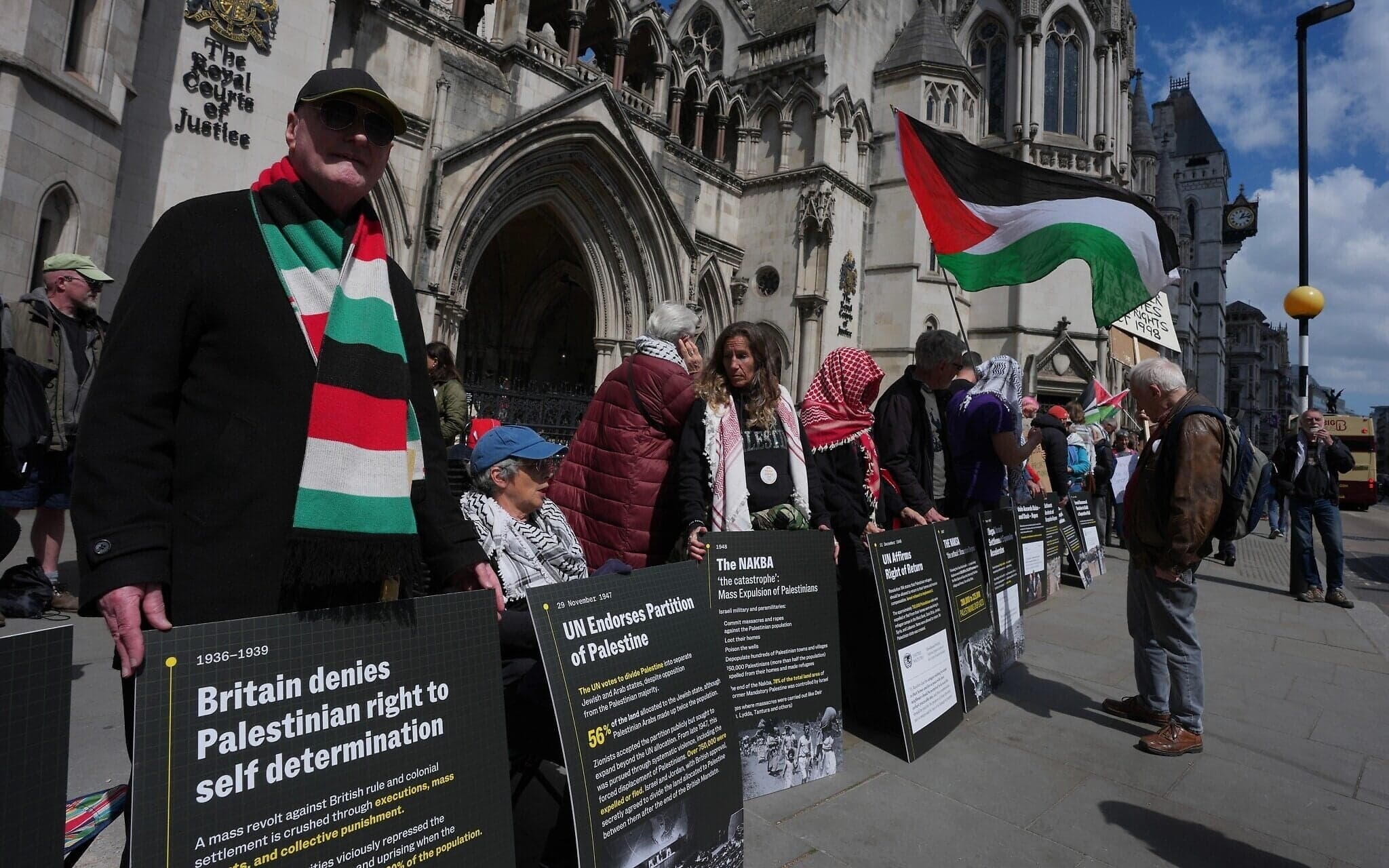
A UK court struck down the terror designation of Palestine Action — a group whose members destroyed military aircraft and attacked police — illustrating how Western institutions increasingly cannot call politically motivated violence by its proper name, a hallmark of moral confusion Scripture explicitly warns against.
Isaiah 5:20
Direct Principle“Woe to those who call evil good and good evil, who put darkness for light and light for darkness, who put bitter for sweet and sweet for bitter!”
Why this passage
Isaiah 5 is a series of 'woe' oracles against Judah's ruling class for systematic moral inversion — the corruption of judgment, the perversion of justice, and the rewarding of wickedness.
The plain grammatical-historical sense is that a society which deliberately reverses the categories of good and evil — not out of ignorance but out of ideological or self-serving interest — invites divine judgment. The principle is not time-bound; it describes a recurring pattern in human institutions.
Isaiah declared with piercing clarity: 'Woe to those who call evil good and good evil, who put darkness for light and light for darkness.' This ancient warning finds a modern echo in a British courtroom that refused to classify the destruction of military aircraft and assault of police officers as terrorism, dressing lawlessness in the language of legitimate protest.
When a society's legal institutions lose the moral vocabulary to name violence for what it is, the foundations of ordered justice tremble. The reader is called not to despair but to sobriety — to recognize that this confusion is not new under the sun, and to pray for those in authority who must contend with it.
Today's Prayer
Pray that God would grant wisdom and moral clarity to judges, lawmakers, and officials in Western nations, that they would have the courage to call evil by its rightful name and uphold just order.
Further Scripture
Additional passages that illuminate this event, each grounded in a distinct interpretive lens.
“He who justifies the wicked and he who condemns the righteous are both alike an abomination to the LORD.”
Why this passage
Proverbs 17:15 addresses the judicial act specifically — not merely general moral confusion but the formal, institutional acquittal of the guilty and condemnation of the just.
The wisdom tradition in Israel held that right judgment was a reflection of God's own character (Deut 16:18-20), and that courts which inverted this reflected not just incompetence but an abomination — a term reserved for that which is fundamentally repulsive to God's moral order.
How it applies
When a court formally rules that the government acted unlawfully by designating as terrorists those who demonstrably committed property destruction and assaulted officers, it performs the precise act Proverbs describes: justifying those whose acts warrant judgment.
The proverb does not require malicious intent to apply — institutional processes that produce unjust acquittals fall under the same rebuke, and believers are right to name this pattern with scriptural precision.
“But understand this, that in the last days there will come times of difficulty. For people will be lovers of self, lovers of money, proud, arrogant, abusive, disobedient to their parents, ungrateful, unholy, heartless, unappeasable, slanderous, without self-control, brutal, not loving good, treacherous, reckless, swollen with conceit, lovers of pleasure rather than lovers of God,”
Why this passage
Paul writes to Timothy characterizing the moral texture of 'the last days' — not a single apocalyptic moment but an era marked by pervasive ethical inversion within human society, including 'not loving good' and being 'brutal' yet 'treacherous' in how that brutality is rationalized.
The Pauline phrase 'not loving good' (aphilagathos) describes an active aversion to what is genuinely good and ordered — a condition in which good and evil are not merely confused but the good is positively rejected.
How it applies
The spectacle of Western legal institutions refusing to classify organized violence as terrorism — while those who seek to restrain it are placed in legal jeopardy — reflects the 'not loving good' and 'treacherous' patterns Paul identifies as characteristic of the age.
This is not an isolated judicial error but part of a broader institutional drift in which ordered justice is treated as oppression and destructive activism as virtue — the very moral texture Paul warns will mark the difficult times ahead.
Related by Scripture
Other events we've interpreted through the same passage or hermeneutical lens.
Learning nothing: L.A. can't put out a warehouse fire even as city gets covered in smoke
Moral DeclineShares Isaiah 5:20Not entirely unacceptable to call Hamas freedom fighters, doctor tells tribunal
Moral DeclineShares Isaiah 5:20Green councillor who praised Oct 7 attacks lands cabinet role
Moral DeclineShares Isaiah 5:20Gender Madness Is Embarrassing Reasonable Australians
Moral DeclineShares Isaiah 5:20Christian Lifeguard, L.A. County Go to Trial over June Pride Flag Ordinance
Moral DeclineShares Isaiah 5:20
Community launching soon
Get the invite by email when the Watchman's Wall opens
Share this article
Source: timesofisrael— we link to the original for full context.