Uganda's president sworn in for record seventh term
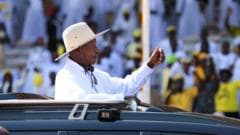
Uganda's President Yoweri Museveni, 81, was sworn in for a seventh term after disputed elections, extending his 40-year rule — a pattern of entrenched power that Scripture warns against as a sign of fallen human governance.
Proverbs 29:2
Wisdom Application“When the righteous increase, the people rejoice, but when the wicked rule, the people groan.”
Why this passage
This proverb from Solomon's collection states a universal moral principle: the character of rulers directly affects the well-being of the people. The Hebrew word for 'rule' (mashal) implies dominion or governance, and the contrast between 'rejoice' and 'groan' (anach, to sigh or complain) is stark.
The proverb does not specify a form of government — it applies to any system where the wicked hold power. Its plain sense is that righteous leadership brings joy, while wicked leadership brings suffering — a recurring pattern in fallen human governance.
Behold the pattern of the nations: a ruler who will not let go of the scepter, and a people whose voice is set aside. Scripture declares that "when the righteous increase, the people rejoice, but when the wicked rule, the people groan" (Proverbs 29:2).
Here in Uganda, an 81-year-old leader extends four decades of rule through disputed elections — a groaning that echoes the cry of every land where power clings to itself. Take heed, O reader: the Lord sees every throne that forgets it is borrowed.
Today's Prayer
Pray for the people of Uganda, that the Lord would raise up righteous leaders who fear Him and serve with humility, and that the Church would be a faithful witness in the face of entrenched power.
Further Scripture
Additional passages that illuminate this event, each grounded in a distinct interpretive lens.
“So Samuel told all the words of the LORD to the people who were asking for a king from him. He said, 'These will be the ways of the king who will reign over you: he will take your sons and appoint them to his chariots and to be his horsemen and to run before his chariots... He will take the best of your fields and vineyards and olive orchards and give them to his servants... And in that day you will cry out because of your king, whom you have chosen for yourselves, but the LORD will not answer you in that day.'”
Why this passage
In 1 Samuel 8, Israel demands a king like the other nations, and God through Samuel warns them of the pattern of human kingship: conscription, taxation, confiscation, and eventual oppression. The warning is not about a specific king but about the inherent tendency of concentrated human power.
The narrative is a direct principle about fallen governance: when rulers accumulate power over decades, they inevitably take from the people — their sons, their fields, their freedom. The warning concludes that the people will 'cry out' but the Lord will not answer, because they chose this system.
How it applies
Museveni's 40-year rule — now extended to a seventh term — mirrors the pattern Samuel warned Israel about. The 'taking' is visible in Uganda's political landscape: opposition suppressed, term limits removed by parliament in 2005, and a ruling party that has controlled the country since 1986.
The people's 'cry' is heard in disputed elections and opposition protests, but the machinery of power remains unresponsive — a secular echo of the warning that when a people accept a ruler who will not let go, their cry may go unanswered by human institutions.
Related by Scripture
Other events we've interpreted through the same passage or hermeneutical lens.
Community launching soon
Get the invite by email when the Watchman's Wall opens
Share this article
Source: bbc— we link to the original for full context.