UAE says it will withdraw from OPEC and OPEC+, in historic blow to global oil cartel
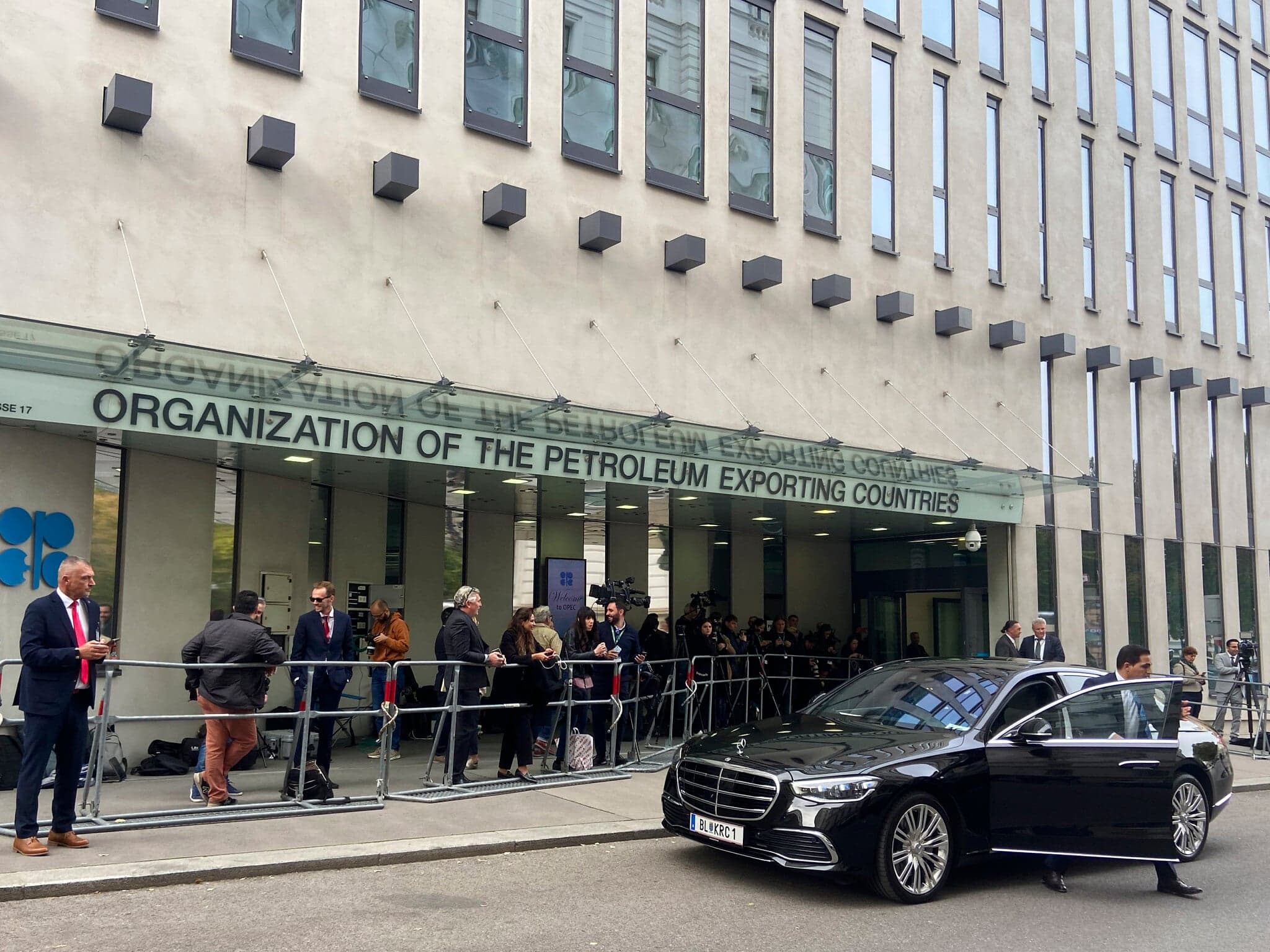
The UAE's historic withdrawal from OPEC and OPEC+, compounded by Iran's blockade of the Strait of Hormuz, signals a fracturing of the global oil order — a concrete demonstration of how quickly the economic systems that undergird nations can be shaken and turned against one another.
Ezekiel 27:26-27
Narrative Parallel“"Your rowers have brought you out into the high seas. The east wind has wrecked you in the heart of the seas. Your riches, your wares, your merchandise, your mariners and your pilots, your caulkers, your dealers in merchandise, and all your warriors who are in you, with all your crew that is in your midst, sink into the heart of the seas on the day of your fall."”
Why this passage
Ezekiel 27 is an extended lament over Tyre, the ancient world's premier maritime trading empire, whose wealth flowed through sea lanes and whose alliances with surrounding nations gave her unmatched commercial power. The oracle's driving motif is that a civilization built on the control of trade routes and merchant alliances is uniquely vulnerable — when those routes are cut, the entire structure collapses catastrophically.
The structural parallel here is genuine: the Strait of Hormuz is the modern equivalent of Tyre's sea lanes — roughly 20% of the world's oil transits that chokepoint. Iran's blockade and the UAE's withdrawal from the cartel that organized Gulf oil exports together mirror precisely the pattern Ezekiel describes: rowers pulling into the high seas, then an east wind wrecking the vessel of commerce in the open water.
The prophet Ezekiel warned that the merchants of the earth would find their trade and their alliances shaken when the Lord moves against the proud and the powerful. Hear the word of Ezekiel 27:27 — "your riches, your wares, your merchandise, your mariners and your pilots, your caulkers, your dealers in merchandise, and all your warriors who are in you, with all your crew that is in your midst, sink into the heart of the seas on the day of your fall."
The UAE's rupture with OPEC and the chokehold Iran has placed on the Strait of Hormuz show precisely this pattern: the channels of wealth that nations trust can be severed in a moment. Let the people of God hold their security not in oil markets or trade alliances, but in the One who holds the seas in the hollow of His hand.
Today's Prayer
Pray that believers in Gulf nations and around the world would recognize the fragility of earthly economic structures and turn their trust wholly to the Lord, who alone is the stable foundation when the commerce of nations trembles.
Further Scripture
Additional passages that illuminate this event, each grounded in a distinct interpretive lens.
“"Come now, you who say, 'Today or tomorrow we will go into such and such a town and spend a year there and trade and make a profit' — yet you do not know what tomorrow will bring. What is your life? For you are a mist that appears for a little time and then vanishes."”
Why this passage
James addresses merchants who plan their commercial ventures with presumptuous confidence, as though the future were entirely in their control. The apostle's point is not that commerce is sinful, but that human certainty about the stability and continuity of economic arrangements is a form of practical godlessness — it substitutes confidence in markets and plans for dependence on God's providence.
The principle applies without any reinterpretation: OPEC was constructed precisely as a long-term economic planning mechanism — a cartel designed to manage oil supply and pricing across decades. The UAE's sudden, reportedly unconsulted withdrawal is a vivid instance of how quickly those long-horizon plans unravel.
How it applies
Energy ministers and market analysts have treated OPEC's structural cohesion as a fixed variable in global economic planning for half a century. The UAE's announcement — made, according to reporting, without direct consultation even with Saudi Arabia — demonstrates exactly the fragility James describes: what appeared to be a settled commercial arrangement vanishes like mist.
For the Christian reader, this is not primarily an economic story but a spiritual one: the nations that have placed their security in energy dominance are reminded that tomorrow is not theirs to command.
“"Shall not all these take up their taunt against him, with scoffing and riddles for him, and say, 'Woe to him who heaps up what is not his own — for how long? — and loads himself with pledges!'"”
Why this passage
Habakkuk's second chapter contains a series of five woes against the empire (Babylon in its immediate context) that amasses wealth and power through coercion, leverage, and the control of others' resources. The first woe targets specifically the accumulation of pledges and the heaping up of goods extracted from subject nations — an apt description of cartel economics, where production quotas and pricing agreements function as a form of collective leverage over the global economy.
The wisdom pattern Habakkuk identifies is recurring and structural: empires and coalitions that build their power on controlling the flow of goods others depend on inevitably attract the woe God pronounces here — and history consistently vindicates the oracle.
How it applies
OPEC was constructed as a mechanism by which oil-producing nations could collectively control supply and therefore price — effectively loading the consuming world with a perpetual pledge. The cartel's fracturing, accelerated by Iran's aggressive Hormuz blockade that turned the region's own producers into victims of energy-weaponization, echoes the woe Habakkuk pronounces on those who build power through economic coercion.
Take heed: systems of leverage and control do not sustain themselves indefinitely; the God who governs the nations is not neutral toward arrangements built on compulsion.
Related by Scripture
Other events we've interpreted through the same passage or hermeneutical lens.
Community launching soon
Get the invite by email when the Watchman's Wall opens
Share this article
Source: timesofisrael— we link to the original for full context.